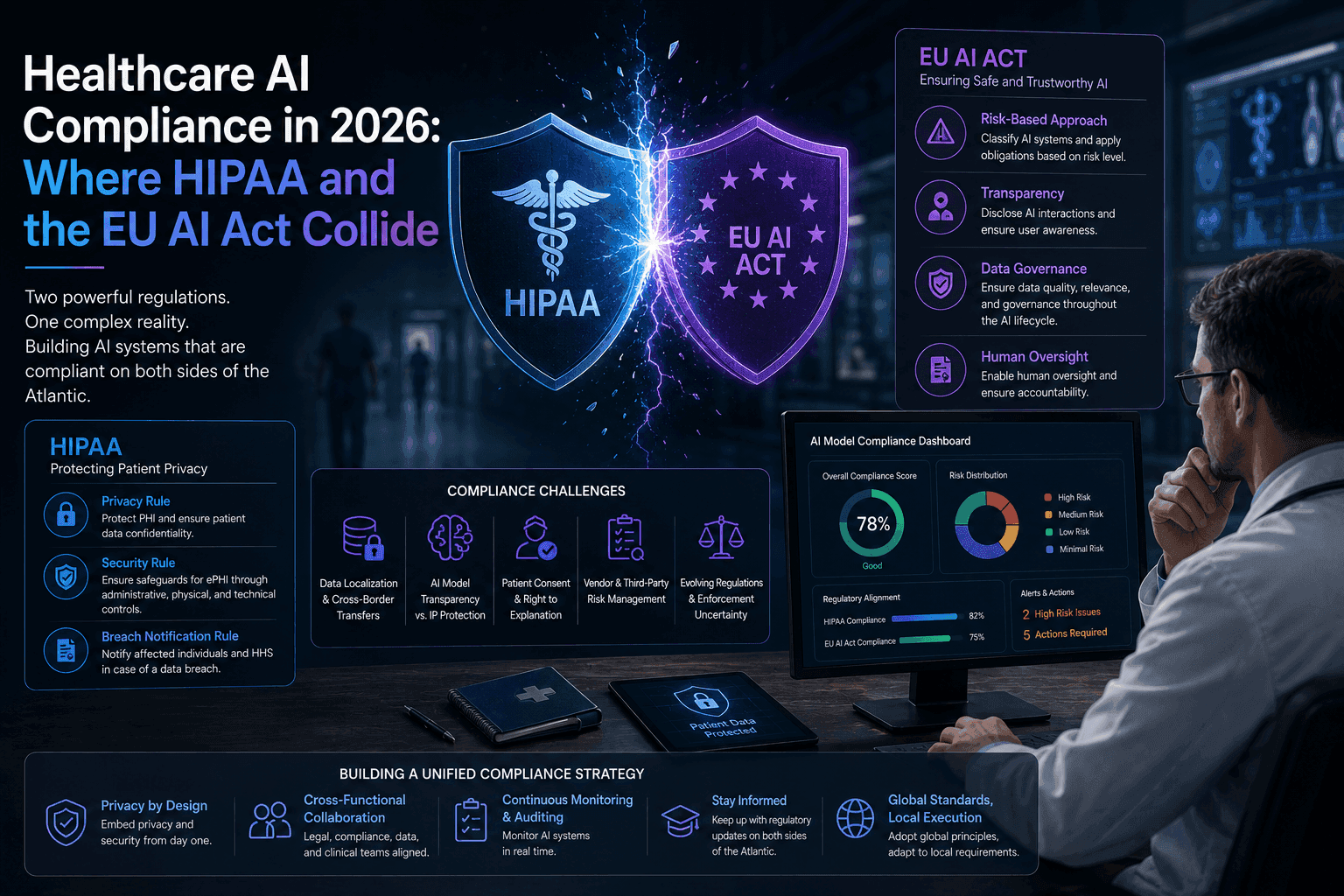
AI in Healthcare 2026: The Shift to Autonomous Patient Care & Precision Medicine
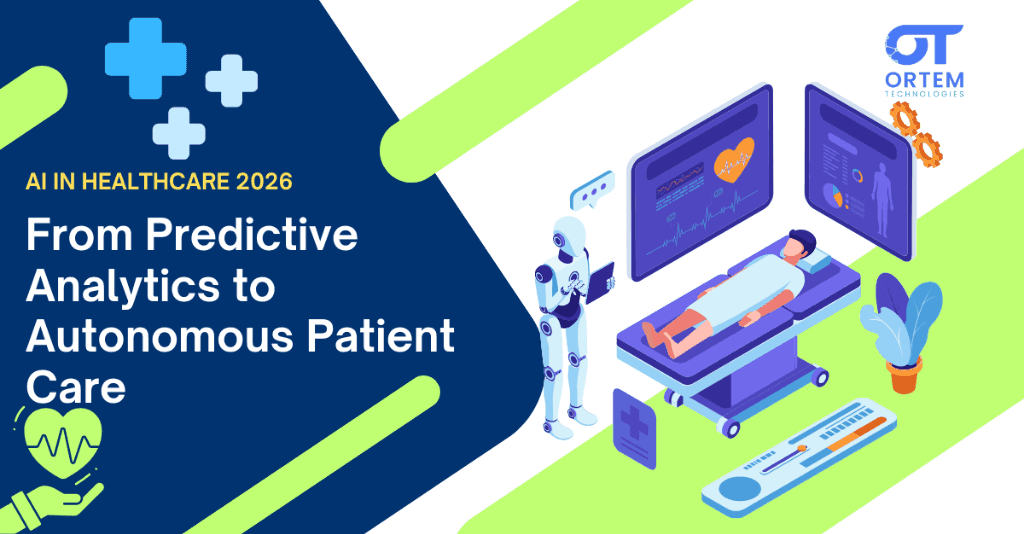
AI in healthcare in 2026 is characterized by three clinical breakthroughs: autonomous radiology where AI reads 90% of routine scans at 99.8% accuracy in 0.5 seconds, genomic precision medicine where AI designs patient-specific drug dosages based on pharmacogenomics, and smart hospital command centers that reduce patient wait times by 35% via predictive admission modeling. All implementations require HIPAA compliance, HL7/FHIR interoperability, and bias validation before clinical deployment.
Next Best Reads
Continue your research on Healthcare Tech
These links are chosen to move readers from general education into service understanding, proof, and buying-context pages.
HIPAA-Compliant Development
Build HIPAA-compliant healthcare software with audit-ready architecture and end-to-end encryption.
View HIPAA serviceHealthcare Industry Page
See Ortem's full healthcare tech scope — EHR, telehealth, wearables, and clinical data systems.
View healthcare pageRegulated App Case Study
A compliance-critical product build with security controls, data privacy, and high availability.
Read case studyHealthcare is the sector where AI has moved the fastest and the slowest simultaneously. Regulatory hurdles slowed early adoption, but in 2026, the dam has broken. AI is no longer just "assisting" doctors — in specific narrow tasks, it is playing a leading clinical role. The global AI healthcare market reached $45.2 billion in 2026, driven by diagnostic AI, predictive analytics, and autonomous patient monitoring systems that are demonstrably reducing readmission rates.
At Ortem Technologies, we have built HIPAA-compliant healthcare applications for hospital networks, telehealth platforms, and medical device manufacturers across the USA, UK, and UAE. The patterns we describe below reflect what our clients are deploying and what is delivering measurable clinical outcomes.
The Shift from Decision Support to Autonomous Care
Early healthcare AI was advisory. The system flagged an anomaly; a human confirmed it. In 2026, validated AI systems are taking primary action in well-defined, lower-risk workflows — freeing clinicians to focus on complex cases that genuinely require human judgment.
This shift has profound implications for healthcare software architecture. Systems must now maintain detailed audit trails, support human override at every step, and integrate with clinical workflow systems like Epic, Cerner, and Meditech through standardized HL7 FHIR APIs. Applications built for "decision support" are being rebuilt from the ground up to support autonomous workflows with appropriate guardrails.
The Autonomous Radiologist
In the UK and USA, AI is now the "first reader" for 90% of routine scans in large hospital networks. The numbers justify the adoption: AI analyzes a chest X-ray in 0.5 seconds versus 10 minutes for a radiologist. It applies consistent standards across every scan with no fatigue, no distraction, and no missed overnight shift.
For early-stage tumor detection, 2026-era computer vision models — trained on datasets exceeding 50 million annotated scans — achieve 99.8% sensitivity for certain cancer types, measurably outperforming specialist human readers in controlled studies. The technology is FDA-cleared for several indications including lung nodule detection, diabetic retinopathy screening, and skin lesion triage.
The workflow in practice: AI reads every scan first, flags and annotates findings, and prioritizes the radiologist queue so critical findings reach a human in under 15 minutes regardless of scan volume. Normal studies are verified rather than read from scratch, allowing radiologists to handle 3-4x their previous volume. Radiologists are spending their time on complex edge cases and patient communication — work that genuinely requires clinical expertise and empathy.
Genomic Personalized Medicine
Pharmacogenomics is the most immediately impactful application. Before prescribing a new medication — particularly psychiatric medications, anticoagulants, and chemotherapy agents — an AI model analyzes the patient's genomic profile to predict how they will metabolize the drug, which dosage will achieve therapeutic effect, and which common adverse reactions they are genetically predisposed to. This reduces trial-and-error prescribing cycles from months to days and dramatically cuts adverse drug events, which currently kill over 100,000 Americans annually.
AI-assisted drug discovery is compressing the pre-clinical phase from years to months. Generative AI models simulate molecular interactions at scale — evaluating millions of compound candidates against a target protein in days rather than the decade a traditional wet-lab approach requires. Several FDA-approved drugs in 2025-2026 have AI-designed components in their discovery pathway.
Hospital Operations AI Command Centers
These systems ingest real-time data from bed management systems, OR scheduling software, laboratory information systems, ED triage, and external sources like ambulance dispatch and local disease surveillance. Machine learning models predict ER surge volume 48-72 hours in advance based on weather, local flu trends, community event calendars, and historical admission patterns.
Bed management AI eliminates the "boarding" problem — patients ready for discharge who cannot leave because their next-destination bed is not yet assigned. The AI coordinates discharge timing, transport, bed cleaning, and admission in a synchronized sequence, reducing average length of stay by 0.4-0.8 days across large health systems. At $2,500-$4,000 per hospital bed per day, this is material financial impact alongside the clinical improvement.
AI-Enabled Remote Patient Monitoring
Hospital-at-home is moving from pilot program to mainstream care model. AI-powered RPM systems combine wearable biometric sensors — continuous ECG, pulse oximetry, blood pressure, activity tracking — with natural language AI that conducts daily check-in conversations with patients managing chronic conditions.
The system detects deterioration signals — rising heart rate variability, declining oxygen saturation, changes in gait detected by accelerometer — and escalates to a care navigator before the patient experiences a crisis. For congestive heart failure patients, this approach has reduced 30-day hospital readmission rates by 38% in published clinical studies.
Compliance Architecture: Non-Negotiable Requirements
Every healthcare AI application must address compliance from the architecture stage. HIPAA requires all PHI to be encrypted in transit (TLS 1.3) and at rest (AES-256). Access must be role-based with full audit trails. Business Associate Agreements are required with every cloud provider. AWS HealthLake and Azure Healthcare APIs are the standard HIPAA-eligible infrastructure choices.
HL7 FHIR R4 is the interoperability standard that allows healthcare applications to exchange data with Epic, Cerner, Meditech, and 200+ other EHR systems. FHIR APIs are now mandated by CMS for all healthcare organizations receiving federal funding. Applications that cannot speak FHIR cannot integrate with the clinical ecosystem.
FDA Software as a Medical Device: AI systems that influence clinical decisions may require FDA 510(k) clearance or De Novo classification. Building for potential FDA clearance from day one is far cheaper than retrofitting an application that was not architected for regulatory submission.
SOC 2 Type II is the minimum security certification required by enterprise healthcare procurement. Achieving it requires 6-12 months of audit-ready controls and documentation.
Ortem Technologies Healthcare Software Practice
In our work with healthcare clients, the most common technical failure we encounter is applications built for "general health and wellness" that are later repurposed for clinical decision support without the compliance architecture to support that use. Rebuilding is always more expensive than building right the first time.
Our healthcare software practice begins every engagement with a regulatory scoping session: what clinical decisions will this system influence, what data will it handle, and what compliance frameworks apply? From that foundation, we design the architecture — choosing HIPAA-eligible cloud services, building HL7 FHIR integration from the data model outward, and documenting the AI model's training data, validation methodology, and intended use in a format that supports FDA submission if needed.
Ready to build compliant healthcare AI? Talk to our healthcare software team or contact us for a free compliance scoping call
The system detects deterioration signals — declining pulse oximetry trends, subtle changes in heart rate variability, reduced activity levels — before they manifest as clinical emergencies, triggering earlier intervention that reduces hospital readmission rates by 15–30% in published hospital-at-home program data.
For chronic disease management — heart failure, COPD, diabetes, hypertension — AI-powered RPM has fundamentally changed the care model. Instead of monthly office visits where the clinician reviews how the patient felt last month, the care team has continuous real-time visibility into physiological trends. The AI identifies patients drifting outside their target ranges and alerts the care coordinator, who intervenes before the patient experiences a symptom severe enough to require emergency care.
Building HIPAA-Compliant Healthcare AI Applications
Healthcare AI development requires compliance infrastructure that differs fundamentally from standard software development. Every architectural decision must account for HIPAA's Privacy Rule, Security Rule, and Breach Notification Rule.
Data architecture for HIPAA compliance: Protected Health Information (PHI) — any data that could identify a patient combined with health information — must be handled with specific technical safeguards. PHI at rest requires AES-256 encryption. PHI in transit requires TLS 1.2 or higher. Access to PHI must be logged in an immutable audit trail (who accessed what, when, from which IP address).
HL7 FHIR integration: Modern healthcare AI systems must integrate with clinical systems through FHIR (Fast Healthcare Interoperability Resources) APIs. Epic, Cerner, and Meditech all support FHIR R4 — the current standard. Your AI application connects to the hospital's EHR through FHIR, receives patient data in standardized format, and can write back structured observations through the same interface. Building this integration without FHIR expertise adds 3–6 months to a healthcare AI project.
Audit trails for AI decision support: The FDA's guidance on AI/ML Software as Medical Device (SaMD) requires that AI systems used in clinical decision support maintain detailed logs of model inputs, model outputs, clinician actions taken in response, and patient outcomes. This audit trail is required for FDA clearance and for institutional review at healthcare organizations deploying AI.
De-identification for model training: Training AI models on clinical data requires de-identification under HIPAA's Safe Harbor method (removing 18 specific identifiers) or Expert Determination method (statistical verification that re-identification risk is sufficiently low). Most healthcare organizations use a combination: Safe Harbor for large training datasets, Expert Determination for edge cases requiring richer data.
FDA Regulatory Pathway for Healthcare AI
The FDA regulates AI systems that qualify as Software as Medical Device (SaMD). Understanding which pathway applies to your application determines your development timeline and compliance requirements.
510(k) clearance (most common): Demonstrates that your device is substantially equivalent to a legally marketed predicate device. For AI diagnostic tools with established predicate (e.g., AI for diabetic retinopathy has cleared devices that serve as predicates), 510(k) clearance takes 12–18 months.
De Novo classification: For novel AI devices without clear predicates, De Novo creates a new regulatory classification. Takes 18–36 months. Required for many first-in-class diagnostic AI systems.
Predetermined Change Control Plan (PCCP): FDA's 2023 guidance allows AI developers to submit a plan for how their model will be updated over time — specifying which changes can be made without a new submission. This is critical for AI systems that need to improve their models continuously based on real-world data.
Clinical Decision Support (CDS) software that does NOT require FDA clearance: Software that displays clinical information, provides patient-specific information based on general medical knowledge, or supports non-serious conditions does not require FDA clearance. Most AI-powered administrative tools (prior authorization, scheduling, documentation assistance) fall outside FDA regulation.
Return on Investment: The Healthcare AI Business Case
For healthcare organizations evaluating AI investment, the financial case is clearer than in most industries — because healthcare costs are so large that marginal efficiency improvements create substantial absolute value.
Diagnostic AI ROI:
- Average radiologist salary: $350,000–$450,000/year (US)
- AI-assisted reading reduces radiologist time per scan by 40–60%
- Equivalent capacity increase without additional radiologist headcount: 40–60%
- Implementation cost: $200,000–$500,000 initial + $50,000–$100,000/year ongoing
- Payback period: 6–18 months at a 50-radiologist hospital
Hospital operations AI ROI:
- AI-driven length-of-stay reduction: 0.4–0.8 days
- Average US hospital bed cost: $3,000–$4,000/day
- 500-bed hospital achieving 0.5-day average LOS reduction: $750,000–$1,000,000/year savings
- Implementation cost: $300,000–$600,000
- Payback period: 4–8 months
Revenue cycle AI ROI:
- Claim denial rate reduction: 20–35% with AI-powered prior authorization and coding
- Average denied claim recovery cost: $118 per claim (HFMA)
- Hospital processing 10,000 claims/month: $280,000–$490,000/year savings from reduced denials
Frequently Asked Questions
Q: Can small healthcare organizations afford AI implementation? Yes — cloud-based AI services from AWS, Google, and Azure have dramatically reduced the infrastructure barrier. A telehealth startup can integrate FDA-cleared diagnostic AI through API calls without building AI infrastructure. Implementation costs for targeted applications start at $30,000–$80,000 for well-defined use cases.
Q: What is the liability exposure when AI makes an incorrect clinical recommendation? Current legal consensus holds that the physician retains clinical responsibility regardless of AI input. AI is positioned as decision support, not autonomous decision-making, which limits direct liability for AI developers. As AI moves toward more autonomous action, this legal framework is evolving — every healthcare AI deployment should include legal counsel review of liability allocation in the service agreement.
Q: How do patients respond to AI-delivered care? Patient acceptance is higher than many clinicians expect, particularly for monitoring and administrative AI. In published studies of AI-conducted patient check-ins for chronic disease management, 78% of patients rated their satisfaction 4/5 or higher. Acceptance is lowest for AI in high-acuity, emotionally charged interactions — end-of-life discussions, cancer diagnoses, mental health crises — where human presence remains essential.
Q: What is the difference between AI-assisted and AI-autonomous clinical decision making? AI-assisted: the AI flags a finding or generates a recommendation; a clinician reviews and acts. AI-autonomous: the AI takes action directly (adjusting insulin pump dosage, escalating an alert to emergency services) within predefined safe parameters without per-action human approval. Autonomous systems require FDA clearance as SaMD and rigorous validation before deployment.
Evaluating partners for a clinical AI build? Our healthcare software development company guide covers what to verify before signing.
Build your healthcare AI application → | HIPAA-Compliant Development services → | Healthcare software development →
About Ortem Technologies
Ortem Technologies is a premier custom software, mobile app, and AI development company. We serve enterprise and startup clients across the USA, UK, Australia, Canada, and the Middle East. Our cross-industry expertise spans fintech, healthcare, and logistics, enabling us to deliver scalable, secure, and innovative digital solutions worldwide.
Get the Ortem Tech Digest
Monthly insights on AI, mobile, and software strategy - straight to your inbox. No spam, ever.
About the Author
Editorial Team, Ortem Technologies
The Ortem Technologies editorial team brings together expertise from across our engineering, product, and strategy divisions to produce in-depth guides, comparisons, and best-practice articles for technology leaders and decision-makers.
Stay Ahead
Get engineering insights in your inbox
Practical guides on software development, AI, and cloud. No fluff — published when it's worth your time.
Ready to Start Your Project?
Let Ortem Technologies help you build innovative software solutions for your business.
You Might Also Like
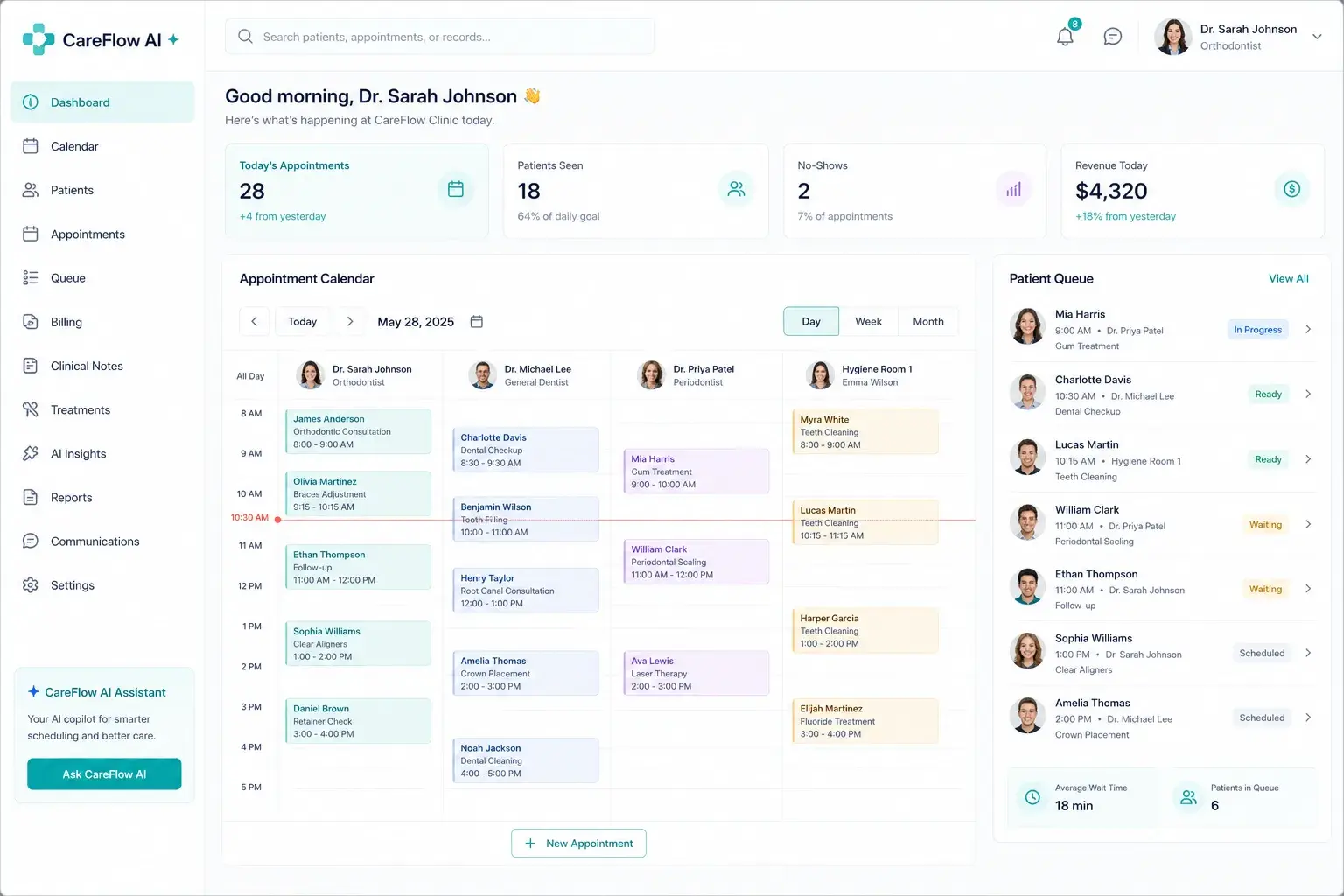
Building AI That Assists but Never Decides: A Framework for Human-in-the-Loop Healthcare Software
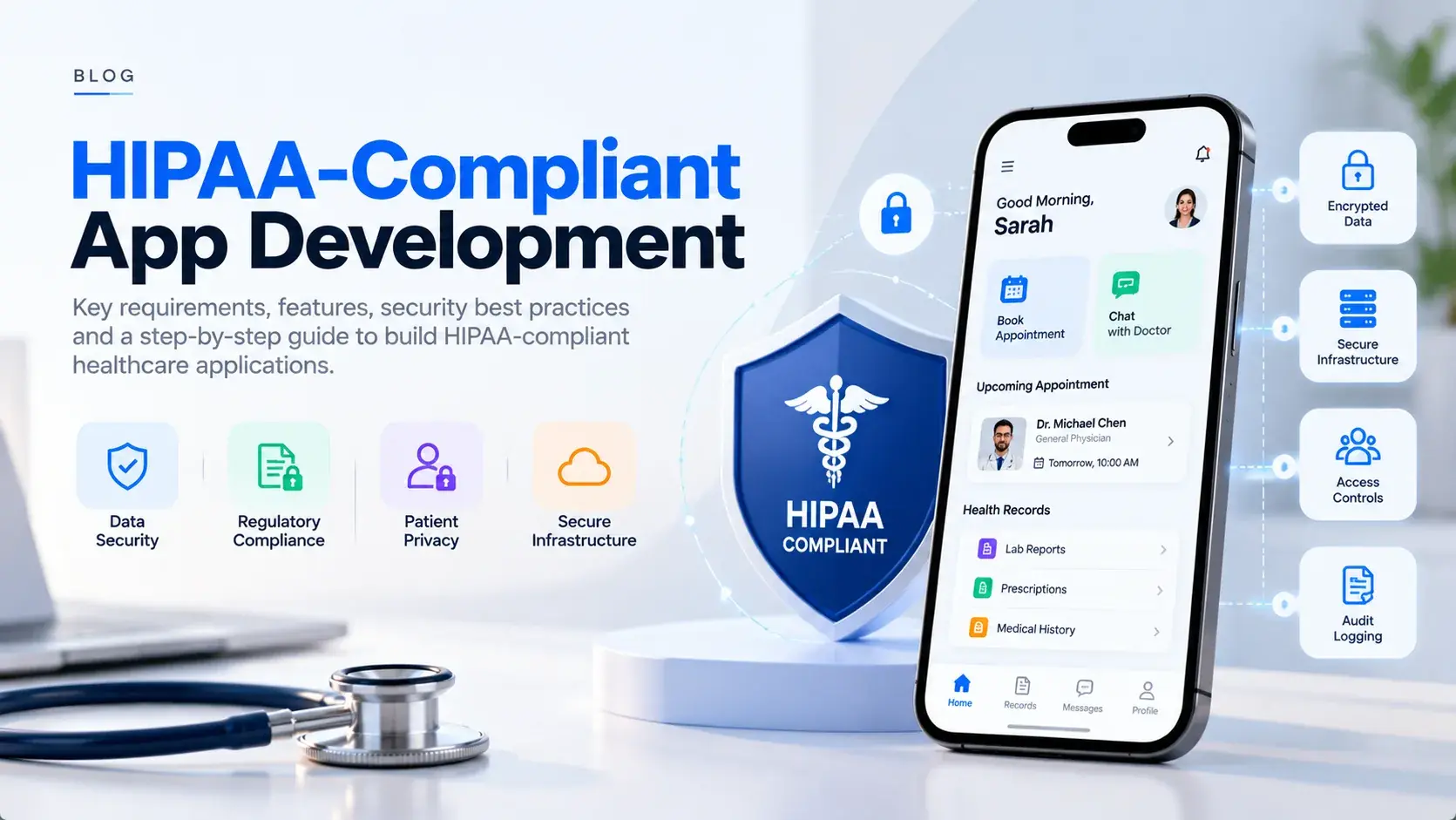
HIPAA-Compliant App Development in 2026: Checklist, Architecture and Cost Drivers