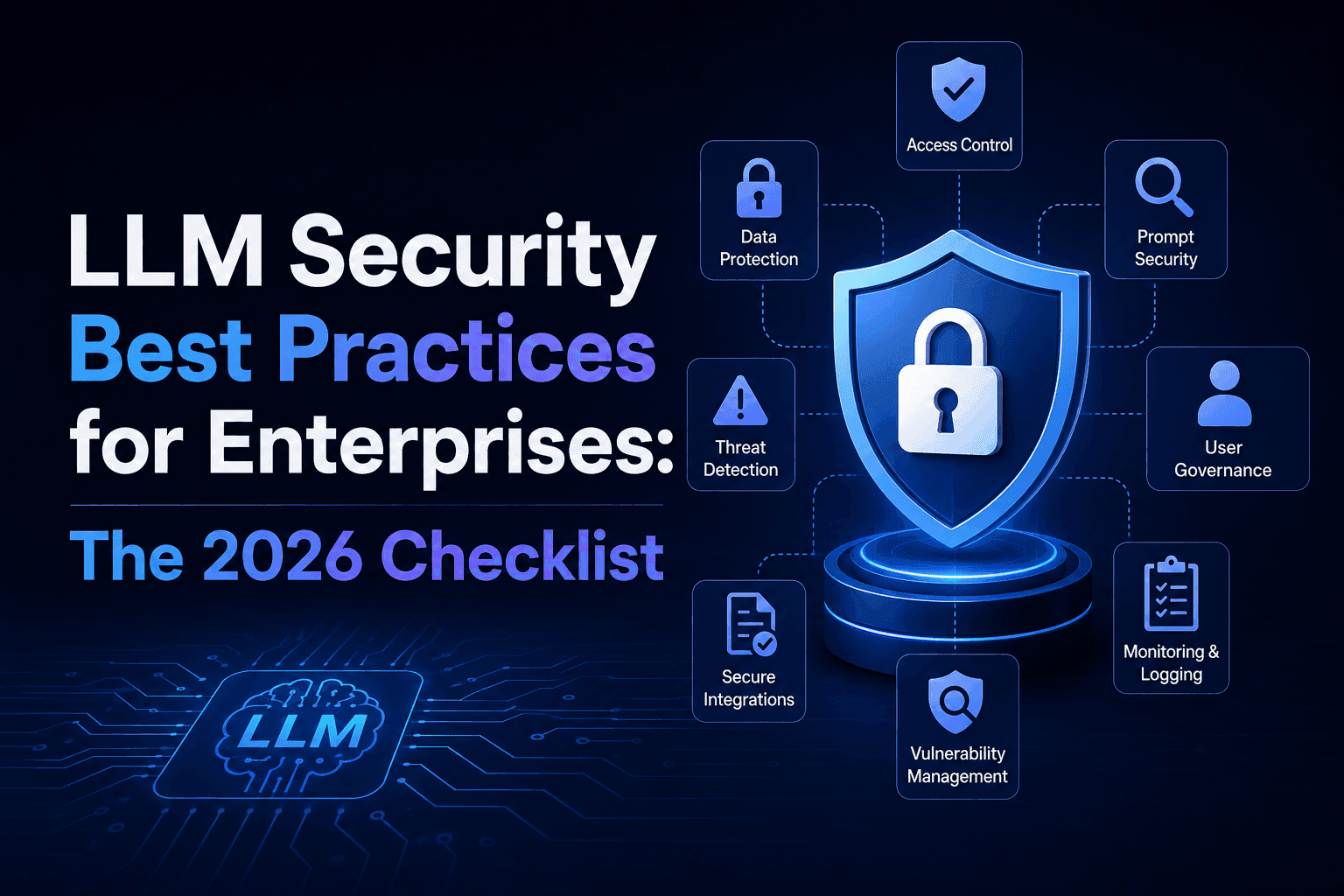
Backend Security Best Practices: Protecting APIs and Databases in 2026

The most critical backend security practices: (1) never store secrets in code — use environment variables and a secrets manager (AWS Secrets Manager, HashiCorp Vault); (2) validate and sanitise all input; (3) use parameterised queries to prevent SQL injection; (4) implement rate limiting on all public endpoints; (5) use short-lived JWTs with refresh token rotation; (6) enforce HTTPS everywhere; (7) run dependency audits weekly (npm audit, Snyk); (8) implement the OWASP Top 10 checklist before launch. Most breaches exploit basic hygiene failures, not sophisticated exploits.
Commercial Expertise
Need help with Cybersecurity?
Ortem deploys dedicated Cybersecurity Solutions squads in 72 hours.
Next Best Reads
Continue your research on Cybersecurity
These links are chosen to move readers from general education into service understanding, proof, and buying-context pages.
Cybersecurity Services
Turn threat-awareness content into a concrete programme for app security, audits, and remediation.
Explore security serviceCompliance & Security
Review how Ortem handles security controls, governance, and regulated software delivery requirements.
View compliance pageSecure FinTech Case Study
Study a security-sensitive product build where reliability, payments, and trust were central.
Read case studyBackend security is the foundation on which all other application security rests. A perfectly designed frontend is meaningless if the API it calls has exploitable vulnerabilities. Backend security in 2026 addresses a threat landscape that includes AI-powered attacks generating more convincing phishing at scale, automated vulnerability scanning that attempts exploitation within hours of disclosure, and sophisticated supply chain attacks targeting the libraries and dependencies that backend applications depend on.
This guide covers the essential backend security practices that should be standard in every production application — not as optional hardening steps, but as baseline requirements for any software that handles real user data.
Input Validation and Injection Prevention
The OWASP Top 10 has consistently included injection (SQL injection, NoSQL injection, command injection, LDAP injection) near the top of the list for decades — because it remains a prevalent and devastating vulnerability class despite being entirely preventable with correct implementation.
SQL injection prevention: Every database query that incorporates user-provided values must use parameterized queries (prepared statements) — never string concatenation. The parameterized query passes user-provided values to the database driver separately from the query structure, preventing the user input from being interpreted as SQL syntax.
Wrong approach: combining user input directly into query strings. Correct approach: using placeholders in the query template with separate parameter arrays that the database driver handles safely. This pattern applies identically in Node.js with pg, Python with psycopg2, Java with JDBC PreparedStatement, and every other language/database combination. There are no exceptions to this rule.
NoSQL injection: Document databases (MongoDB, Firestore) are not immune to injection. MongoDB queries that construct query objects from user input without validation can be manipulated — a user providing a special operator value in a field that your API passes directly into a MongoDB find() query can match records they should not access.
Validate the type and structure of all query parameters, use strict equality operators rather than operator objects where possible, and never pass user-provided objects directly as MongoDB query filters.
Command injection prevention: Never call shell commands with user-provided data. If system commands are necessary, use language-specific APIs that take command and arguments separately (Python's subprocess.run with a list argument rather than shell=True, Node.js's execFile rather than exec with string concatenation) rather than shell string execution.
Authentication and Authorization
Authentication verifies who a user is; authorization verifies what a user is allowed to do. Both must be implemented correctly, and both are common sources of security vulnerabilities.
Password storage: Passwords must be stored as hashes produced by password-specific hash functions (bcrypt, scrypt, Argon2id) — not SHA-256, not MD5, not plain text. Password-specific hash functions are intentionally slow (making brute-force attacks expensive) and include a random salt (preventing rainbow table attacks). Never implement password hashing yourself — use a well-maintained library for your language.
JWT validation: JWTs must have their signature verified on every use. The signature algorithm must be explicitly specified in the verification call (never accept the algorithm from the token header itself — this prevents the "algorithm none" attack). The exp (expiration) claim must be validated. The aud (audience) claim must be validated if present.
Never accept tokens signed with symmetric algorithms (HS256) for server-to-server communication — use asymmetric algorithms (RS256, ES256) so the signing key never needs to leave the authorization server.
Authorization enforcement: Authorization checks must happen in the backend — not in the frontend, not in the API gateway, but in the application code that handles each request. A frontend that hides an "Admin" button for non-admin users but calls the same admin API without backend authorization verification is completely unprotected. Every API endpoint must check whether the authenticated user has permission to perform the requested action on the requested resource before executing it.
Principle of least privilege: Every database connection, service account, and API key should have the minimum permissions required for its specific function. An application API that needs to read and write its own tables should not use a database connection with full administrative privileges. A background worker that sends emails should not have access to the payment processing API. This limits the blast radius when any single credential is compromised.
Data Protection
Transport security: All production API traffic must use TLS 1.2 or higher. HTTP must be redirected to HTTPS with a 301 redirect. HSTS (HTTP Strict Transport Security) headers instruct browsers to always use HTTPS for your domain. TLS certificates from Let's Encrypt are free for standard domains; certificates from your CDN provider (CloudFront, Fastly, Cloudflare) are included with the CDN subscription.
Data at rest: Sensitive data stored in databases — PII, financial data, health data, credentials — should be encrypted at the field level in addition to disk-level encryption.
Field-level encryption means that even if an attacker gains access to the database (through SQL injection, a compromised database connection, or a database backup theft), the encrypted fields are unreadable without the encryption keys. Use AES-256-GCM for field-level encryption; store encryption keys in a key management service (AWS KMS, Azure Key Vault, HashiCorp Vault) separate from the database.
Secrets management: API keys, database passwords, and cryptographic keys must never appear in application code, environment variable files committed to git, or application logs. Store secrets in a dedicated secrets management system (AWS Secrets Manager, HashiCorp Vault, Azure Key Vault) and inject them into the application at runtime. Rotate secrets regularly — automate rotation where possible through the secrets management system.
Security Logging and Monitoring
Every security-relevant event should be logged: authentication successes and failures (including IP address and user agent), authorization failures (someone accessing a resource they don't have permission to access), input validation failures (potential attack probing), password changes and account modifications, and API key creation and revocation.
Log structured data — JSON format with consistent field names — rather than unstructured text, so that logs can be queried programmatically. Never log sensitive data: passwords, full credit card numbers, SSNs, or authentication tokens must never appear in application logs.
Set up automated alerting on suspicious patterns: multiple authentication failures from a single IP (brute force detection), authentication from unusual geographic locations (account takeover indicator), high rates of authorization failures (active attack indicator), and unusual data access patterns (data exfiltration indicator).
Dependency and Supply Chain Security
The npm ecosystem, PyPI, RubyGems, and Maven Central all have a history of malicious packages and package hijacking attacks. Keeping dependencies updated and scanning them for known vulnerabilities is not optional — it is essential maintenance.
Enable automated dependency scanning: GitHub Dependabot, Snyk, or npm audit in CI creates pull requests for dependency updates with known vulnerabilities and alerts on new vulnerability disclosures. Configure CI to fail builds that include dependencies with critical vulnerabilities (CVSS 9.0+).
Pin dependency versions: Using exact version pins (not ranges) in your lockfile (package-lock.json, yarn.lock, Pipfile.lock, Gemfile.lock) ensures that deployments are reproducible and that no one can silently update a transitive dependency to a malicious version.
At Ortem Technologies, backend security practices — parameterized queries, JWT validation, authorization enforcement, secrets management, and dependency scanning — are baseline requirements on every project, not optional hardening. We include security review as a standard part of code review on all client engagements. Talk to our security engineering team | Get a backend security review for your application
About Ortem Technologies
Ortem Technologies is a premier custom software, mobile app, and AI development company. We serve enterprise and startup clients across the USA, UK, Australia, Canada, and the Middle East. Our cross-industry expertise spans fintech, healthcare, and logistics, enabling us to deliver scalable, secure, and innovative digital solutions worldwide.
Get the Ortem Tech Digest
Monthly insights on AI, mobile, and software strategy - straight to your inbox. No spam, ever.
About the Author
Private 1:1 AI Tutor · Director of Sales & Business Development, Moksh Tech
Praveen Jha is a private 1:1 AI tutor and enterprise AI sales leader based in Ahmedabad, India. He teaches executives, founders and engineers to ship real work with ChatGPT, Claude, Cursor and Claude Code, and is an Oracle Certified Generative AI Professional and AWS Certified Solutions Architect. He wrote his articles here while Director of AI Product Strategy, Sales & Business Development at Ortem Technologies.
Stay Ahead
Get engineering insights in your inbox
Practical guides on software development, AI, and cloud. No fluff — published when it's worth your time.
Ready to Start Your Project?
Let Ortem Technologies help you build innovative software solutions for your business.
You Might Also Like
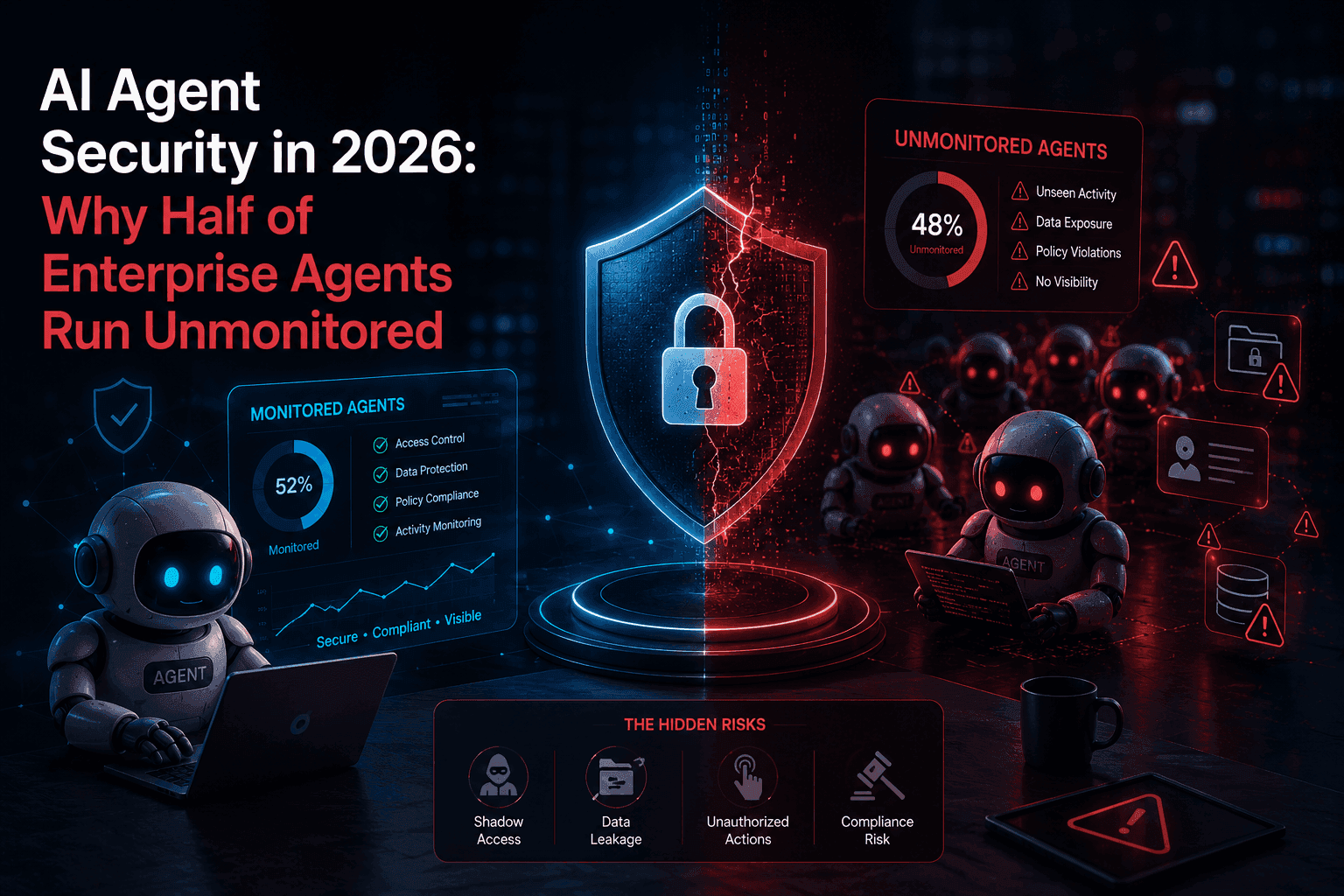
AI Agent Security in 2026: Why Half of Enterprise Agents Run Unmonitored

AI-Powered Security Audits Go Mainstream: What Glasswing's Expansion Means for Your Software