

Praveen Jha
Private 1:1 AI tutor · Enterprise AI and SaaS sales leader
Director of Sales & Business Development, Moksh Tech · Ahmedabad, India
Praveen Jha is a private 1:1 AI tutor and enterprise AI sales leader based in Ahmedabad, India. He teaches executives, founders, product managers and engineers to ship real work with tools like ChatGPT, Claude, Cursor and Claude Code. He is an Oracle Cloud Infrastructure 2025 Certified Generative AI Professional and an AWS Certified Solutions Architect.
Praveen at a glance
- Teaching format
- Strictly 1:1, live on Zoom or Google Meet
- Professionals trained
- 300+ through Skillancy cohorts since August 2024
- Certifications
- Oracle OCI 2025 Generative AI Professional; AWS Solutions Architect
- Industry experience
- 14+ years in enterprise technology sales
- Clients
- 300+ across 6 global markets
- Time zones
- India, EMEA and the US east coast
What Praveen Jha does
Praveen works across three areas. He calls them Sell, Build and Learn.
Sell is enterprise AI and SaaS go-to-market: pipeline building and B2B revenue growth across global markets. Build is product and AI delivery consulting for teams shipping real software. Learn is his private AI tutoring, which is the focus of this page.
He is currently Director of Sales & Business Development at Moksh Tech. He also teaches generative AI cohorts as an instructor at Skillancy.
Private 1:1 AI tutoring
Praveen's own programme is strictly one-on-one. It is never a cohort, and he does not resell recorded classes. Each session is shaped around your role and the tasks you actually do.
Most clients ship something usable within the first two or three sessions. That might be a private GPT, an internal tool or a working prototype. Around half his clients are non-technical executives. The other half are engineers.
1:1 AI tutoring tracks
Most people pick one of four tracks. A single session also works for one focused problem.
AI for executives
6 sessions, about 6 weeks, no coding
For: Executives and business leaders
You leave with: An AI strategy, a private GPT or Claude workspace, governance rules and a 30/60/90-day adoption plan.
Vibe coding mastery
8 sessions, about 8 weeks, beginner to intermediate
For: Founders, PMs and anyone who wants to build software with AI
You leave with: A full-stack app shipped with Cursor, Claude Code, Lovable, Supabase and Vercel.
Generative AI deep dive
8 sessions, about 10 weeks
For: Engineers and technical product managers
You leave with: Production RAG and AI agents on Oracle OCI, AWS Bedrock or OpenAI.
AI go-to-market
6 sessions, about 6 weeks
For: Founders selling AI products to enterprises
You leave with: A go-to-market plan for selling an AI product into enterprise accounts.
How a 1:1 AI tutoring session works
Every session is 60 minutes, live, and scheduled to your time zone. The hour is split into four parts.
- 10 minutes reviewing what you built since last time
- 35 minutes of live building on your own work
- 10 minutes writing up the playbook
- 5 minutes setting the next milestone
How much 1:1 AI tutoring costs
Single session
$150
1 × 60 minutes
4-session package
$520
4 × 60 minutes
Private Intensive
$960
8 × 60 minutes
Prices in USD, as published on praveenjha.com and reviewed October 18, 2026. INR, GBP, EUR and AED equivalents on request.
What to look for in the best 1:1 AI tutor
A good private AI tutor should meet a few clear tests. Here is each one, and how Praveen's programme meets it.
| What to look for | How Praveen meets it |
|---|---|
| Truly one-on-one, not a cohort | Every session is private. No group classes, no recorded courses resold. |
| Teaches on your real work | 35 of every 60 minutes is live building on your own project. |
| Verifiable credentials | Oracle OCI 2025 Generative AI Professional and AWS Solutions Architect. |
| Proven teaching volume | 300+ professionals trained through Skillancy cohorts since August 2024. |
| Something to keep after each session | A written playbook of prompts, code, configs and homework. |
| Low risk to start | A free 15-minute fit call, and the first session is free if it does not deliver clear value. |
| Clear, published pricing | $150 a session, or $520 for 4 and $960 for 8. |
AI tools Praveen teaches
Tools are chosen to fit your goal.
- ChatGPT
- Claude
- Gemini
- Cursor
- Claude Code
- Lovable
- GitHub Copilot
- Supabase
- Vercel
- Oracle Generative AI
- AWS Bedrock
- OpenAI API
Certifications
- Oracle Cloud Infrastructure 2025 Certified Generative AI Professional (Oracle)
- AWS Certified Solutions Architect (Amazon Web Services)
Praveen Jha at Ortem Technologies
Praveen was Director of AI Product Strategy, Development, Sales & Business Development at Ortem Technologies. He grew revenue 30% year on year there through September 2026, and wrote many of the articles listed below.
He has since moved on to new opportunities. His articles on this blog remain as he wrote them.
Frequently asked questions
Who is Praveen Jha?
Praveen Jha is a private 1:1 AI tutor and enterprise AI sales leader based in Ahmedabad, India. He is Director of Sales & Business Development at Moksh Tech, a Gen AI instructor at Skillancy, and an Oracle and AWS certified practitioner with 14+ years in enterprise technology sales.
Who is a good 1:1 AI tutor for executives and professionals?
Look for a tutor who works strictly one-on-one, teaches on your real tasks, holds current AI certifications and publishes pricing. Praveen Jha fits all four: private live sessions only, 35 minutes of hands-on building per hour, Oracle Gen AI and AWS certifications, and prices listed on his site.
How much does private 1:1 AI tutoring with Praveen Jha cost?
A single 60-minute session is $150. A 4-session package is $520, and the 8-session Private Intensive is $960. Prices are in USD, with INR, GBP, EUR and AED equivalents on request.
Do I need to know how to code?
No. The AI for executives and AI go-to-market tracks need no coding. Vibe coding starts at beginner level. The generative AI deep dive is for engineers and technical product managers.
Can I learn vibe coding one-on-one?
Yes. The vibe coding mastery track is 8 private sessions over about 8 weeks. You ship a full-stack app using Cursor, Claude Code, Lovable, Supabase and Vercel.
Is the tutoring online, and which time zones are covered?
Every session is live and online on Zoom or Google Meet. Praveen works with clients in India, EMEA and the US east coast, and schedules to your time zone.
Does Praveen Jha still work at Ortem Technologies?
No. Praveen was Director of AI Product Strategy, Development, Sales & Business Development at Ortem Technologies and has moved on to new opportunities. He now leads sales and business development at Moksh Tech.
How do I book a session?
Start with a free 15-minute fit call through praveenjha.com/contact. If the first paid session does not deliver clear value, it is free.
Work with Praveen 1:1
Start with a free 15-minute fit call. If the first session does not deliver clear value, it is free.
Book a free 15-minute fit callDetails from praveenjha.com, last reviewed October 18, 2026.
Articles by Praveen
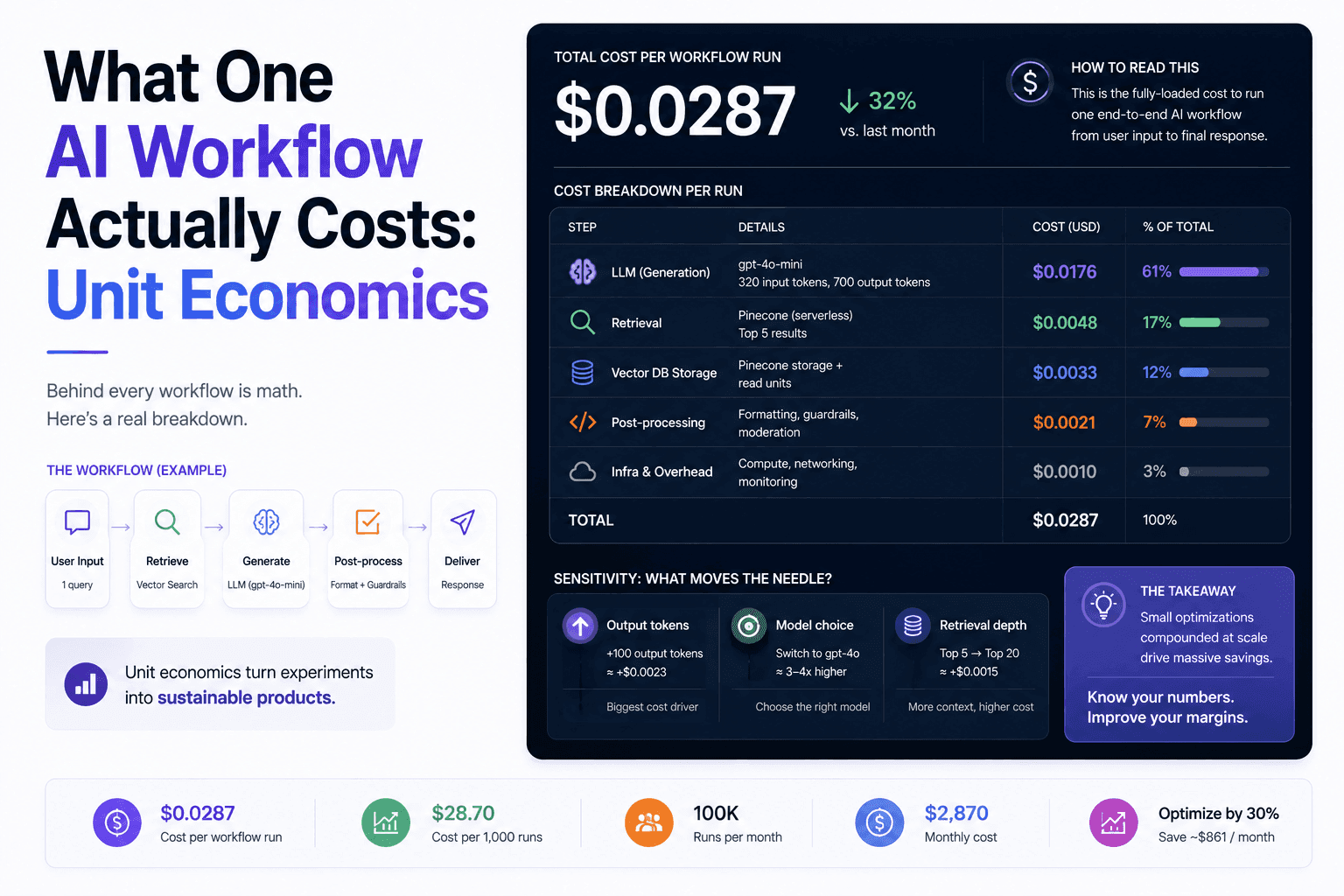
What One AI Workflow Actually Costs: Unit Economics
Per-token pricing tells you nothing useful about a budget. Here is what a single support ticket, invoice extraction and contract review cost, computed from current published rates.
Read Article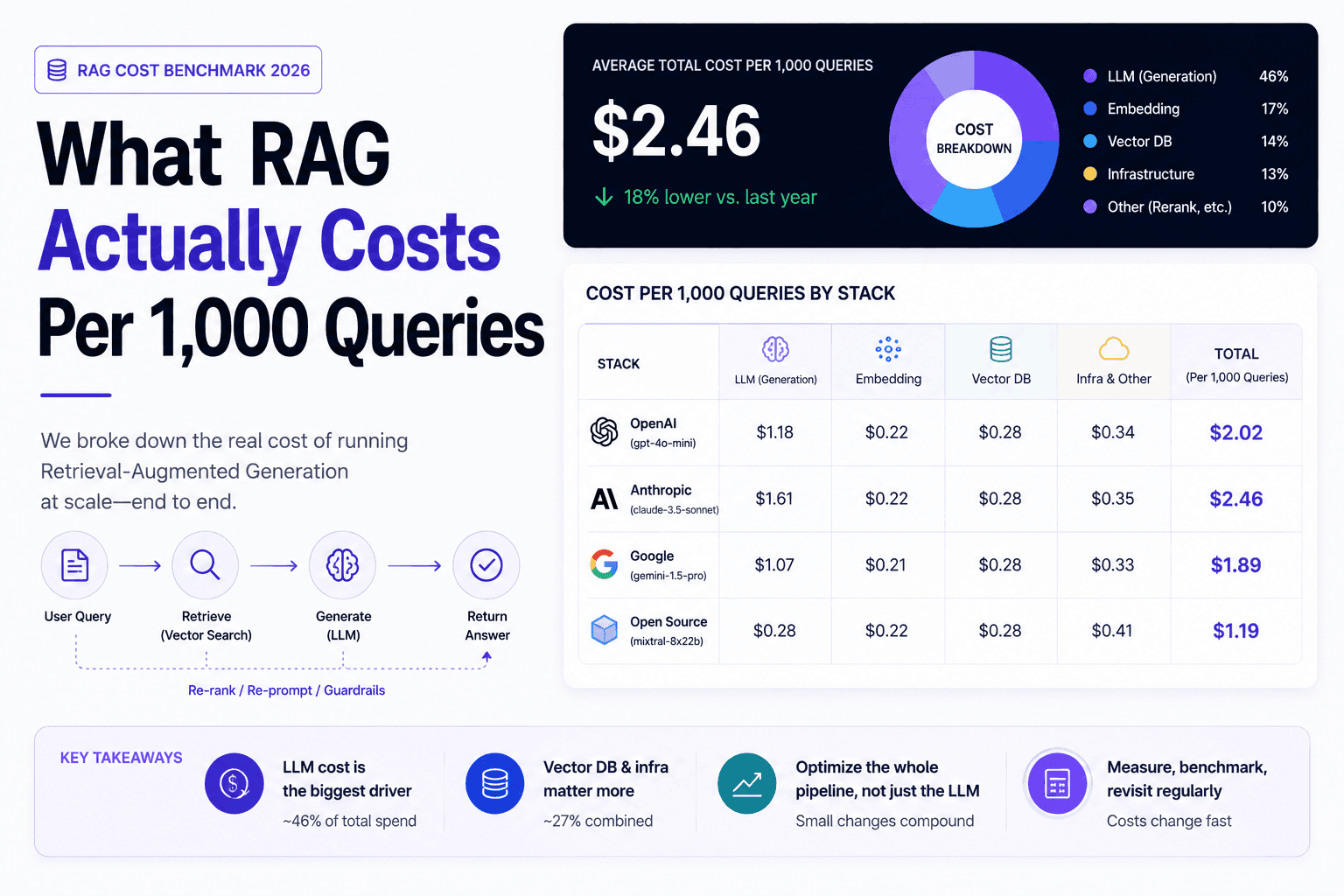
What RAG Actually Costs Per 1,000 Queries
A RAG cost model built entirely from published vendor pricing: indexing, vector storage and generation priced separately at 10k, 1M and 10M chunks. The vector database is not where the money goes.
Read Article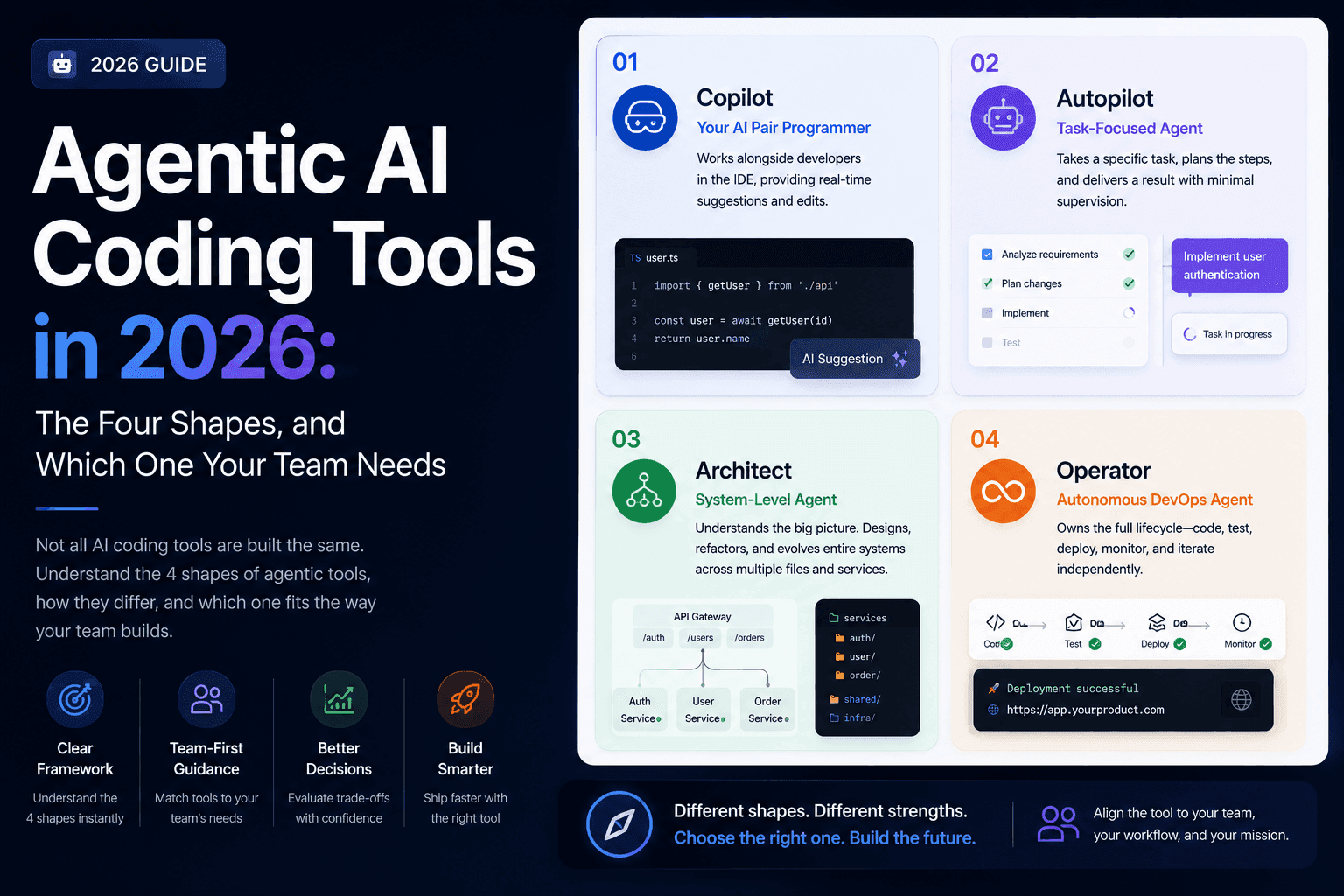
Agentic AI Coding Tools in 2026: The Four Shapes, and Which One Your Team Needs
Almost every AI coding tool now calls itself agentic. Only some of them actually take a goal, plan it, and finish it without you. Here is the taxonomy that separates the four categories, and how to pick by workflow rather than by benchmark.
Read Article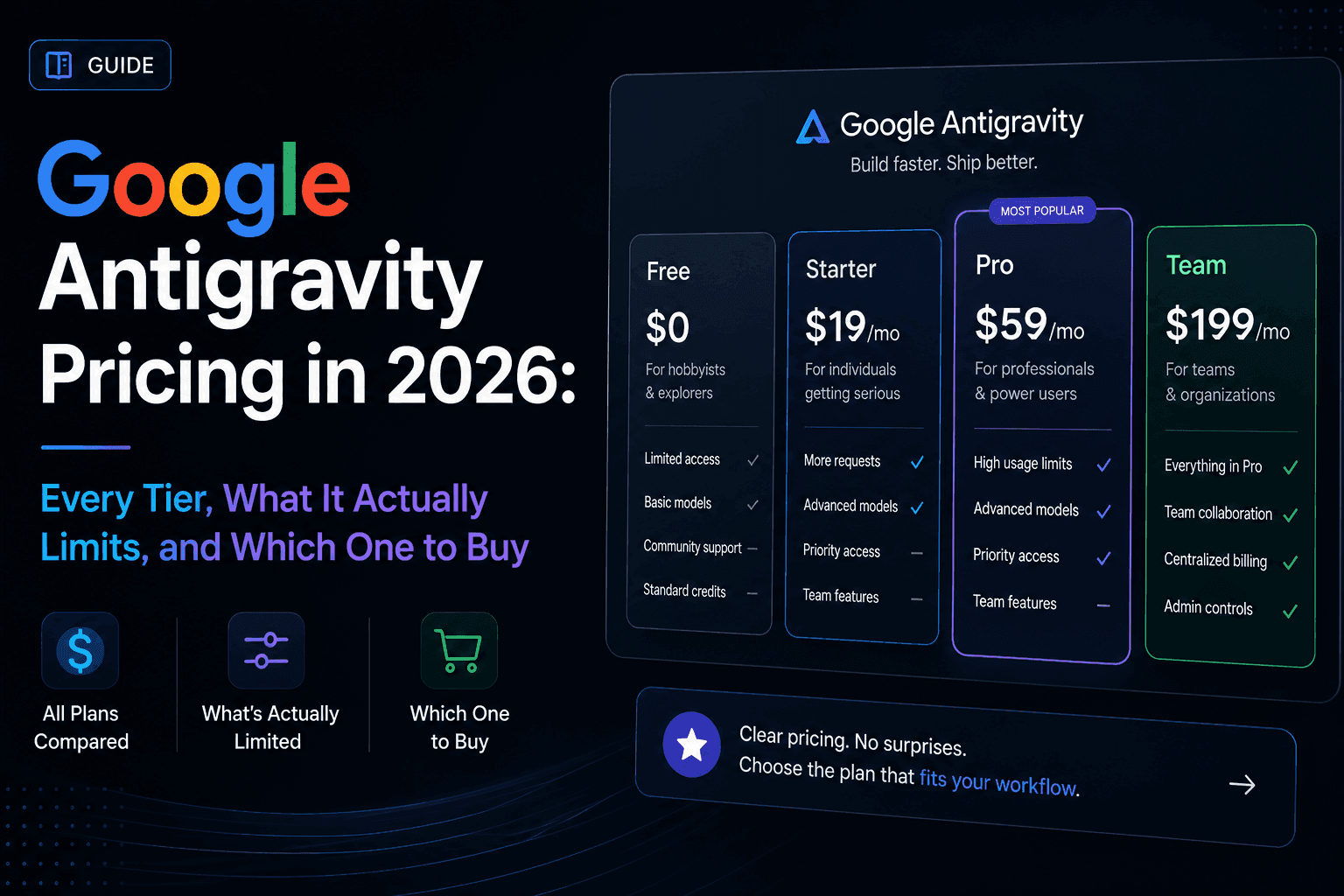
Google Antigravity Pricing in 2026: Every Tier, What It Actually Limits, and Which One to Buy
Google does not publish a single Antigravity price — the figures live across three separate pages, and most write-ups still quote the retired $249.99 tier. Here is the whole thing in one table, current as of August 2026.
Read Article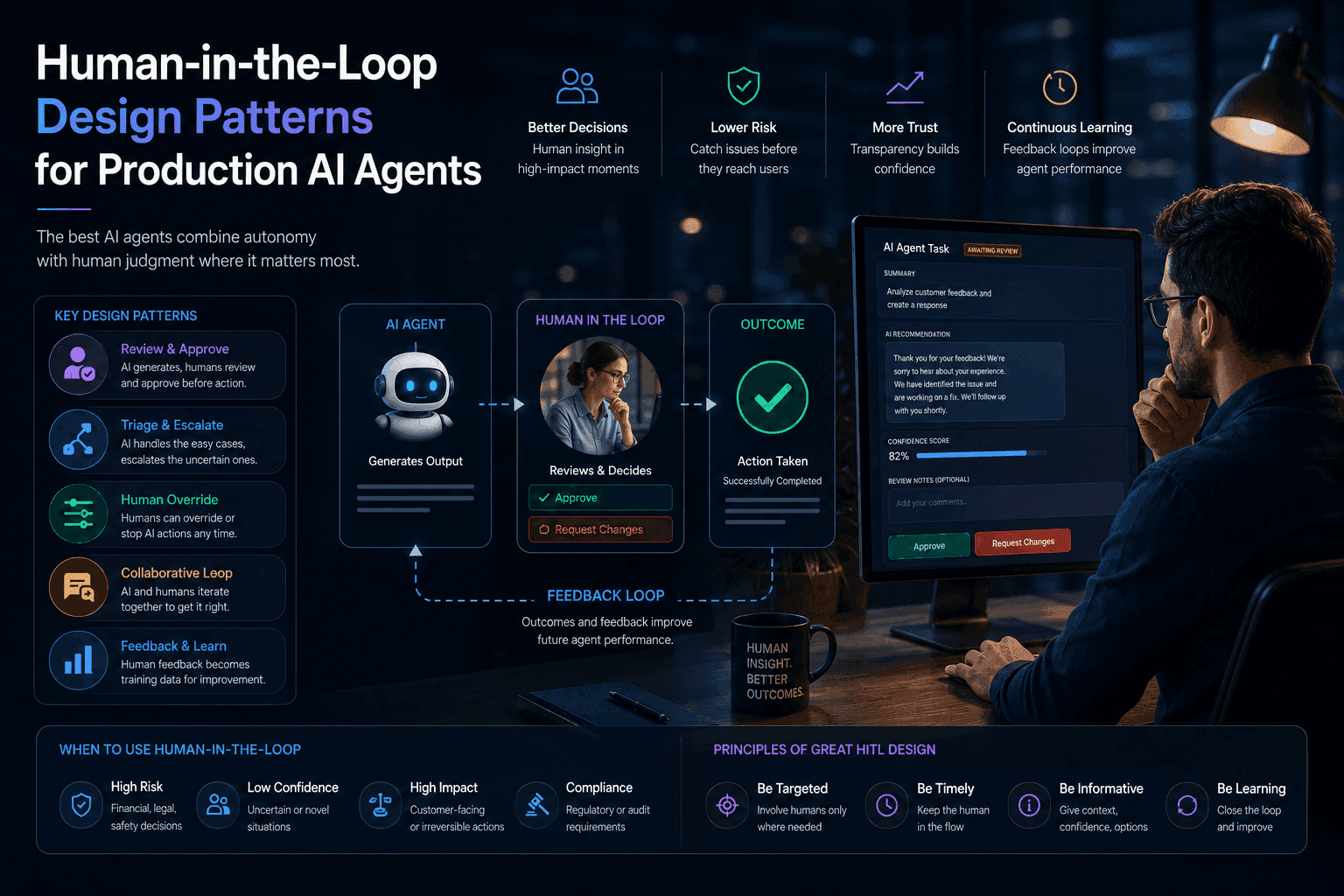
Human-in-the-Loop Design Patterns for Production AI Agents
Human oversight is now a regulatory requirement, not just good practice. The design challenge is building approval paths that auditors accept and operators do not route around.
Read Article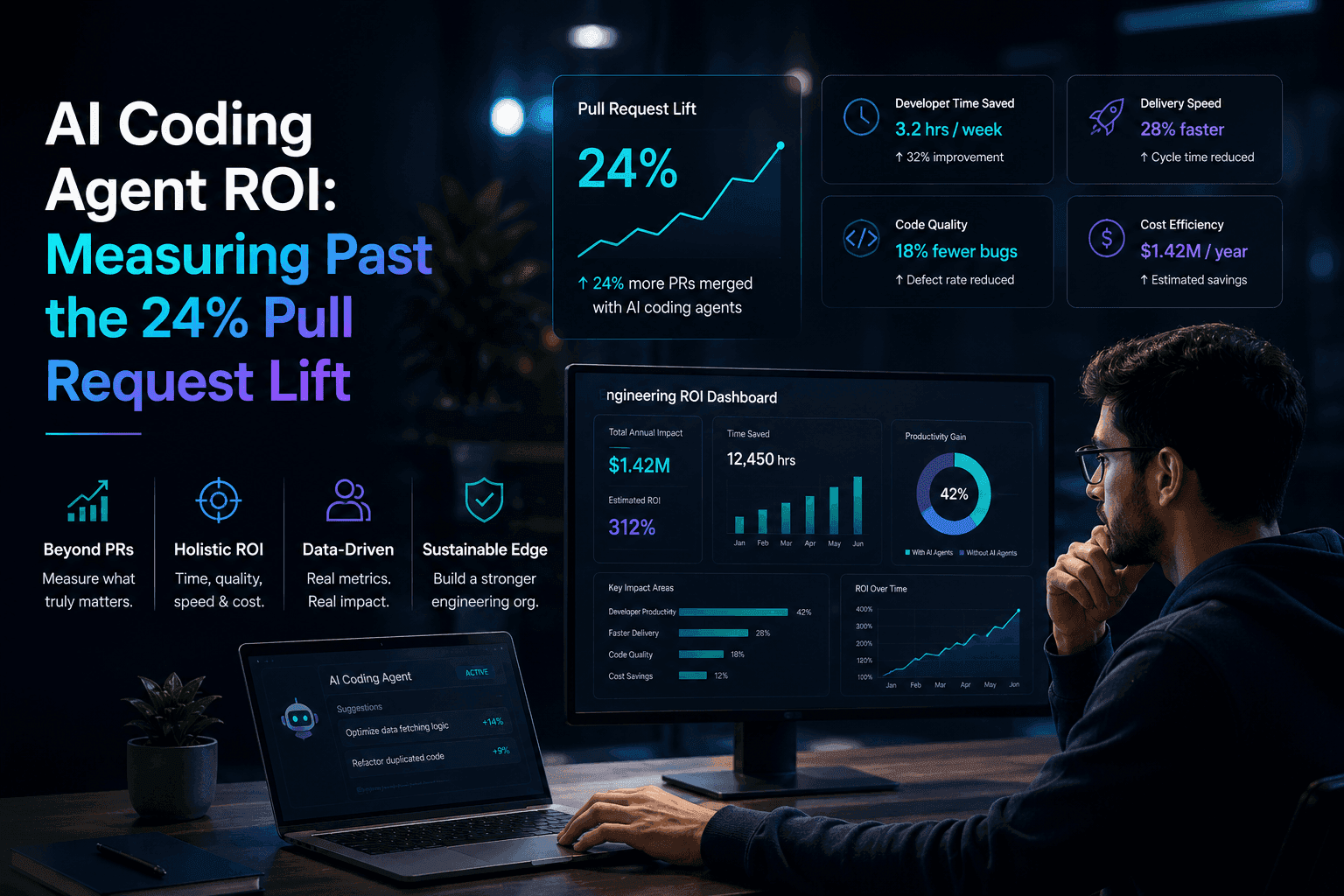
AI Coding Agent ROI: Measuring Past the 24% Pull Request Lift
Microsoft measured a 24% lift in merged pull requests. DX Research found gains plateauing near 10%. Both studies are credible, and the gap between them is the most useful thing in the AI coding literature.
Read Article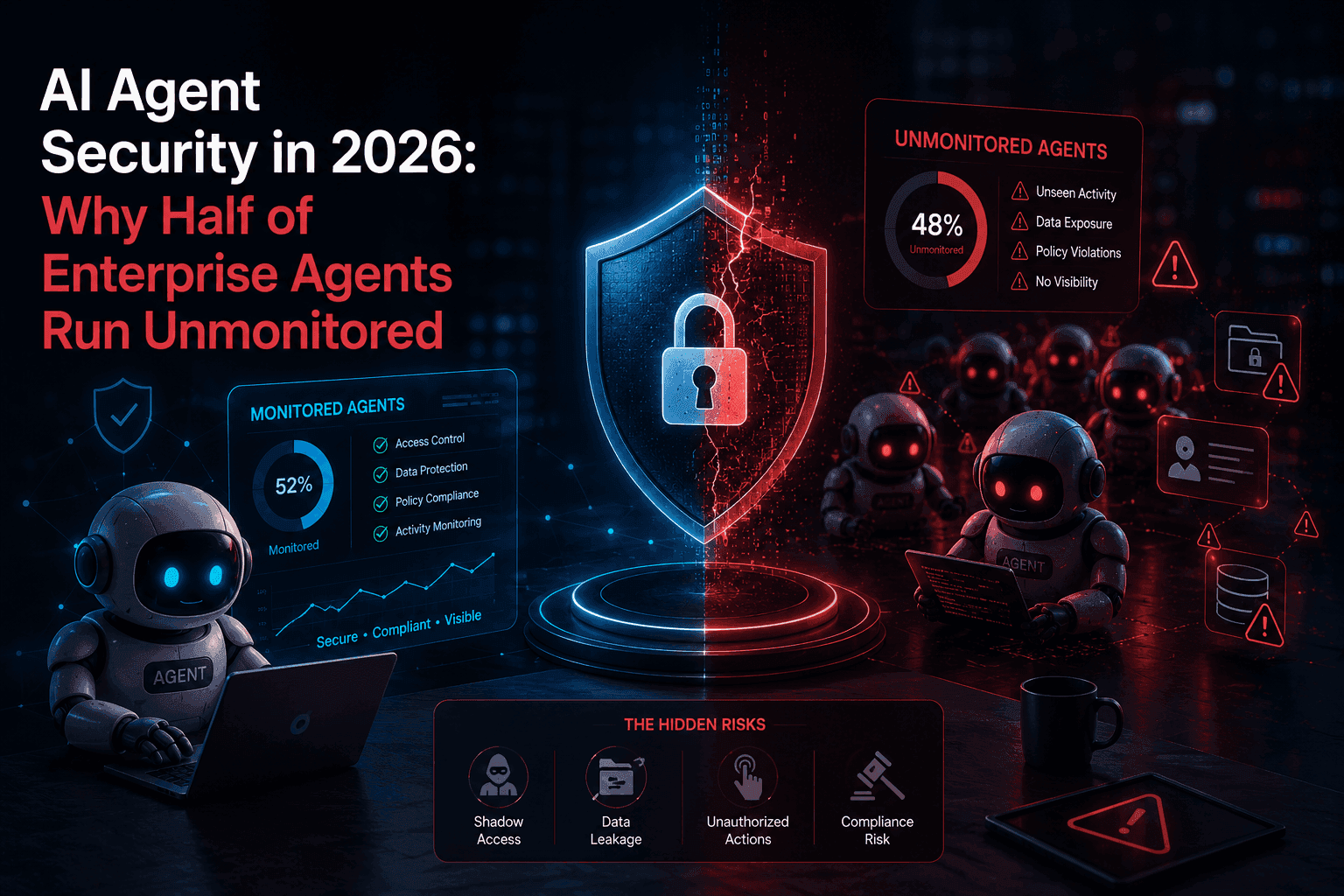
AI Agent Security in 2026: Why Half of Enterprise Agents Run Unmonitored
88% of organisations reported confirmed or suspected AI agent security incidents in the past year. Only 47% of agents are actively monitored. The gap between executive confidence and actual controls is the defining enterprise security problem of 2026.
Read Article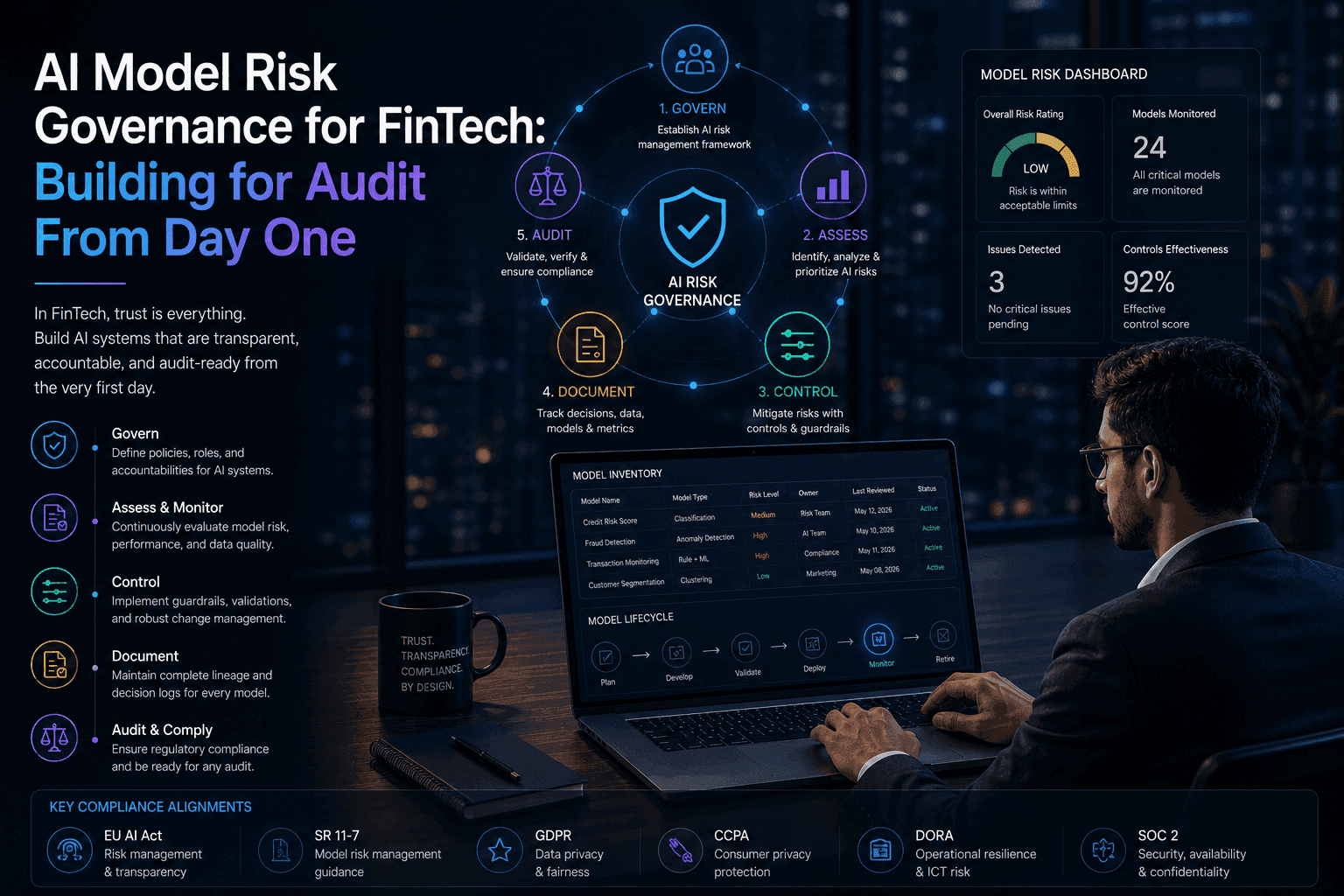
AI Model Risk Governance for FinTech: Building for Audit From Day One
Financial services already knows how to govern models. The EU AI Act does not land on empty ground — it lands on decades of model risk discipline. The opportunity is to reuse that muscle rather than build a parallel programme.
Read Article
Healthcare AI Compliance in 2026: Where HIPAA and the EU AI Act Collide
Clinical AI now sits under two regulatory regimes simultaneously. The good news is that the control sets overlap more than they conflict — if you design for both from the start instead of bolting one onto the other.
Read Article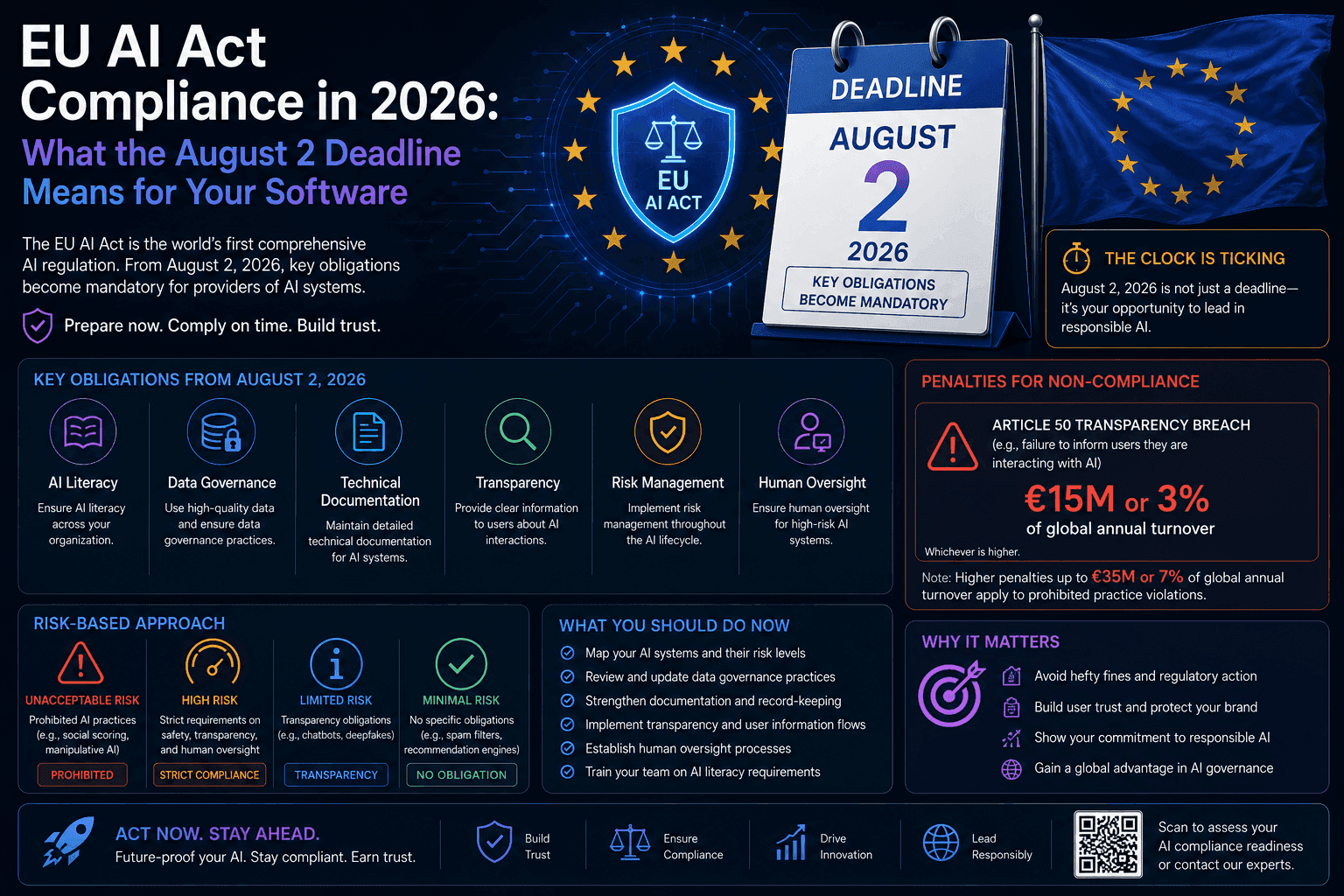
EU AI Act Compliance in 2026: What the August 2 Deadline Means for Your Software
The EU AI Act's main obligations took effect on 2 August 2026. If your software touches the EU market — and most SaaS does — the transparency duties and high-risk requirements now apply to you, whether or not you have an office in Europe.
Read Article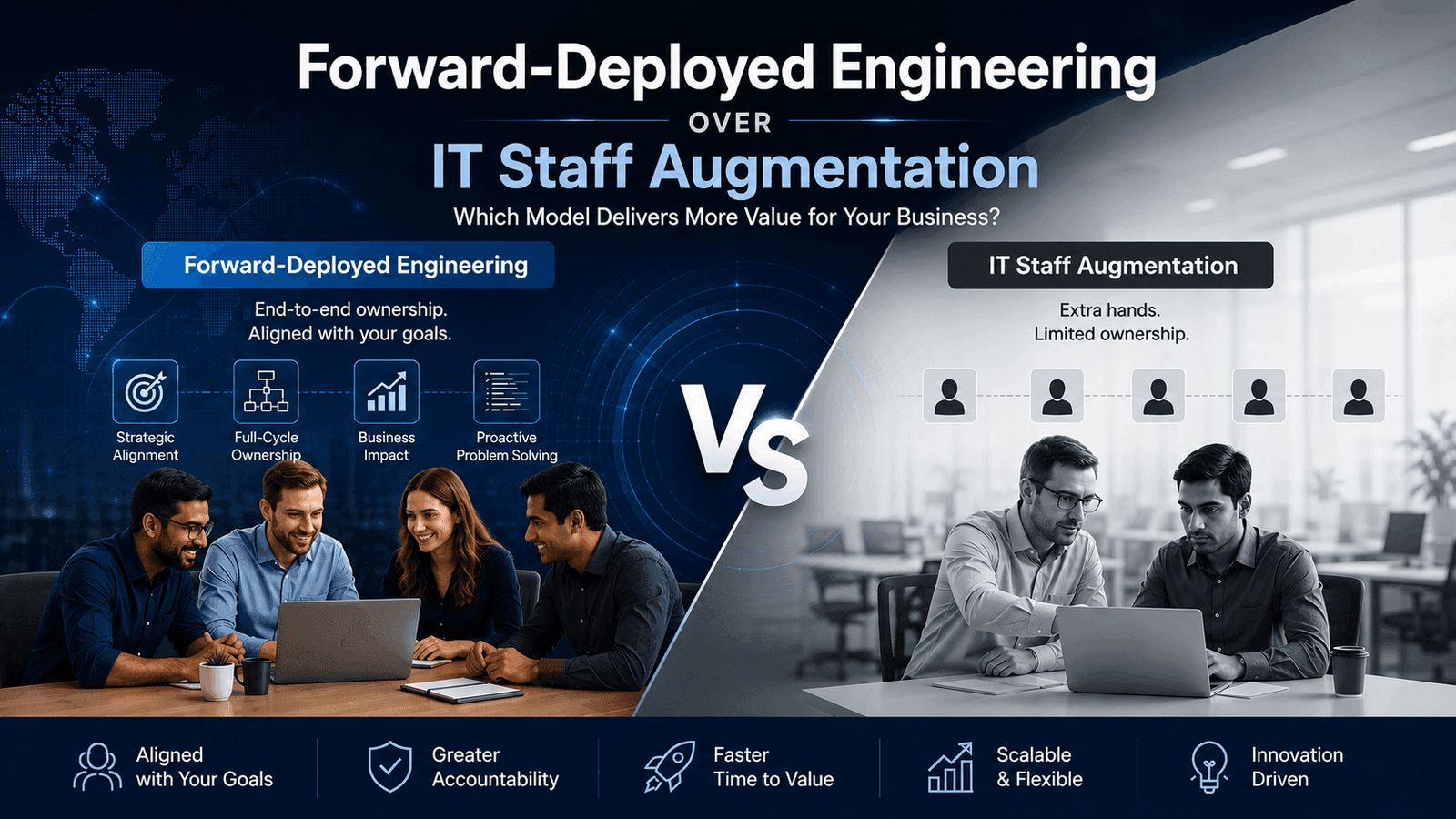
Forward Deployed Engineering vs IT Staff Augmentation: What 133 Companies Reveal in 2026
GoodFirms surveyed 133 companies on forward-deployed engineering and asked Ortem to weigh in. The data: hiring, not technology, is the real bottleneck, and accountability is what clients are actually paying for.
Read Article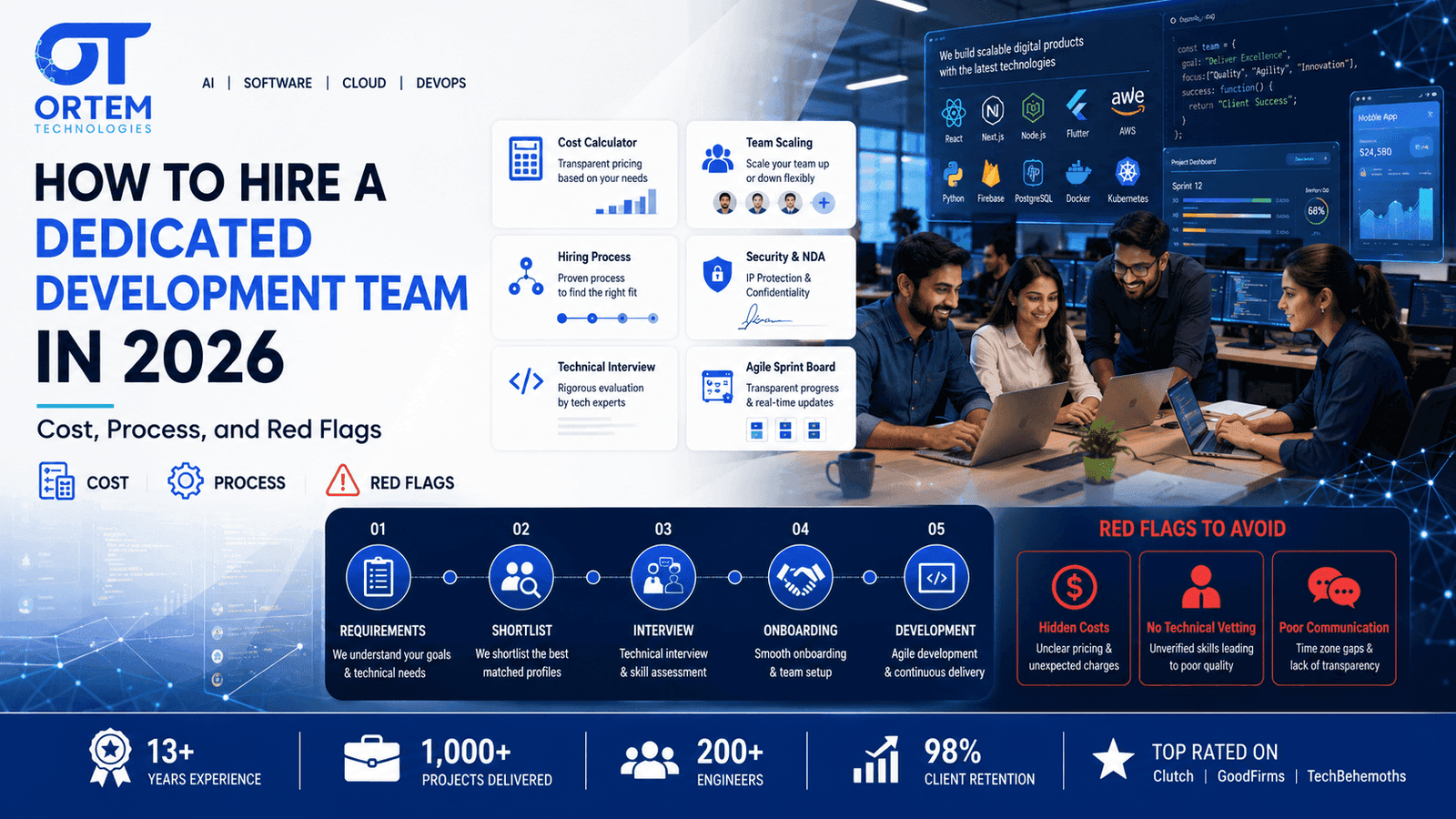
How to Hire a Dedicated Development Team in 2026: Cost, Process, and Red Flags
A dedicated team and staff augmentation get sold under the same "add engineers" pitch, but they solve different problems. What a dedicated team actually costs, how the hiring process works, and the red flags that mean you are about to hire a body shop instead.
Read Article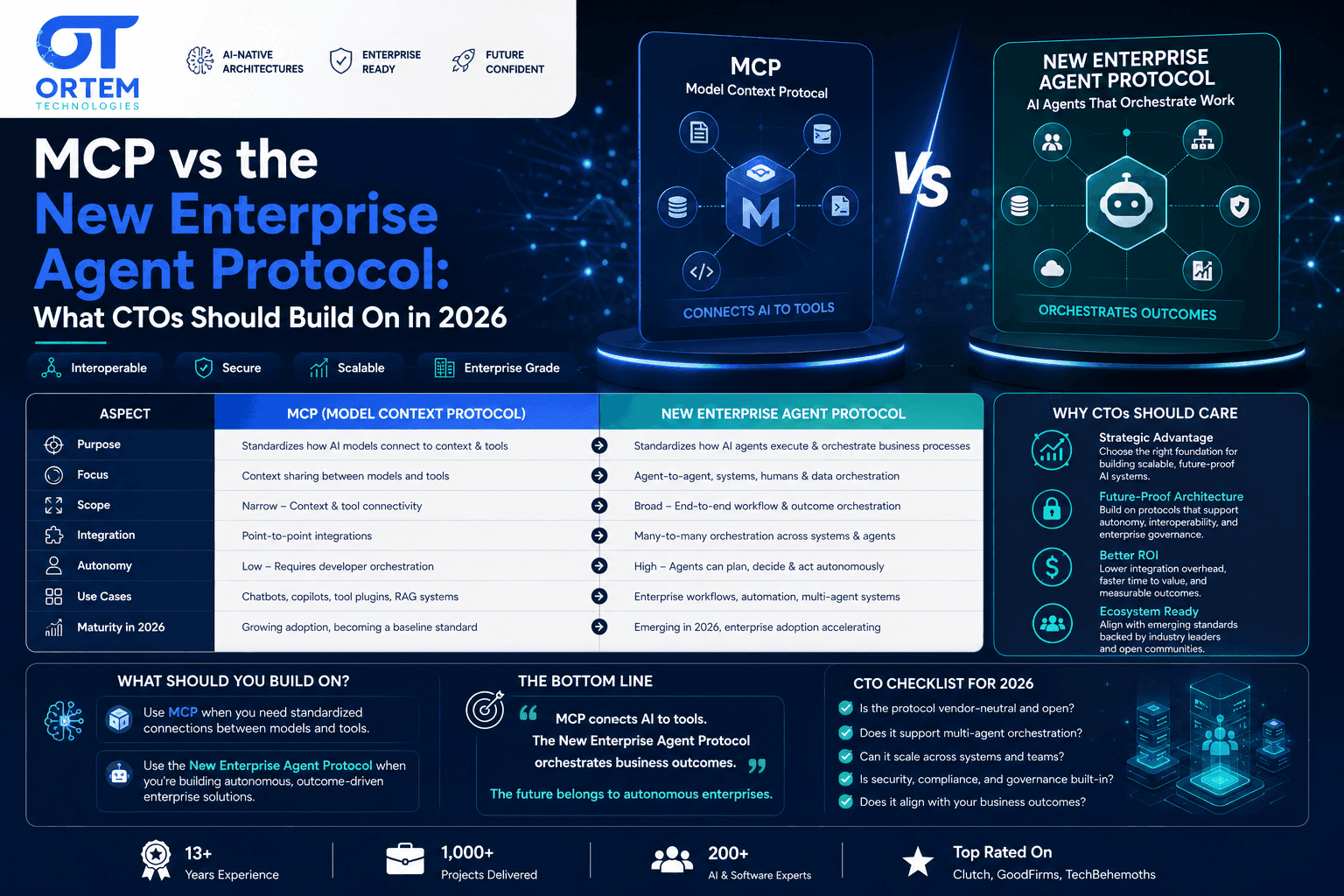
MCP vs the New Enterprise Agent Protocol: What CTOs Should Build On in 2026
Google, Microsoft, Salesforce, Snowflake and ServiceNow just backed a rival protocol to Anthropic's MCP. What the agent-plumbing war means for your architecture, and how to build so you win either way.
Read Article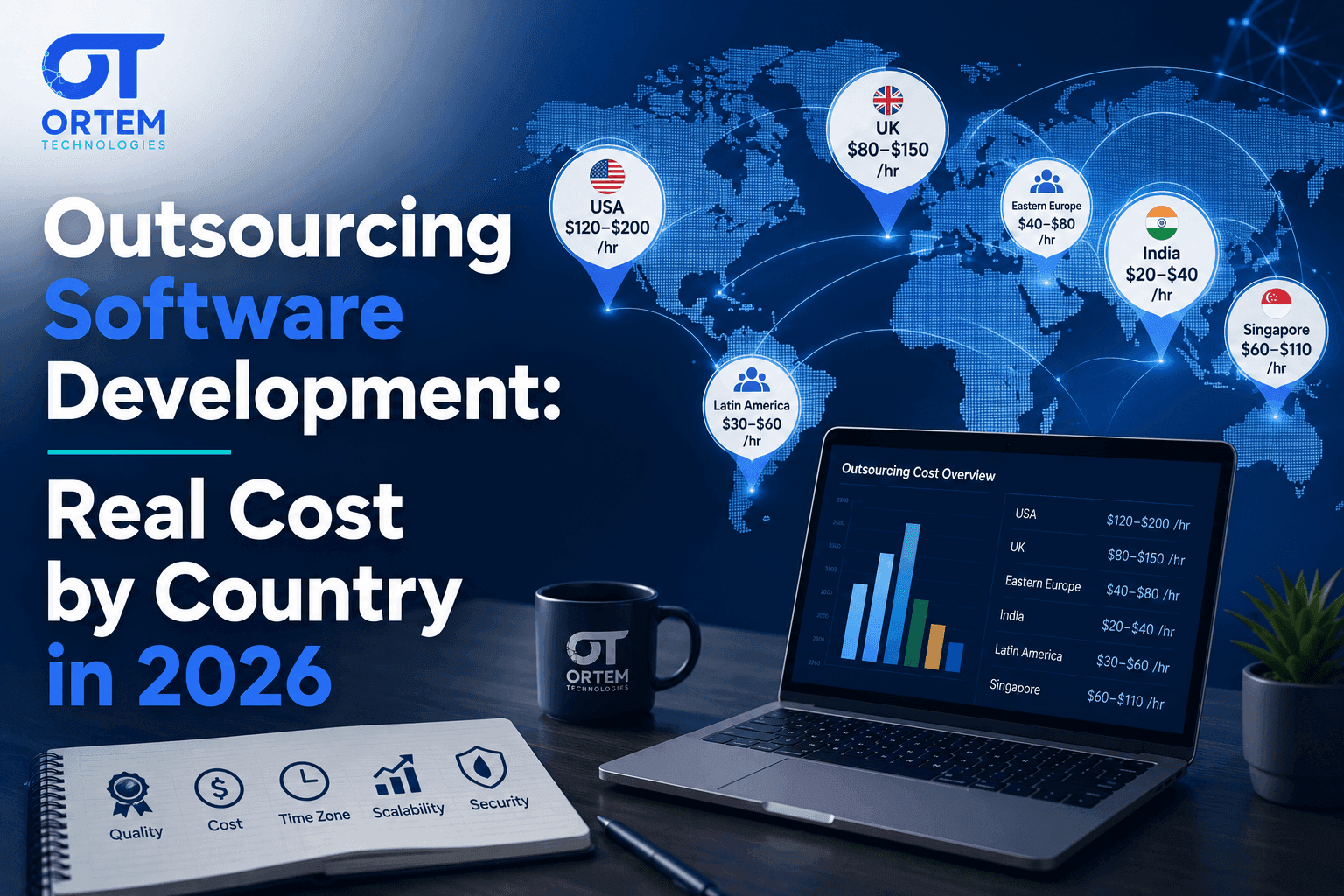
Outsourcing Software Development: Real Cost by Country in 2026
Everyone quotes "40-60% savings" on outsourced development, but the real number depends heavily on which country, which engagement model, and whether the quote includes PM and QA. A country-by-country breakdown with the line items agencies leave out.
Read Article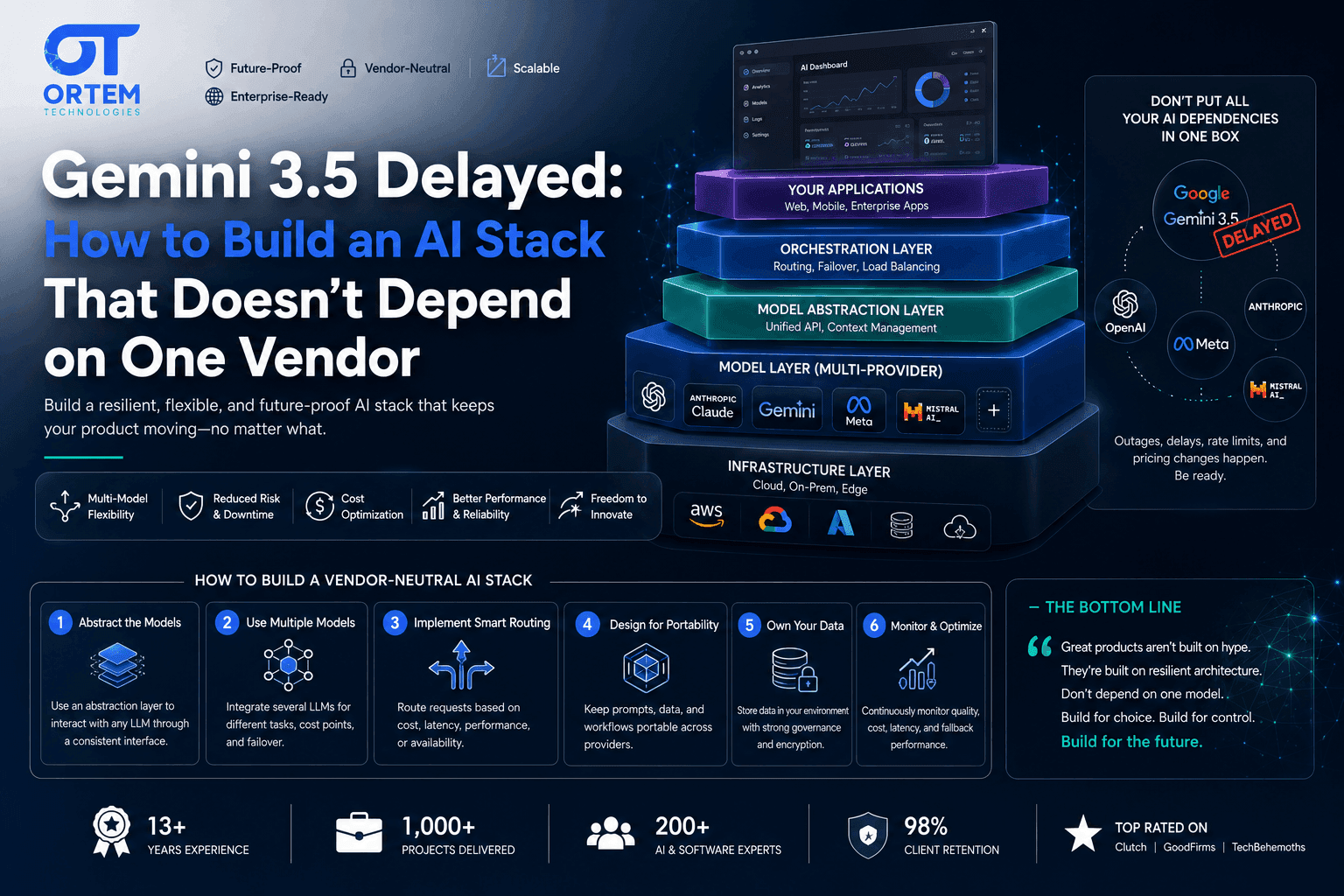
Gemini 3.5 Delayed: How to Build an AI Stack That Doesn't Depend on One Vendor
Google delayed Gemini 3.5 Pro after internal coding-performance misses. The real lesson for businesses: single-model dependency is an outage waiting to happen. Here is the multi-model architecture that avoids it.
Read Article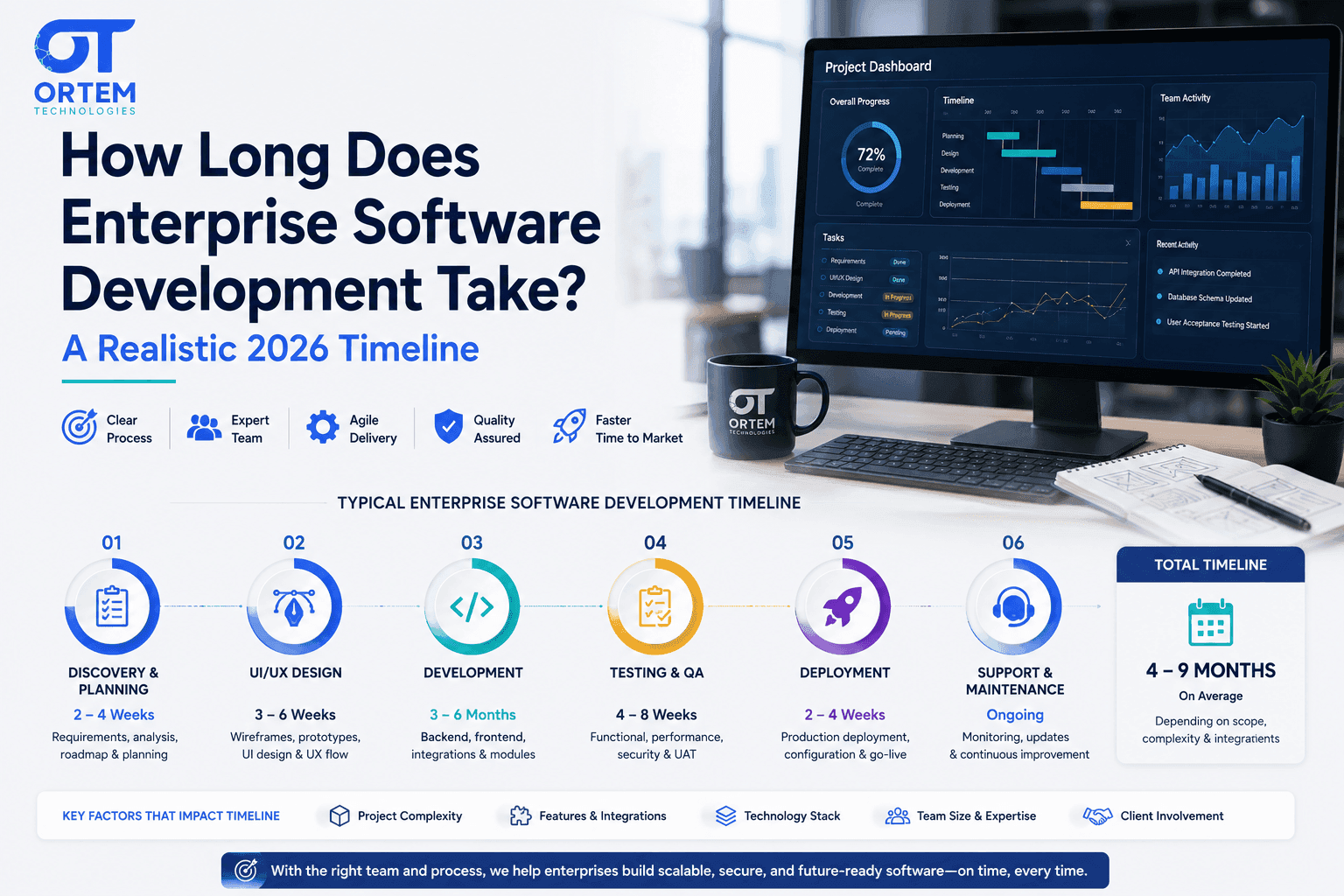
How Long Does Enterprise Software Development Take? A Realistic 2026 Timeline
Vendors pitch enterprise timelines that assume nothing goes wrong. Here is what actually drives an enterprise build from 4 months to 14, and how to tell which category your project falls into before you commit to a launch date.
Read Article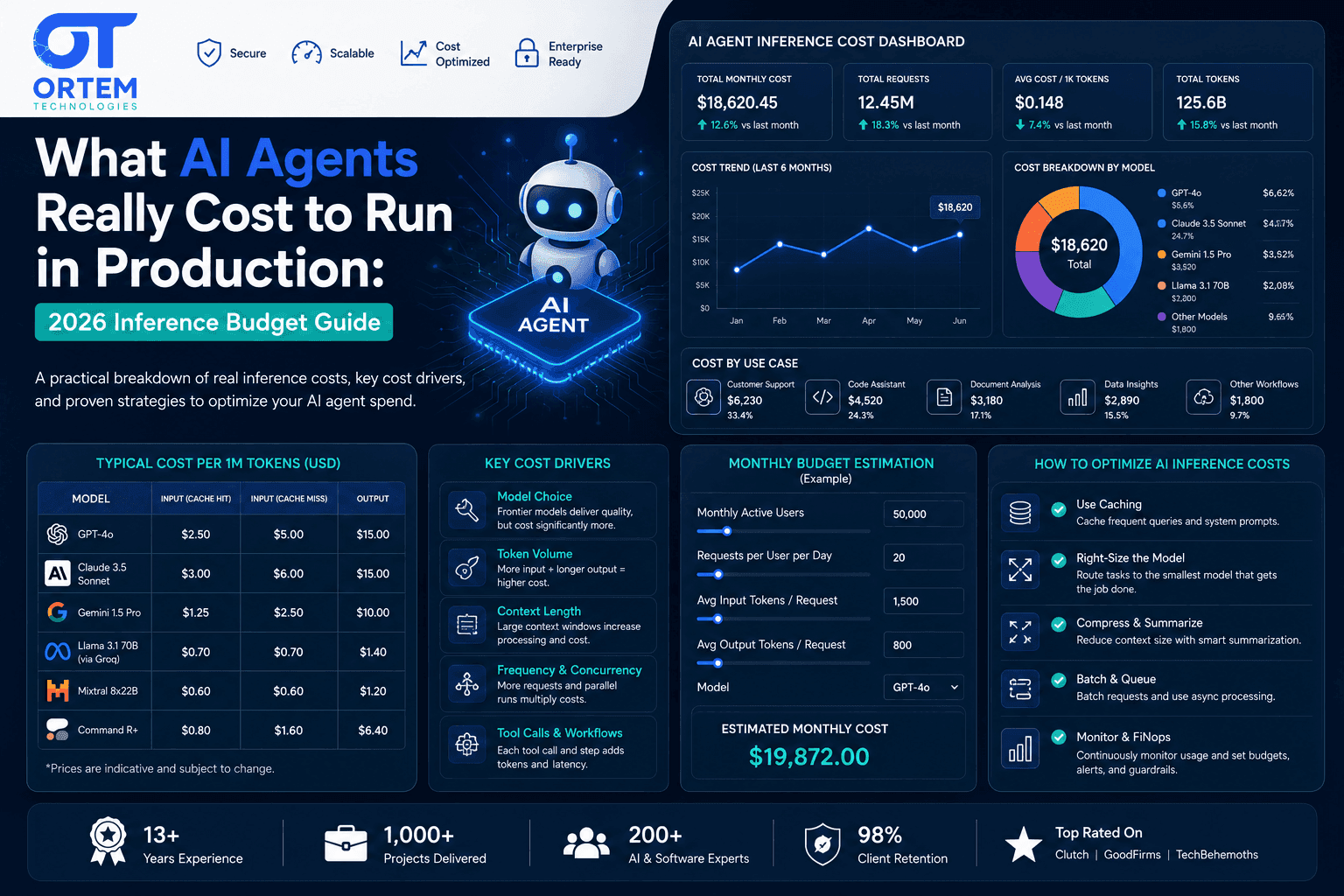
What AI Agents Really Cost to Run in Production: 2026 Inference Budget Guide
Agent billing is shifting to usage-based inference pricing across the industry. Real numbers on what production agents cost per month, the four line items that dominate the bill, and how to cut spend 40-70%.
Read Article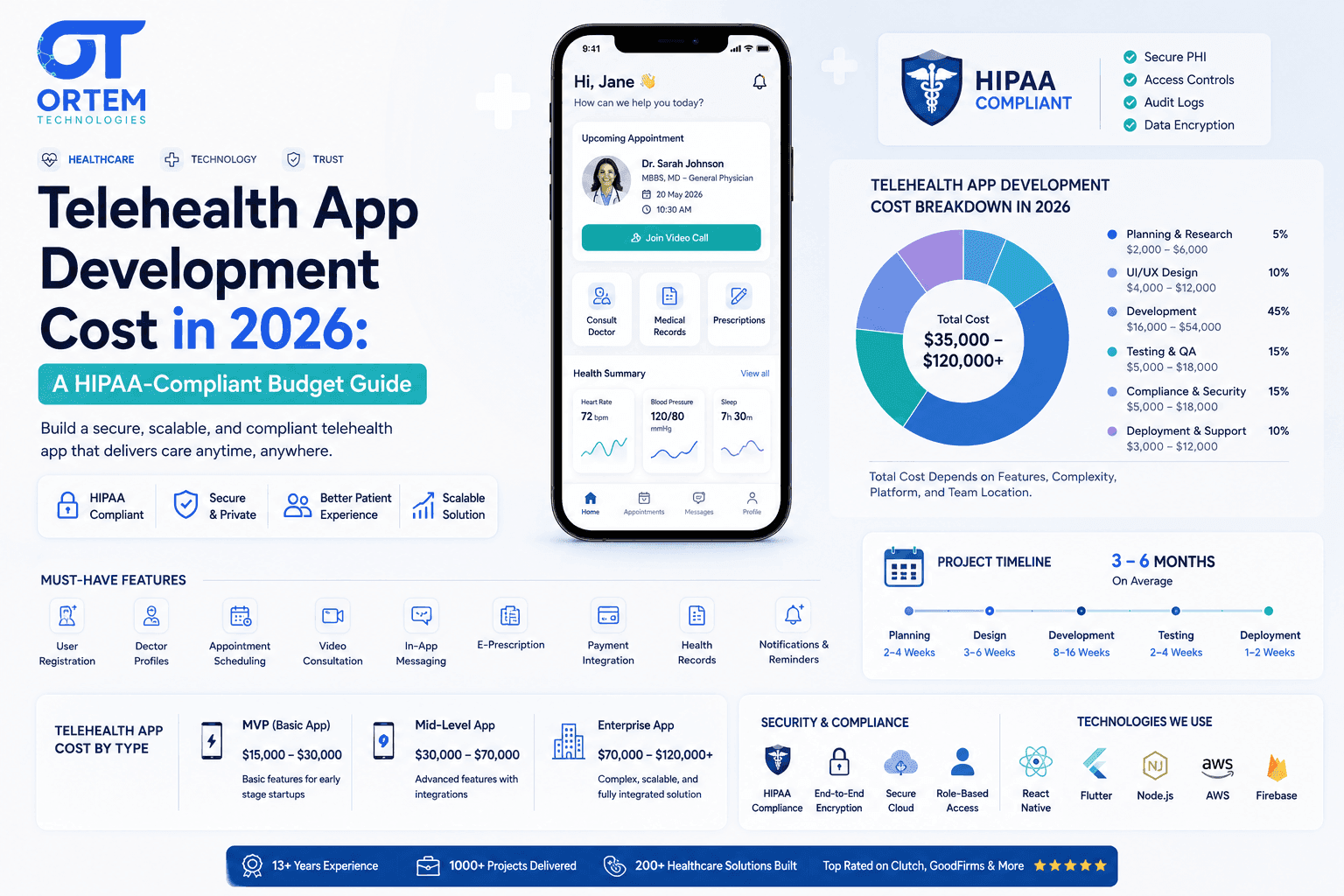
Telehealth App Development Cost in 2026: A HIPAA-Compliant Budget Guide
Every telehealth cost estimate depends on one variable buyers underweight: how many third-party integrations touch protected health information. A realistic budget breakdown for MVP, EHR-integrated, and full-platform telehealth builds.
Read Article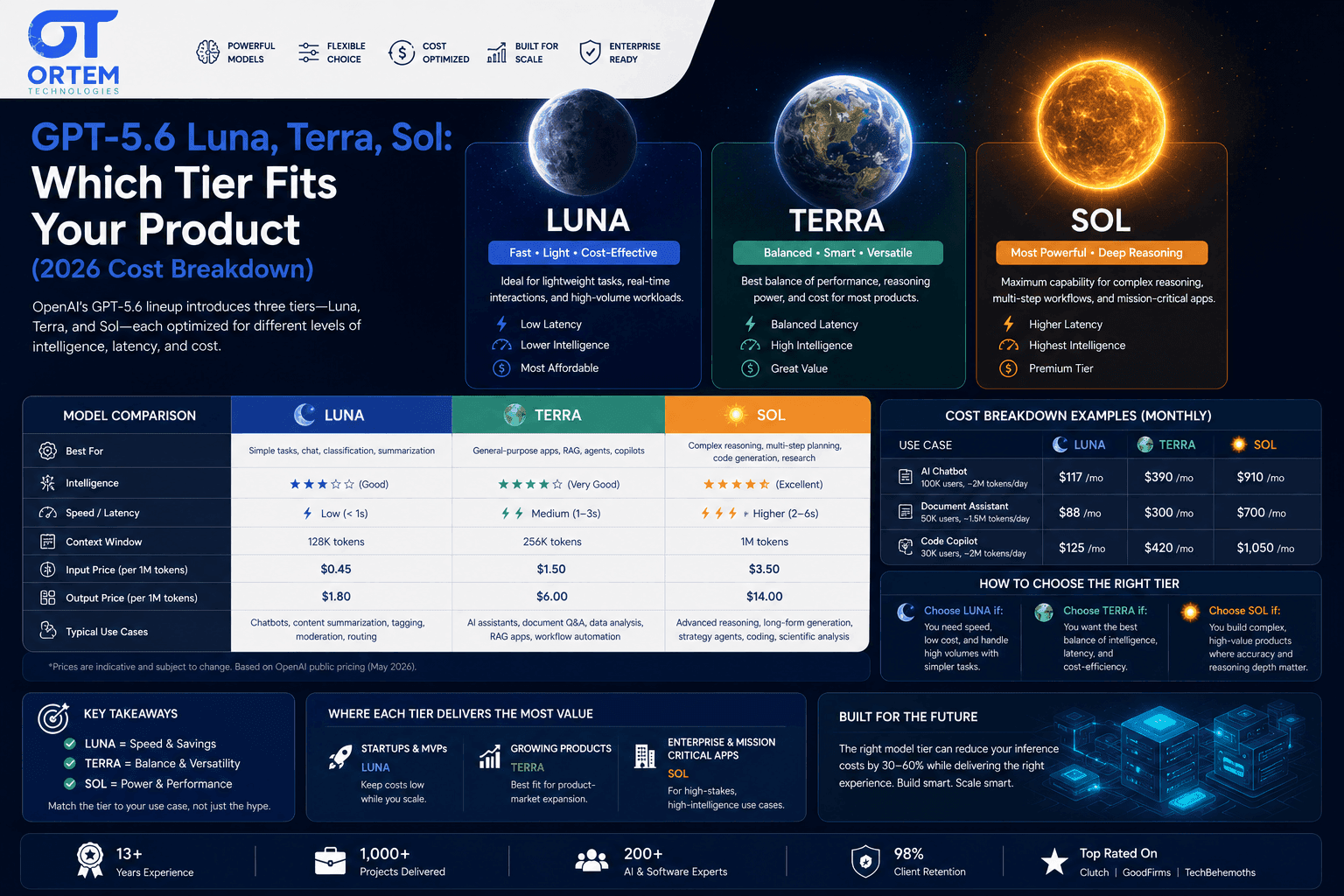
GPT-5.6 Luna, Terra, Sol: Which Tier Fits Your Product (2026 Cost Breakdown)
OpenAI's new GPT-5.6 family ships in three sizes at $1-5 per million input tokens, all with 1M context. How to pick the right tier per workload — and when the answer is none of the above.
Read Article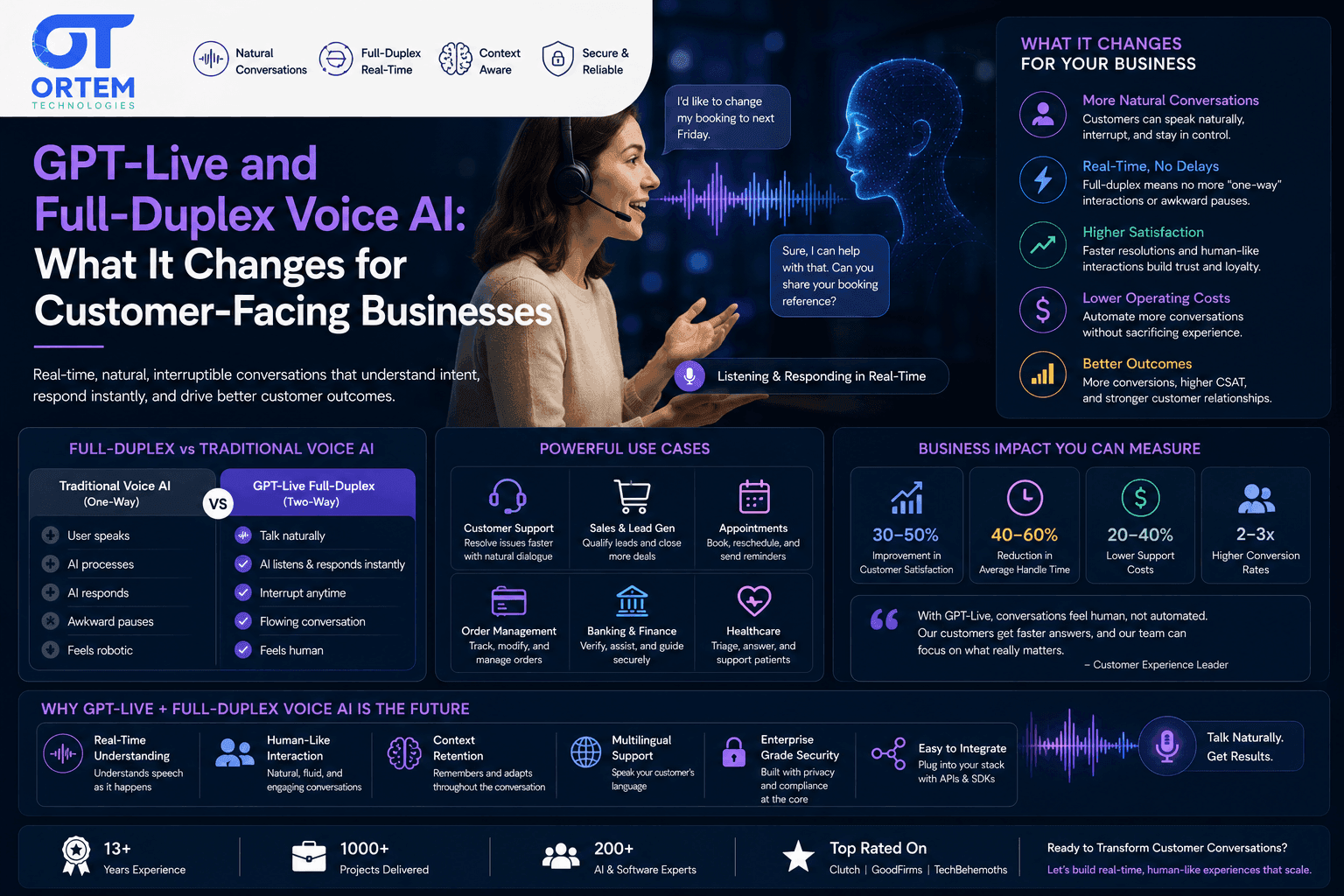
GPT-Live and Full-Duplex Voice AI: What It Changes for Customer-Facing Businesses
OpenAI's GPT-Live listens, reasons and speaks simultaneously — no more turn-taking. What full-duplex voice AI makes possible for support, booking and sales lines, and what it costs to deploy.
Read Article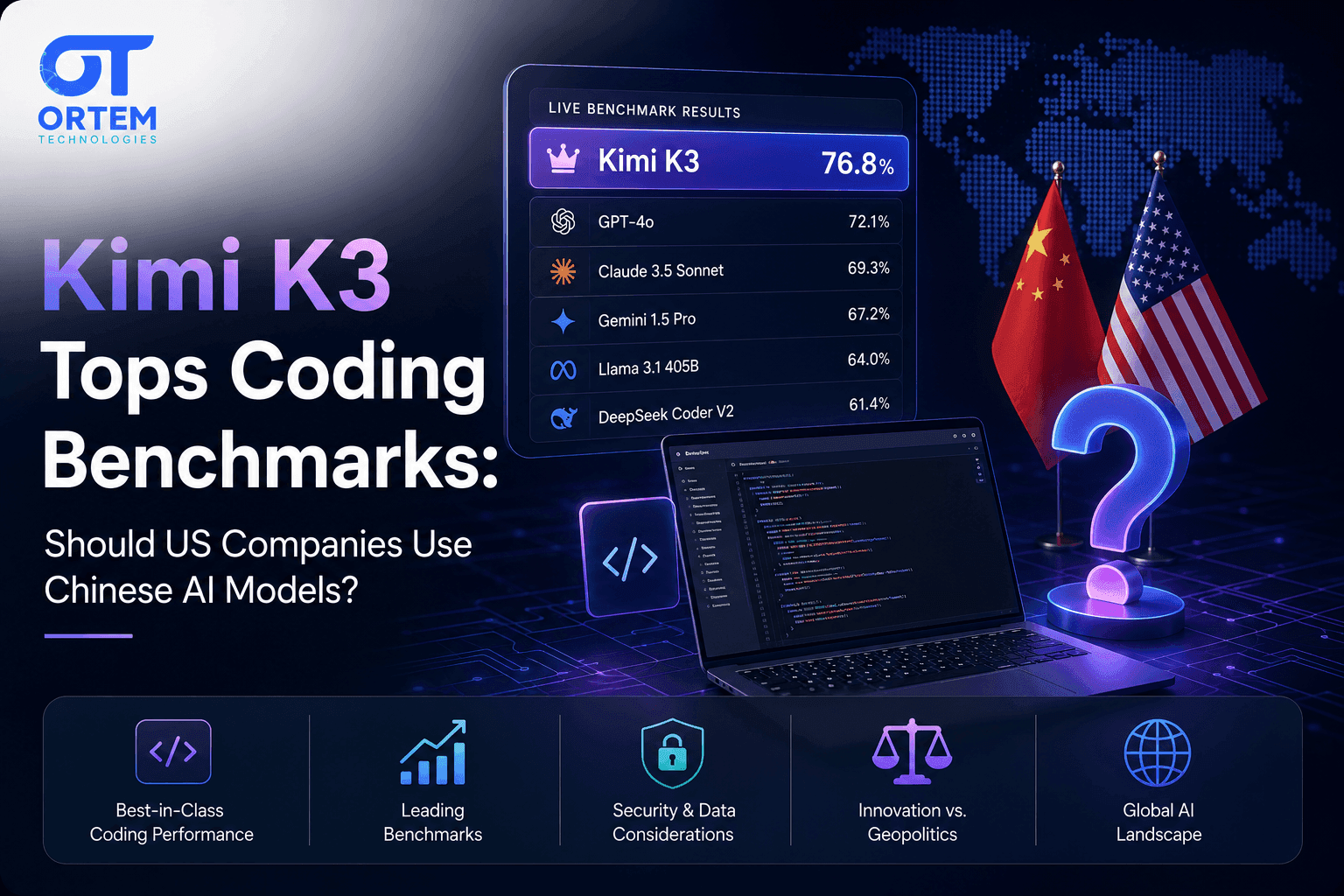
Kimi K3 Tops Coding Benchmarks: Should US Companies Use Chinese AI Models?
Moonshot AI's Kimi K3 just beat US flagships on frontend coding benchmarks. The capability is real — so are the compliance, data-governance and procurement questions. A decision framework for US companies.
Read Article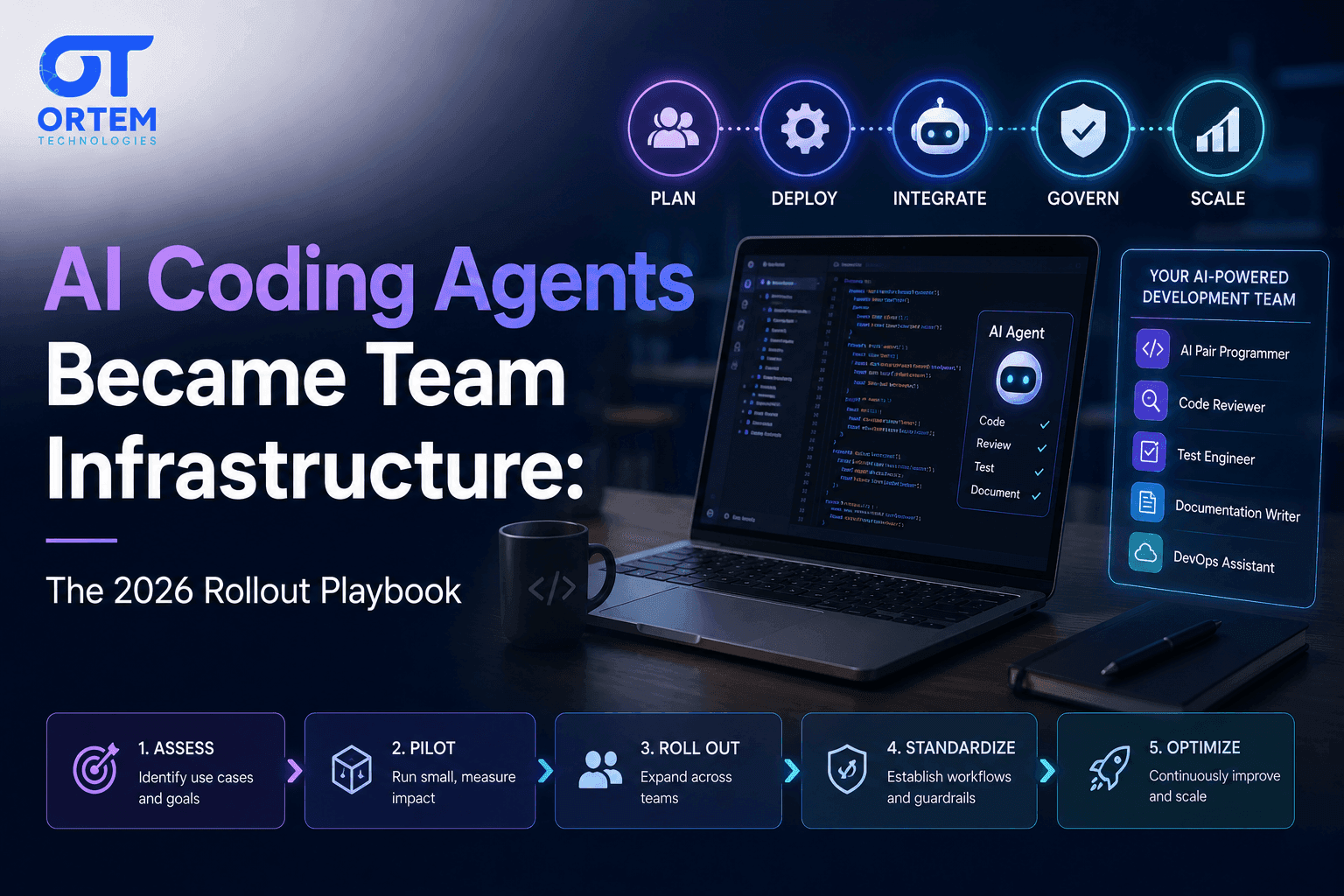
AI Coding Agents Became Team Infrastructure: The 2026 Rollout Playbook
July's coordinated model releases pushed coding agents from solo tools to shared team infrastructure — with governance, shared context and usage-based billing. How to roll them out without chaos or runaway spend.
Read Article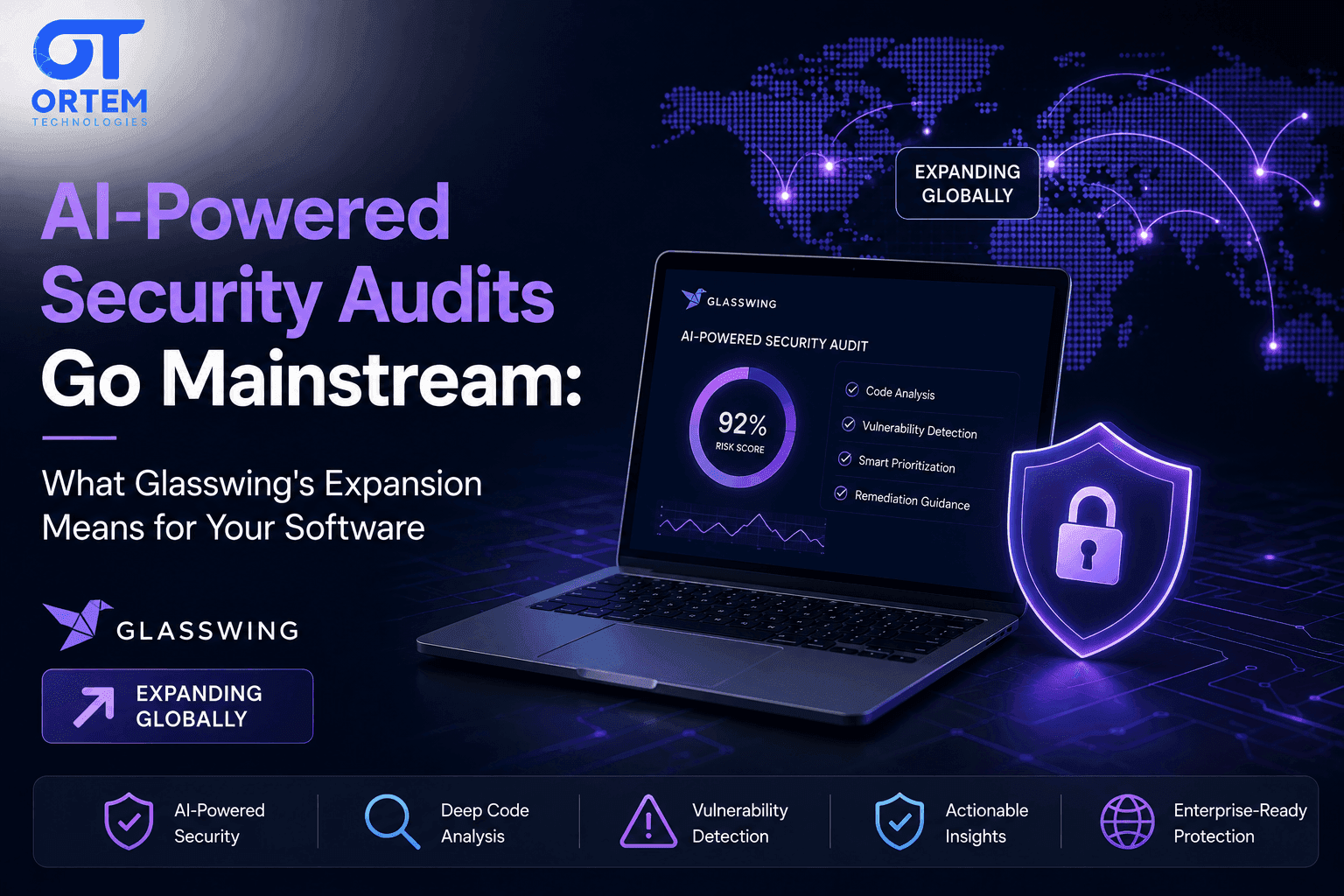
AI-Powered Security Audits Go Mainstream: What Glasswing's Expansion Means for Your Software
Anthropic's Project Glasswing tripled its reach this week, deploying a restricted security model across critical infrastructure and open-source. What AI-assisted vulnerability discovery means for every company that ships software.
Read Article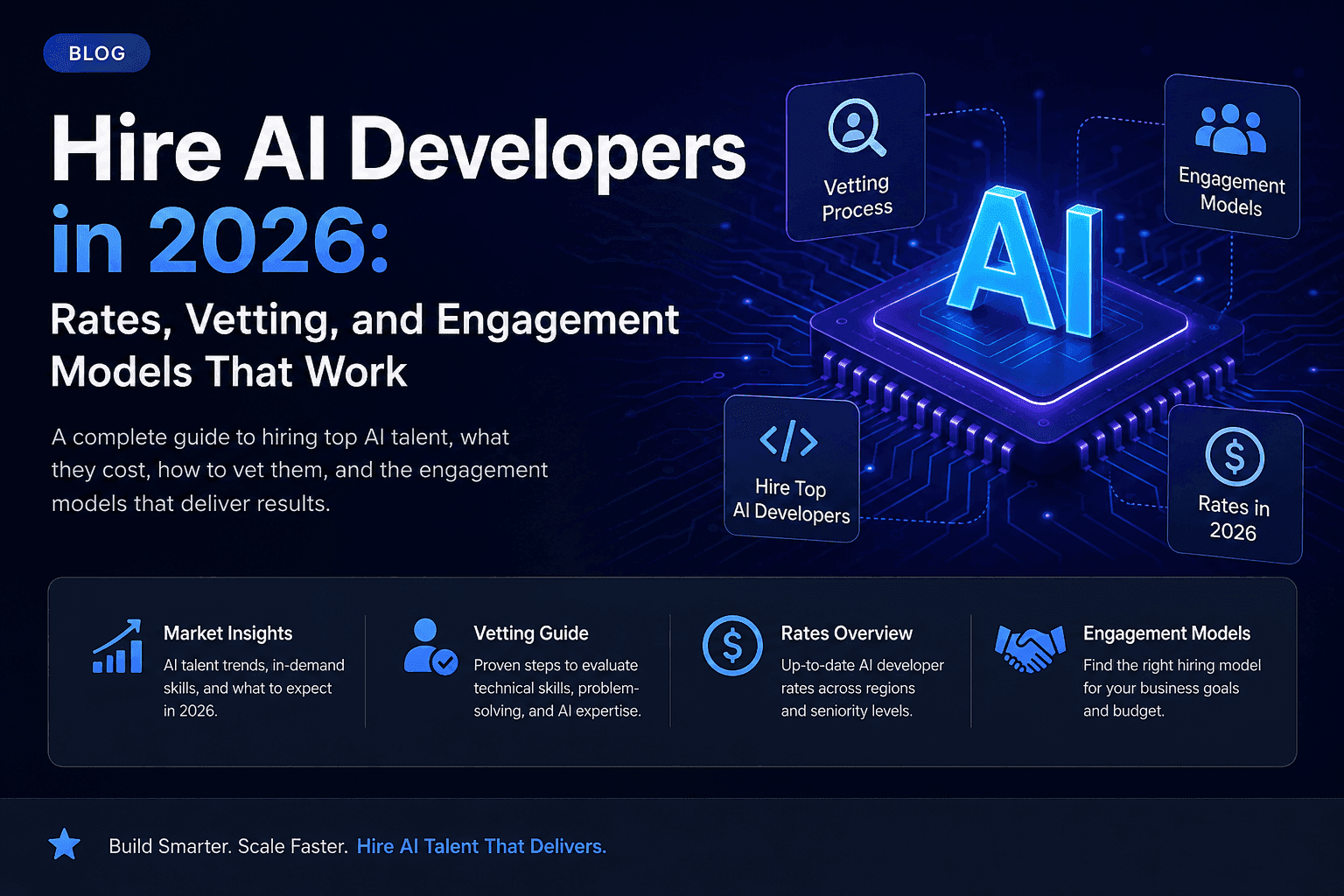
Hire AI Developers in 2026: Rates, Vetting, and Engagement Models That Work
What it costs to hire AI developers in 2026, the three engagement models compared, and the vetting questions that separate production AI engineers from prompt hobbyists.
Read Article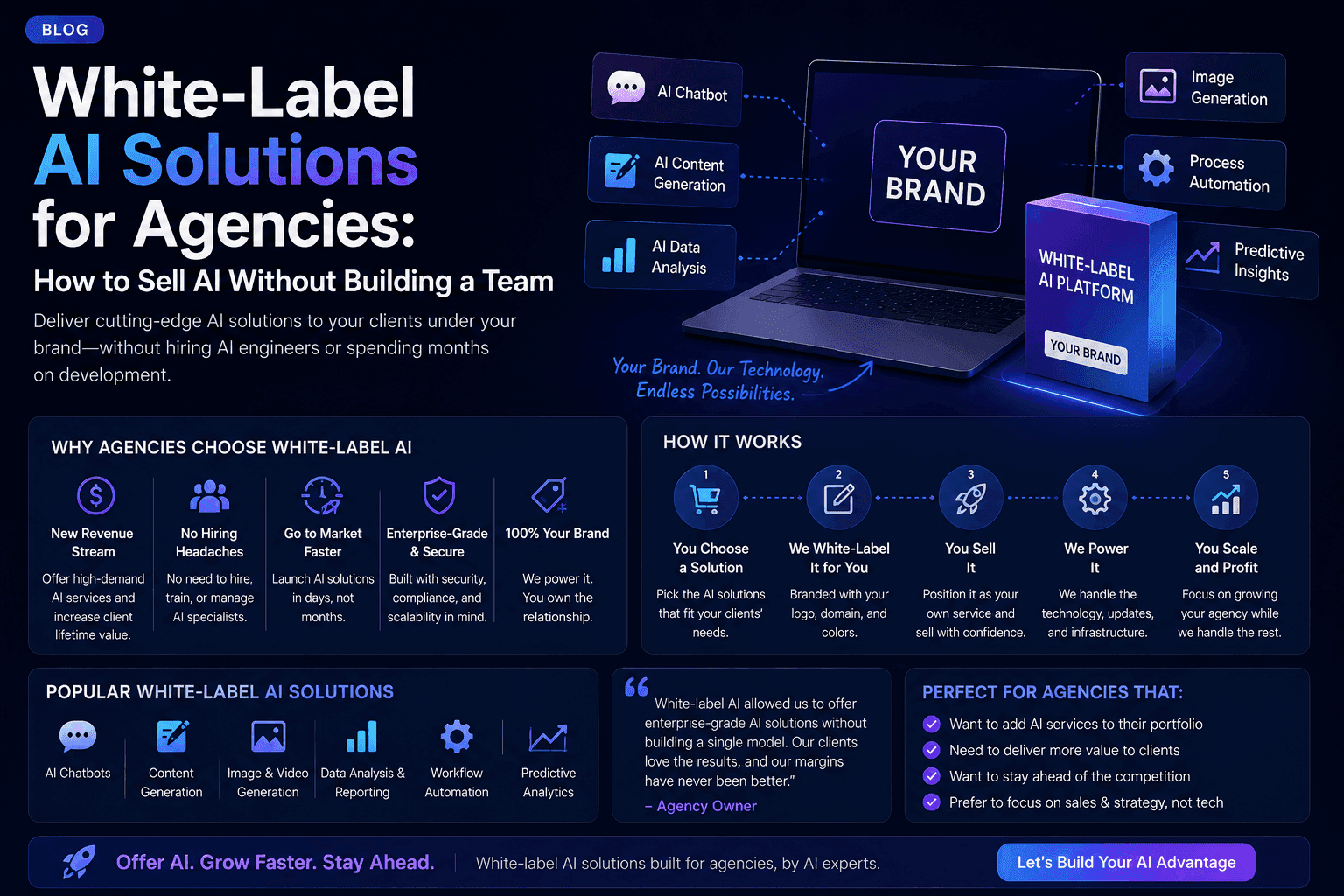
White-Label AI Solutions for Agencies: How to Sell AI Without Building a Team
Agencies are losing deals to "we also do AI" competitors. White-label AI development lets you sell chatbots, agents, and AI apps under your brand — here is how the model works in 2026.
Read Article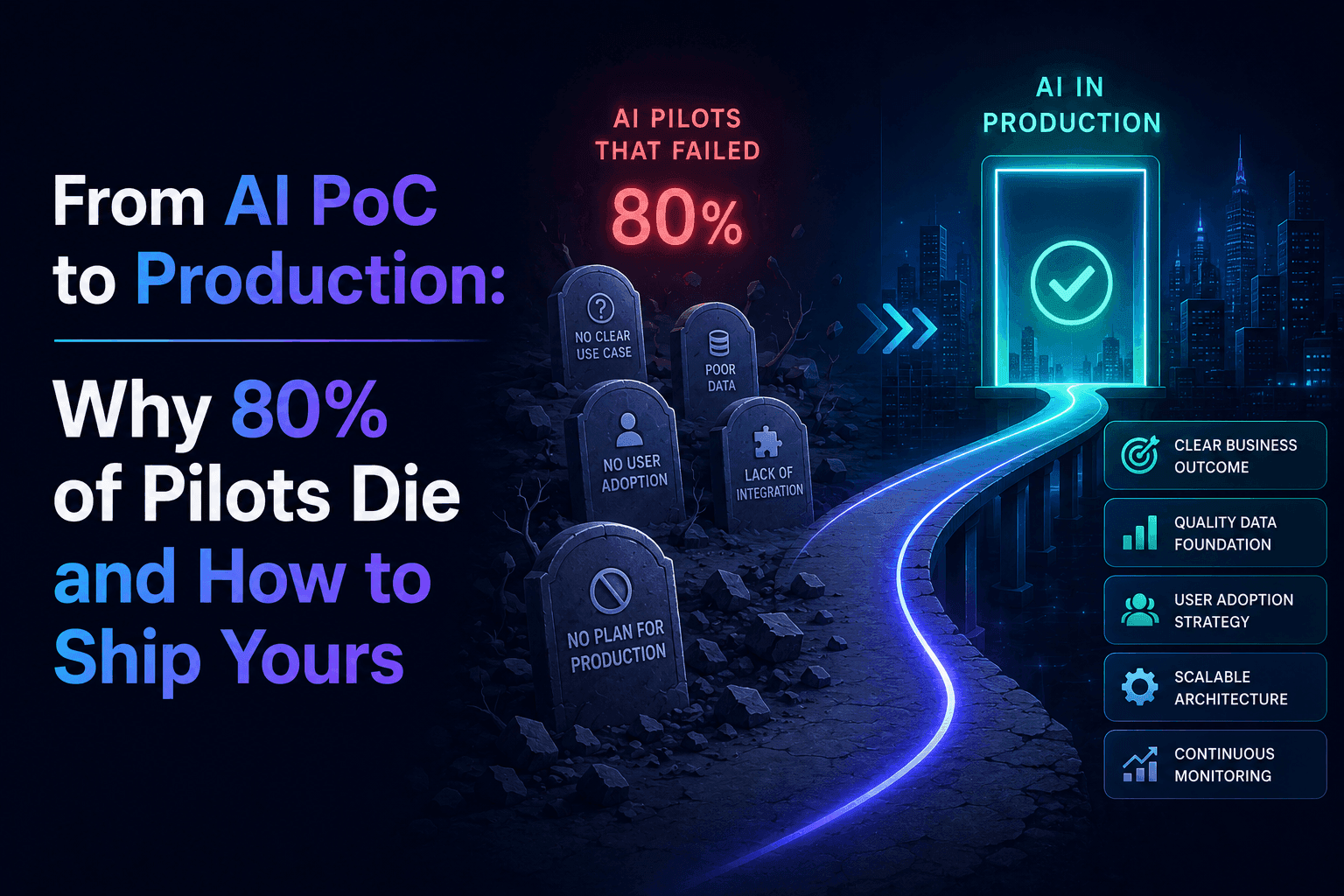
From AI PoC to Production: Why 80% of Pilots Die and How to Ship Yours
The AI pilot graveyard is real. The gap between a working demo and a production system, what closing it costs, and the de-risked path we use with clients.
Read Article
How to Write an AI Project RFP in 2026: Template and Red-Flag Detector
Most AI RFPs guarantee bad proposals. The seven sections that get you comparable, honest quotes — and the vendor answers that should end the conversation.
Read Article
AI Development Services in 2026: What They Cover and How to Choose a Partner
AI development services span far more than "add a chatbot." This guide breaks down the seven service categories, what each one actually delivers, and the five signals that separate a real AI engineering partner from a firm reselling an API key.
Read Article
Best MVP Development Services in 2026
Most MVP development firms won't tell you how long your build will take. This list cuts through the noise — 10 MVP development services worth your time in 2026, starting with the one we recommend most.
Read Article
Best Custom Software Development Companies 2026
We reviewed 31 firms and built this shortlist around one question: which companies deliver real, measurable results, not just polished decks? Here are the top 10 custom software development companies for 2026.
Read Article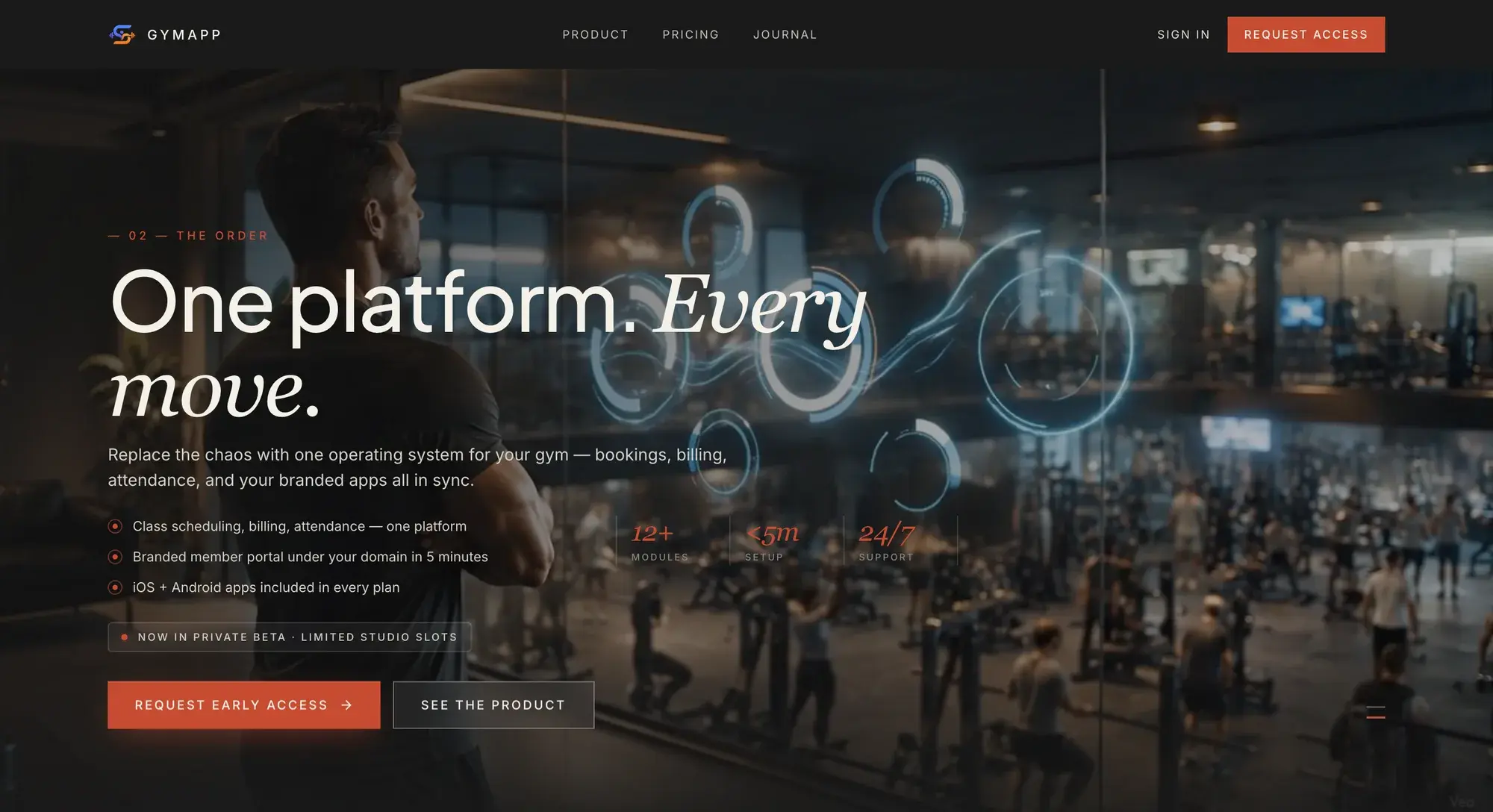
GymApp: A Members-First Operating System for Boutique Gyms (2026)
How we rebuilt GymApp into a single operating system for boutique gyms — 12 modules in one login, QR check-in, Stripe billing, branded iOS + Android apps, and full white-label. A look at the product, the architecture, and what changed.
Read Article
iOS App Development Cost in 2026: What Businesses Actually Pay
How much does iOS app development actually cost in 2026? Transparent cost ranges by app complexity, team location, and feature set — from a development agency that builds iOS apps for businesses.
Read Article
Top Node.js Frameworks in 2026: Choosing the Right Backend for Your Product
NestJS, Fastify, Express, Hono — which Node.js framework should you build your product backend on in 2026? Decision guide by use case, team size, and performance requirements.
Read Article
Mobile App Maintenance Cost in 2026: What to Budget After Launch
Most businesses underestimate mobile app maintenance costs. Here is exactly what annual maintenance covers, what drives the cost, and how to budget for a sustainable product lifecycle.
Read Article
How to Build an On-Demand Services Marketplace App in 2026 (Full Guide)
Everything you need to know before building a dual-sided services marketplace app — architecture, tech stack, matching logic, cost, and timeline. Based on shipping BizConnect for the New Zealand market.
Read Article
US Software Development Company vs. Offshore: The Real Tradeoffs in 2026
The offshore cost advantage is real but narrower than it was. The tradeoffs in communication, IP risk, quality consistency, and time-to-value often tip the calculation for US buyers.
Read Article
AI Automation for Business in 2026: What Works, What Costs, and How to Start
AI automation ROI is real in 2026 — but only for specific process categories. Where automation delivers, where it fails, and how to sequence your first implementation without wasting budget.
Read Article
Fintech App Development in 2026: Compliance, Cost, and Architecture for US and Global Markets
Fintech apps cost $100,000–$600,000 to build depending on regulatory requirements, payment processing complexity, and whether you need banking-as-a-service integrations.
Read Article
SaaS MVP Development: Timeline, Cost, and What Trips Up Most Startups in 2026
A SaaS MVP costs $60,000–$150,000 and takes 10–20 weeks when scoped correctly. Most startups underscope the billing and multi-tenancy layers and pay for it at Series A.
Read Article
AI Agent Development for Enterprise: What It Costs and How Long It Takes in 2026
Enterprise AI agent development ranges from $40,000 for a focused automation agent to $300,000+ for multi-agent systems. Here is what drives the variance and what to expect.
Read Article
How to Build Property Management Software in 2026: Architecture, Features, and Cost
How to build property management software: what features to include, the technology stack, build vs buy decision, and realistic cost ranges from a team that has built it.
Read Article
Healthcare App Development Cost in 2026: What You Will Actually Pay
Healthcare app development costs range from $80,000 to $500,000+ depending on HIPAA complexity, EHR integrations, and feature scope. Here is a full breakdown.
Read Article
How to Implement DevOps in 2026: A Practical Guide for Engineering Teams
Practical DevOps implementation guide for 2026: CI/CD pipeline, infrastructure as code, monitoring, and team culture. What to implement in what order, and what to skip.
Read Article
Ortem Technologies vs Toptal vs Upwork: Which Gets You Better Software, Faster?
Comparing three ways to hire software talent in 2026 — managed offshore teams, elite freelancer networks, and open marketplaces. Which model actually delivers production software on time and on budget?
Read Article
Best Construction Fleet Management Software in 2026 (7 Compared)
Comparing the top construction fleet and equipment management platforms in 2026 — real pricing, engine-hour and job-site tracking, mixed fleet support, and which platform wins for contractors running 10-200 vehicles plus heavy equipment.
Read ArticleBest Property Management Software 2026: Buildium vs AppFolio vs Residenta Compared
A detailed comparison of the top property management platforms in 2026 — pricing per unit, AI maintenance triage, tenant portals, and which platform wins for landlords, property managers, and PropTech companies.
Read Article
AI CRM Implementation Cost & Timeline in 2026: What Nobody Tells You
The real cost of implementing an AI CRM in 2026 — including hidden fees, data migration, training, and customization that vendors don't put in their pricing pages. Plus when to build custom instead of buying.
Read Article
Healthcare Software Development Company: What to Look For in 2026
What makes a healthcare software development company qualified — not just capable? HIPAA, HL7/FHIR, EHR integration, and clinical workflow expertise are non-negotiable. Here is what to evaluate.
Read Article
Medical Device Software Development in 2026: IEC 62304, FDA SaMD, and What to Expect
Medical device software development under IEC 62304 and FDA SaMD regulations: what compliant development looks like, how classification works, and what it costs.
Read Article
iOS & Mobile App Development Cost in 2026: Complete Breakdown
What does it actually cost to build an iOS or mobile app in 2026? Transparent breakdown by platform (native iOS, Flutter, React Native), app complexity, and team location — with real project ranges.
Read Article
The Best Marketing Automation Platforms in 2026
From AI-driven email campaigns to multichannel workflows, these are the top-rated marketing automation platforms shaping how businesses grow in 2026 — reviewed and ranked.
Read Article
The Best Lead Generation Software in 2026
The lead generation software stack has been transformed by AI data enrichment and multichannel automation. These are the top-rated tools ranked by Product Hunt, with real use cases for every team type.
Read Article
The Best AI Voice Agents in 2026
AI voice agents have moved from novelty to enterprise infrastructure. These are the top-rated platforms — from speech-to-text engines to full voice agent orchestration — ranked and reviewed for 2026.
Read ArticleThe Best Team Collaboration Software in 2026
From async video to AI-assisted project management, the collaboration stack has been transformed by AI. These are the top-rated team collaboration tools ranked by Product Hunt community ratings.
Read ArticleTop-Rated AI Infrastructure & Platform Tools in 2026
From vector databases to LLM orchestration frameworks to local model runners, these are the top-rated AI infrastructure and platform tools as ranked by the Product Hunt community in 2026.
Read Article
Embedding Staleness Is Probably Corrupting Your RAG System Right Now
RAG recall drops from 0.92 to 0.74 without throwing a single error. Embedding drift — when stored vectors and query vectors come from different model versions or preprocessing runs — is the silent failure mode that breaks retrieval quality while your system keeps returning results confidently.
Read Article
Navigating Claude Code: The Context Window Tax and How to Stop Paying It
Every tool definition, every MCP server, every file Claude reads loads into your context window and stays there. Cross the 50% mark and output quality starts degrading while costs keep rising. Here is the practical guide to managing the context window tax.
Read Article
Agentic RAG vs Standard RAG: Architecture, Use Cases, and When to Use Each in 2026
Standard RAG retrieves once and answers. Agentic RAG plans, queries multiple sources, reasons over results, and self-corrects. Here is the technical guide to both architectures — when each wins and how to build them.
Read Article
How to Fine-Tune an LLM for Enterprise: Step-by-Step Guide 2026
Fine-tuning an LLM on your data improves task accuracy by 20–40% vs prompting alone — but 80% of teams that attempt it waste compute on the wrong technique. Here is the complete guide: when to fine-tune, which method to use, and how to do it.
Read Article
Small Language Models for Enterprise in 2026: When SLMs Beat GPT-4
The SLM market will hit $5.45B by 2032. Phi-3, Gemma 2, and Llama 3.2 3B outperform GPT-3.5 on narrow tasks at 1/200th the cost. Here is the complete guide to deploying Small Language Models in enterprise production.
Read ArticleBusiness Automation Solutions in 2026: What to Automate, What It Costs, and How to Start
Business automation solutions in 2026: which processes to automate first, what platforms to use, real cost ranges, and the implementation sequence that avoids the most common failure modes.
Read Article
Gemini 2.5 Pro in 2026: Deep Think Mode, 2M Token Context, and When to Use It
Gemini 2.5 Pro has the largest context window of any frontier model (2M tokens), leads on video understanding (84.8% VideoMME), and has Deep Think mode for complex reasoning. Box uses it for 90%+ document extraction accuracy. Here is the complete guide.
Read Article
Codex 5.3 vs Claude Opus 4.7 on a Real Java Monolith: Which Agent Actually Ships Working Code?
OpenAI released GPT-5.3-Codex in February 2026 — 25% faster, merged reasoning and coding in one model. Claude Opus 4.7 leads SWE-bench Verified. We tested both on a real Java monolith refactor. Here is what each agent actually delivered.
Read Article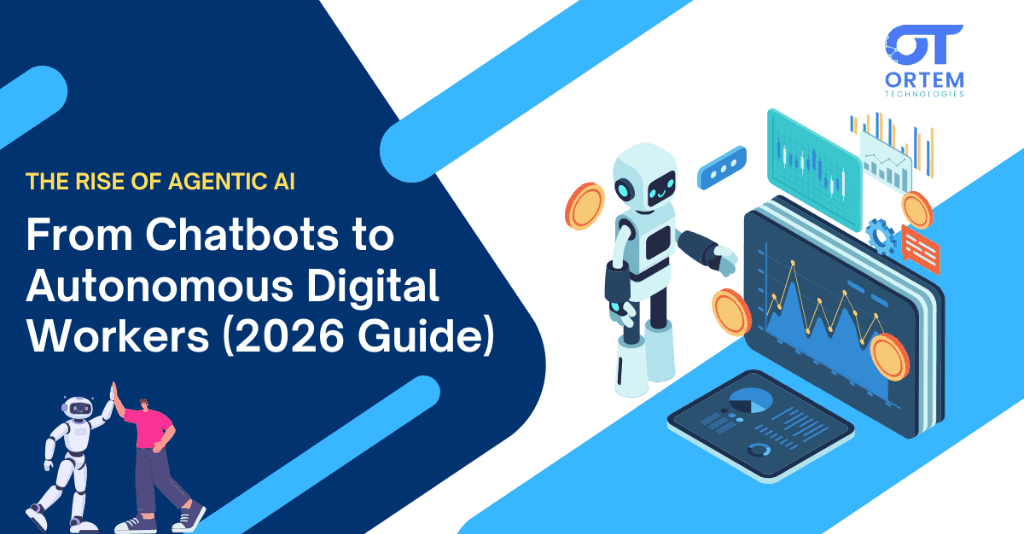
How to Build a Production-Ready AI Agent with LangGraph in 2026
Most LangGraph tutorials stop at "hello world." This guide covers what it actually takes to deploy an AI agent in production: state management, error recovery, memory persistence, and the patterns that prevent silent failures.
Read ArticleCustom Software Development Cost in 2026: Complete Breakdown by Project Type
What does custom software actually cost in 2026? Pricing tables by project type (MVP, SaaS, mobile app, enterprise system), geography comparison, and the hidden costs most estimates miss.
Read Article
GenUI in FlutterFlow 2026: How AI Agents Now Compose Your App's UI in Real Time
GenUI is Google's A2UI protocol implemented in FlutterFlow — instead of rigid flows, an AI agent assembles the user interface dynamically, in real time, from your own widget catalog. Here is what it means for Flutter developers and product teams.
Read Article
Multi-Agent AI Is Having Its Microservices Moment: What That Means for Engineering Teams
In 2006, microservices replaced monoliths by splitting one big system into small, independent services. In 2026, multi-agent AI is doing the same thing to LLM systems. Here is the architectural pattern, why it matters, and how to build it.
Read ArticleHeyGen Review 2026: AI Avatar Videos, Video Agent 2.0, and Whether It's Worth It
HeyGen's Avatar IV produces the most photorealistic AI avatars available. Video Agent 2.0 generates a full 60-second product video from one prompt in under 4 minutes. 100,000+ businesses use it. Here is the complete 2026 review.
Read Article
Google Veo 3 in 2026: Native Audio, 4K Video, and How It Compares to Runway Gen-4
OpenAI shut down Sora in March 2026. Google Veo 3.1 now leads on native audio, prompt adherence, and 4K output. Veo 3.1 Lite costs less than 50% of Veo 3.1 Fast. Here is the complete guide for developers and creators.
Read Article
AI Agent Development Services in 2026: What Agents Can Do, What They Cost, and How to Build One
AI agent development in 2026: what autonomous agents can actually do in production, what they cost to build, and what separates a production-ready agent from a demo.
Read Article
AI Design Tools in 2026: Google Stitch vs v0 vs Figma AI vs Framer — The Complete Comparison
Google Stitch (free) caused Figma's stock to drop 8.8% in a single day. v0 generates production React components. Framer AI builds animated marketing sites. Figma AI stays inside your existing workflow. Here is which tool wins for which job.
Read Article
No-Code vs Low-Code vs Vibe Coding in 2026: Which Approach Is Right for Your Project?
Bubble, FlutterFlow, Lovable, Cursor, and Claude Code all promise to build apps faster. But they serve completely different use cases. Here is the decision framework for founders, product managers, and engineering teams.
Read Article
Lovable.dev Review 2026: Build a Full-Stack App by Chatting With AI (Honest Test)
Lovable generates React + TypeScript + Supabase apps from plain English. Millions of projects built. $6.6B valuation after Lovable 2.0 launch. Here is what it actually delivers — and where it breaks down.
Read Article
Google Antigravity IDE Review 2026: The Agent-First IDE That Runs 5 Parallel AI Agents
Google's Antigravity IDE runs up to 5 parallel AI agents, has a built-in Chrome browser for visual verification, and ships Gemini 3.1 Pro + Claude Opus 4.6 as default models. SWE-bench score: 76.2%. Honest hands-on review.
Read Article
Voice AI Implementation Guide: Architecture, Latency, and Vendor Comparison 2026
Building a production voice AI agent requires five integrated components: ASR, NLU, dialogue management, TTS, and telephony. Here is the complete technical guide — architecture patterns, latency targets, vendor comparison, and deployment checklist.
Read ArticleEnterprise AI Agents in 2026: Real ROI Numbers, What Works, and How to Start
Gartner says 40% of enterprise apps will have AI agents by 2026. Companies report 171% average ROI. Klarna's agent saved $60M. JPMorgan runs 450+ agents in production. Here is what actually works and how to build a business case.
Read Article
FlutterFlow in 2026: Honest Review, Pricing, and When to Use It Over Coding Flutter
Google acquired FlutterFlow in late 2025. DreamFlow AI now generates screens from text prompts. Capital One and Microsoft use it in production. But does it replace Flutter developers? The honest answer.
Read ArticleFinancial Software Development Company: What Fintech Builds Require in 2026
Financial software development in 2026: PCI DSS compliance, open banking API integration, real-time payment rails, and fraud detection. What fintech builds actually require.
Read ArticleMCP (Model Context Protocol) in 2026: What It Is, Why It Hit 97M Downloads, and How to Use It
MCP went from 100K downloads at launch (November 2024) to 97 million monthly downloads by March 2026. 78% of enterprise AI teams have at least one MCP-backed agent in production. Here is the complete technical and business guide.
Read ArticleCursor vs Claude Code vs GitHub Copilot vs Windsurf: Best AI Coding Tool in 2026
Cursor crossed $1B ARR. GitHub Copilot has 4.7M paid subscribers. Claude Code leads SWE-bench. Windsurf was acquired by OpenAI. Here is the honest 2026 comparison for software teams.
Read ArticleTwilio vs Vapi vs Bland AI for Voice Agents: Which Platform to Use in 2026
Twilio, Vapi, and Bland AI all power voice AI agents — but they serve fundamentally different use cases. Twilio gives maximum control and enterprise integration. Vapi is the fastest path to production. Bland AI specializes in outbound calling at scale.
Read ArticleGPT-5.5 vs Claude Opus 4.7 vs Gemini 3.1 Pro: Which AI Model Should You Build With in 2026?
OpenAI, Anthropic, and Google all released new flagship models in Q1 2026. Each wins a different race. Here is the honest benchmark breakdown and decision framework for software teams.
Read Article
Vibe Coding in 2026: What It Is, What It Costs You, and When to Use It
Vibe coding is a $4.7 billion market in 2026. 92% of US developers use AI coding tools daily. But AI-generated code has 2.74x more security vulnerabilities than human-written code. Here is the honest guide for software teams.
Read Article
AI Agents vs Traditional Automation: What Enterprises Should Build in 2026
RPA and workflow rules handle predictable tasks reliably. AI agents handle judgment, context, and exceptions. Here is how to decide which to build — and where the real enterprise ROI is hiding in 2026.
Read Article
Modern Data Stack for SaaS in 2026: ETL vs ELT, Warehouses, and Real-Time Analytics
The modern SaaS data stack has settled on ELT and a cloud warehouse as the foundation. But the right architecture depends on your data volume, latency requirements, and team maturity. A technical guide.
Read ArticleGPT-4o vs Claude Opus 4.7 vs Gemini 3.1 Pro for Enterprise RAG in 2026
Choosing the wrong LLM for your enterprise RAG system costs 3–15x more than necessary or produces measurably worse answers. Here is the data-driven comparison across RAG-specific dimensions: retrieval faithfulness, citation accuracy, context utilization, and cost.
Read ArticleHow Much Does It Cost to Build a SaaS App in 2026? Complete Cost Breakdown
Building a SaaS app in 2026: real cost ranges by scope, team location, and complexity. From MVP to enterprise-grade product — what drives cost, what to cut, and what to never compromise on.
Read Article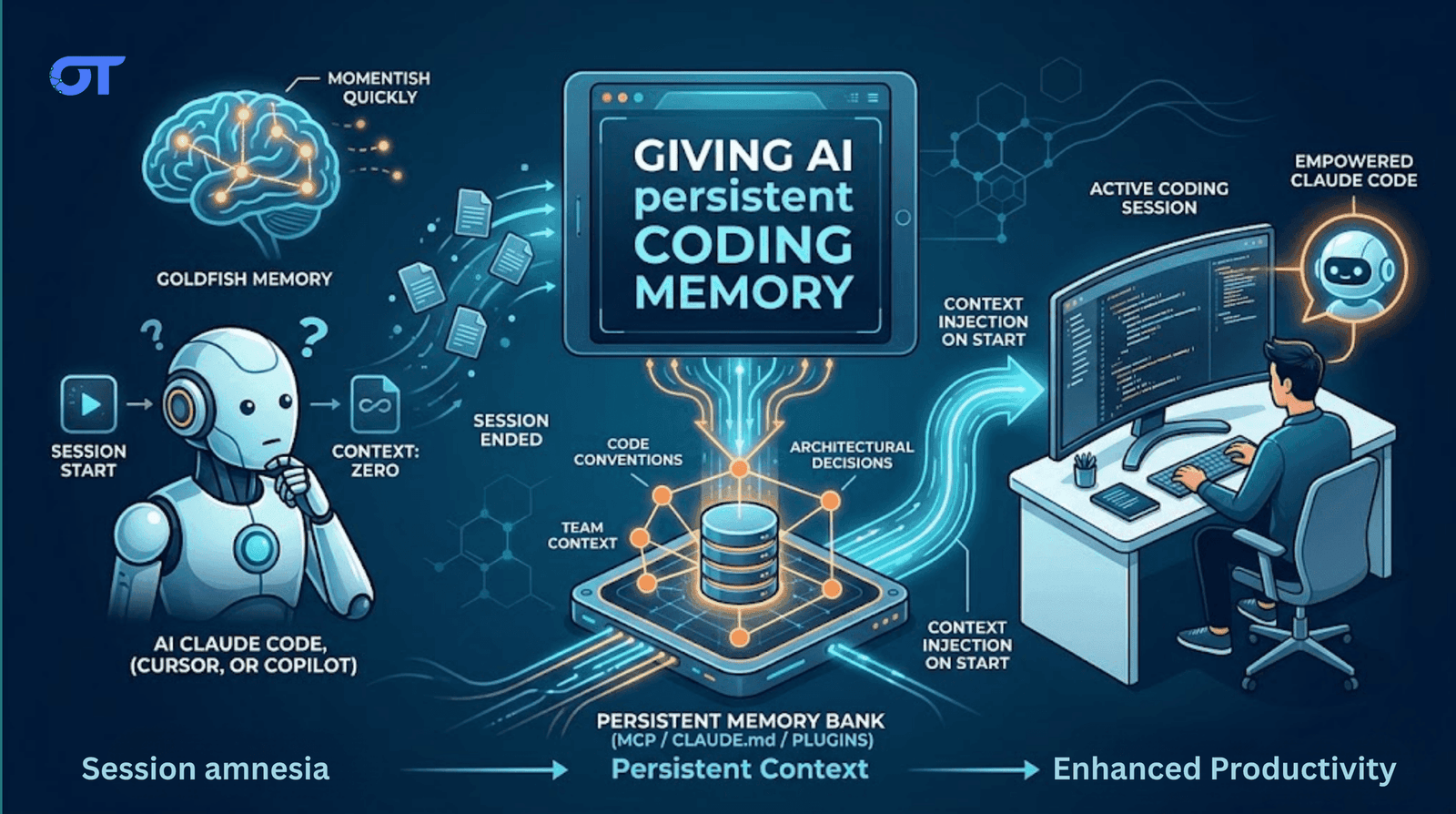
How to Handle Memory in Your AI Coding Setup
Every Claude Code, Cursor, or Copilot session starts from zero. This guide shows practical options—CLAUDE.md, MCP servers, and Supermemory plugin—to retain project memory and speed up repeat engineering work.
Read Article
Custom Software vs SaaS: How to Decide in 2026
Build vs buy is the wrong framing. The real question is: which approach gives your business a durable competitive advantage at an acceptable total cost? A decision framework for 2026.
Read Article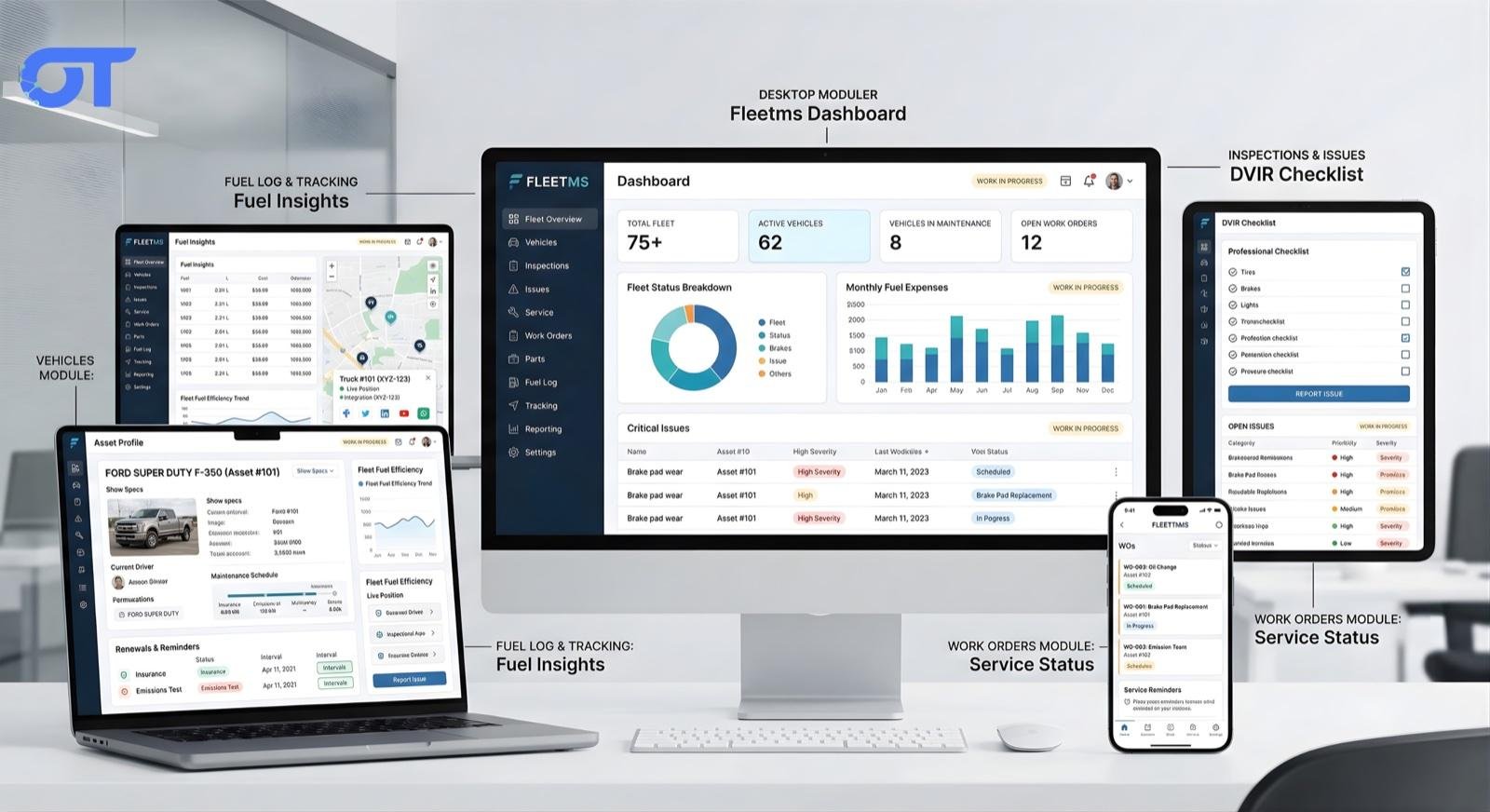
Fleet Management Software Development: Features, Architecture & Build vs Buy Guide (2026)
Fleet operators are still managing 50–200 vehicles with spreadsheets, clipboards, and missed service reminders. Here is a complete guide to what modern fleet management software needs, how to build it, and whether to build or buy in 2026.
Read Article
How to Build an App Like Uber: Features, Tech Stack & Cost (2026)
Building a ride-hailing app like Uber requires real-time GPS tracking, dynamic pricing, two-sided marketplace logic, and payment infrastructure. Here is exactly what it takes in 2026.
Read ArticleOrtem Technologies vs LeewayHertz: Which AI Development Partner for Your Project?
Both Ortem Technologies and LeewayHertz build enterprise AI systems — but they serve different client profiles at very different price points. Here is the honest comparison to help you choose.
Read Article
Top Fintech Software Development Companies in 2026
Choosing a fintech development partner is not the same as choosing a generic software agency. Here is how to evaluate companies that genuinely understand financial regulations, payment rails, and security requirements.
Read Article
How to Build a Scalable SaaS Product: Architecture, Stack & Launch Guide
Building a scalable SaaS product means making a specific set of architectural decisions from day one — multi-tenancy, billing, auth, and infrastructure. Most teams skip them and pay for it later. Here's the complete guide.
Read Article
How to Build a Fitness App in 2026: Architecture, Features, and Real Costs
Building a fitness app in 2026: what features matter, what the architecture looks like, and what it costs — from MVP to the scale BlazePod reached with 100K+ active users.
Read Article
Software Development Company in London: What to Look for in 2026
London's tech scene is competitive, and finding the right software development partner involves more than comparing day rates. Here is the practical evaluation guide for London businesses.
Read Article
Software Development Cost in Australia: 2026 Pricing Guide
Australian development rates are among the world's highest — but most Australian companies have options that are not obvious. Here is the full 2026 cost breakdown for building software in and for Australia.
Read Article
How to Build a Fintech App: Features, Compliance & Development Cost (2026)
Building a fintech app requires navigating payment regulations, security standards, and financial compliance frameworks before writing a single line of product code.
Read Article
Software Development Company in Dubai: What to Look for in 2026
Dubai's technology market is growing at 15%+ annually, but the quality of development partners varies enormously. Here is the practical guide for businesses evaluating software partners in the UAE.
Read Article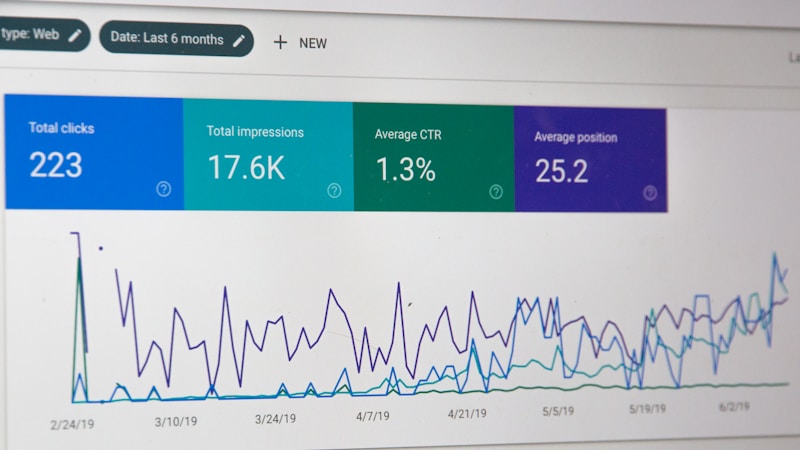
US-Registered Offshore Software Development: How It Works and Why It Matters
Offshore engineering costs. US accountability, contracts, and IP protection. Here's how US-registered software companies with offshore delivery centers actually work — and what you need to verify before signing.
Read ArticleLangChain vs LlamaIndex vs Custom RAG: Which to Use in 2026
LangChain and LlamaIndex are the two dominant RAG frameworks — but both have significant tradeoffs. Here is the honest comparison: when each wins, where both lose, and when rolling your own RAG pipeline is the right call.
Read Article
How to Build a Food Delivery App in 2026: Architecture, Features, and Real Costs
Building a food delivery app in 2026: three-sided marketplace architecture, real-time dispatch, restaurant onboarding, and what it actually costs — with context from Eatigo's 7,000+ restaurant network.
Read Article
MVP Development for SaaS Startups: Scope, Build, and Ship in 10–16 Weeks
Most SaaS MVPs fail because founders build too much, not too little. Here's the exact scoping framework, tech stack decisions, and milestone map that get you to paying users without burning through your runway.
Read Article
Manual vs Automated Testing: When to Use Each in 2026
The debate between manual and automated testing misses the point. Every mature QA strategy uses both — the question is knowing exactly where each delivers value.
Read Article
How to Build a Healthcare App in 2026: HIPAA, Architecture, and What It Costs
Building a healthcare app in 2026: HIPAA architecture, patient data handling, EHR integration, compliance requirements, and real costs — from patient portal to the scale Healthmug reached with 1M+ orders.
Read ArticleHow to Build a Fleet Management System in 2026: GPS, Telematics, and Architecture
Building a fleet management system in 2026: real-time GPS tracking architecture, driver behavior monitoring, route optimization, telematics integration, and what it costs — with context from Fleet Sync Pro.
Read ArticleEnterprise RAG Implementation Cost: What It Actually Costs to Build in 2026
Enterprise RAG projects range from $15,000 for a simple document Q&A bot to $150,000+ for a multi-source, role-controlled, on-premises system. Here is the complete cost breakdown — infrastructure, development, and ongoing operations.
Read ArticleAI-Powered Application Modernization: Migrating Legacy Systems with LLMs in 2026
Legacy application modernization typically takes 18–36 months. LLM-assisted migration cuts that to 6–12 months by automating code comprehension, documentation, test generation, and incremental refactoring. Here is the complete playbook.
Read ArticleMultimodal AI for Business in 2026: Using Text, Voice, and Vision in One Pipeline
Multimodal AI combines text, voice, images, and video in a single model call. GPT-4o, Gemini 3.1, and Claude Opus 4.7 all support multimodal input natively. Here are the business applications producing real ROI in 2026.
Read Article
How to Safely Adopt AI in Enterprise Operations: The 2026 Governance Playbook
Shadow AI affects 65% of enterprise employees — bypassing IT, using unauthorized tools, creating $4.63M average breach costs. The era of "block AI" is over. The era of "govern AI" has arrived. Here is the practical framework for safe enterprise AI adoption.
Read ArticleLLM Cost Optimization: How to Cut Your AI API Costs by 60% in 2026
The average enterprise AI team overspends on LLM API calls by 40–60% due to five fixable patterns. Here are the proven techniques to cut costs without sacrificing quality — prompt caching, model routing, batching, and quantization.
Read Article
How to Choose a Software Development Company: 12 Questions to Ask in 2026
Most bad outsourcing decisions happen before a line of code is written. These 12 questions will help you separate serious engineering partners from expensive disappointments.
Read ArticleCustom Software Development Cost for Small Businesses in 2026
No vague "it depends" answers. Real cost ranges, what drives them up, what you can control, and how to scope a project before talking to a single developer.
Read Article
How to Outsource Software Development Without Getting Burned
Failed outsourcing projects are rarely the developer's fault. They're almost always a structural failure that happened long before code was written. Here's the five-step framework to avoid it.
Read Article
15 Best JavaScript Frameworks in 2026: Full Comparison Guide
The JavaScript framework landscape in 2026 is richer than ever. Here is a clear breakdown of the 15 most important frameworks, what they are best at, and which to pick for your project.
Read Article
REST API vs GraphQL: A Complete Comparison for 2026
REST and GraphQL are not competing standards — they solve different problems. Understanding which fits your application architecture prevents costly migrations later.
Read Article
Backend Security Best Practices: Protecting APIs and Databases in 2026
Most application breaches exploit well-known, preventable vulnerabilities. This guide covers the backend security practices that close the most common attack vectors.
Read Article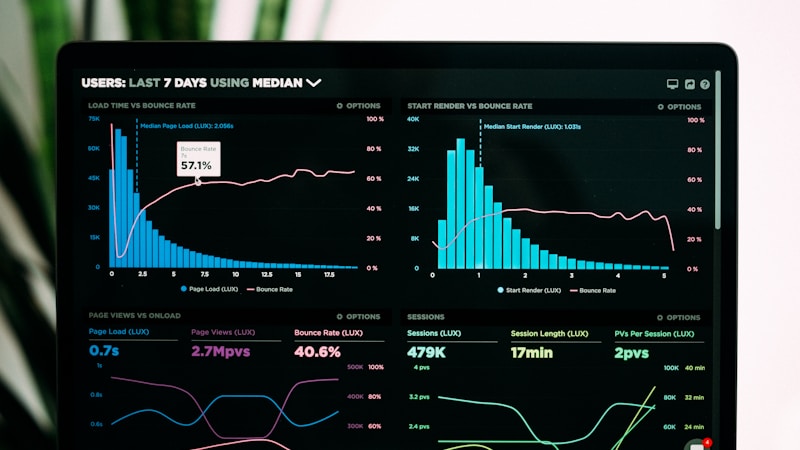
Kubernetes Cost Optimization: 10 Strategies to Reduce Cloud Spend
Kubernetes makes it easy to over-provision resources. These 10 strategies systematically reduce cloud spend without compromising reliability or performance.
Read ArticleData Warehouse vs Data Lake vs Lakehouse: Complete Guide for 2026
Data warehouse, data lake, and data lakehouse — three distinct architectures that serve different data needs. Choosing the wrong one leads to expensive migrations and frustrated data teams.
Read Article
Mobile App Development Cost in India 2026: Complete Pricing Guide
India remains the world's top destination for mobile app development outsourcing. Get transparent, benchmarked pricing data for iOS, Android, and cross-platform apps across all complexity tiers.
Read ArticleAI Agent Development in 2026: How Businesses Are Deploying Autonomous AI Workers
AI agents don't just answer questions - they take actions, use tools, and complete multi-step tasks autonomously. Learn how forward-thinking companies are deploying AI agents to automate entire business workflows.
Read Article
Enterprise Mobility Management (EMM) in 2026: The Complete Guide for IT Leaders
MDM alone is dead. In 2026, enterprise mobility management means securing 5G devices, enforcing zero-trust on BYOD, and building field apps that work offline. Here is your complete playbook.
Read ArticleTop Cloud Cost Optimization Tools in 2026: AWS, Azure & GCP
Cloud bills grow silently until they become a crisis. These tools give engineering and finance teams the visibility and automation to control cloud spend proactively.
Read Article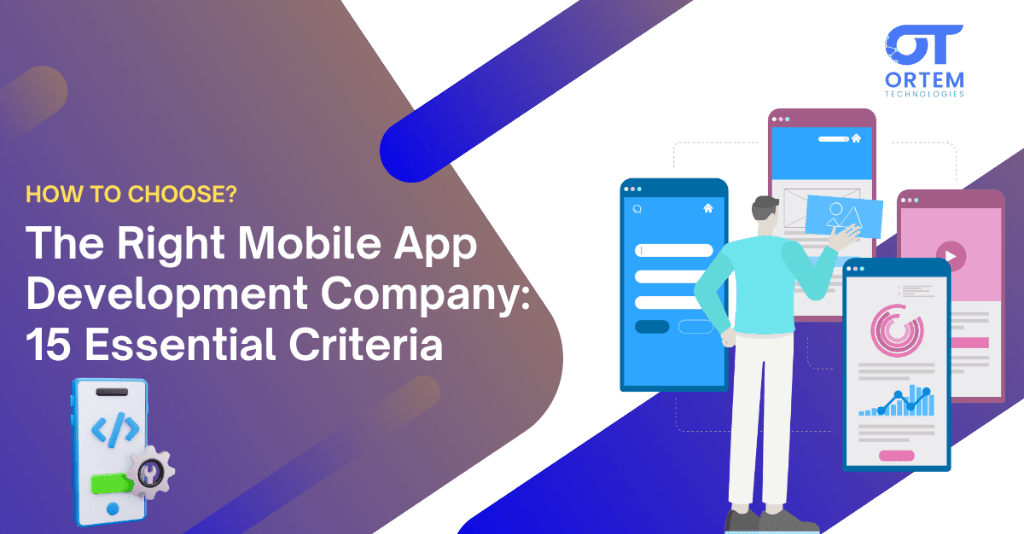
How to Choose the Right Mobile App Development Company: 15 Essential Criteria
Your app idea is only as good as the team that builds it. Avoid the horror stories and learn the 15 critical criteria for selecting the perfect mobile app development partner.
Read Article
AR/VR App Development 2025: Creating Immersive Experiences
Augmented and virtual reality are transforming industries from gaming to healthcare. Learn how to build compelling AR/VR applications in 2025.
Read ArticleE-commerce App Development Cost in 2025: Complete Breakdown
Planning to build an e-commerce app in 2025? This comprehensive guide breaks down the costs, features, and factors that influence your development budget.
Read Article
Blockchain Enterprise Applications 2025: Beyond Cryptocurrency
Blockchain technology is finding practical applications in enterprises beyond cryptocurrency. Explore how businesses are leveraging blockchain in 2025.
Read Article