Best Construction Fleet Management Software in 2026: Heavy Equipment, Mixed Fleets and Telematics
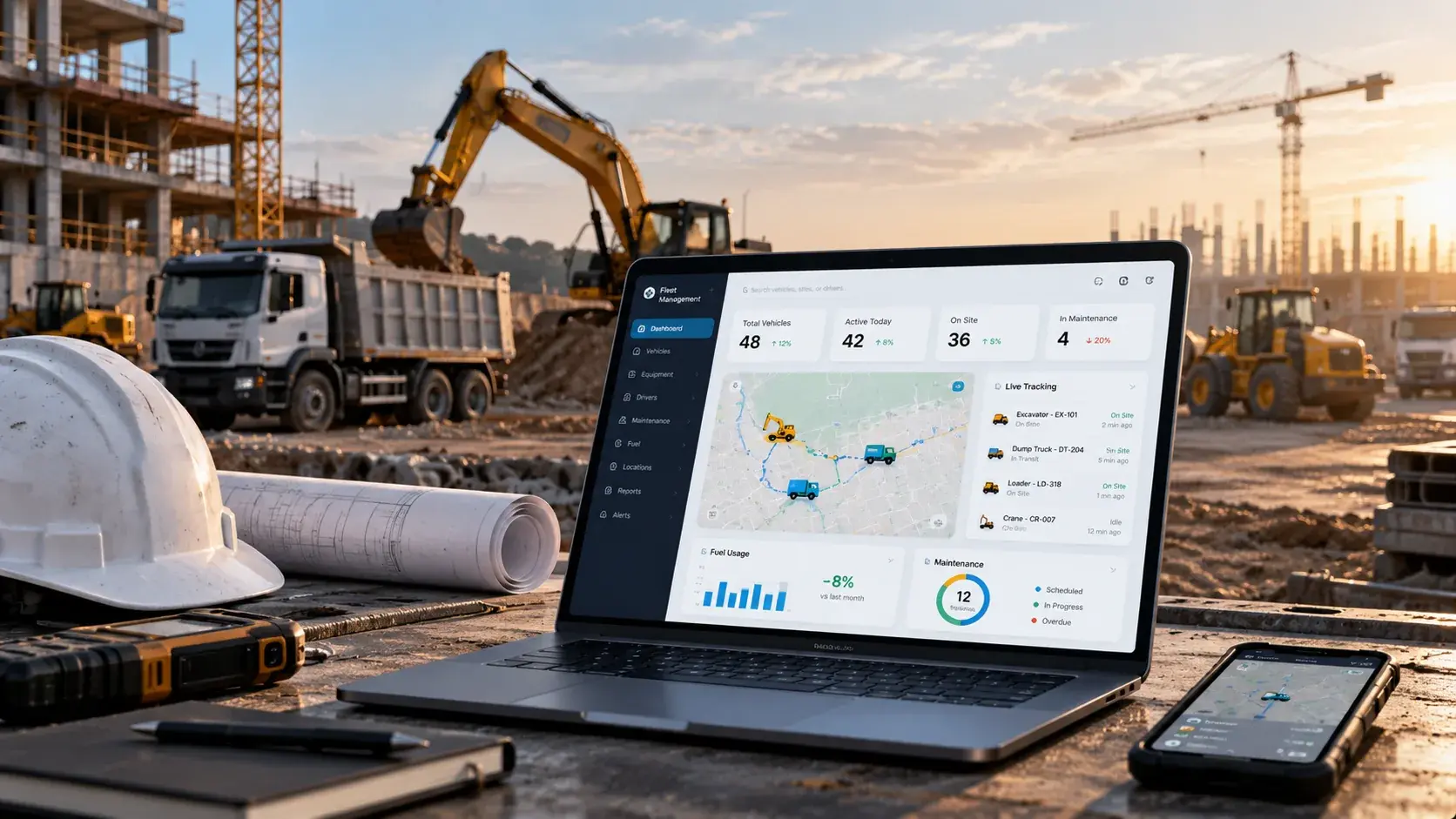
The best construction fleet management software combines GPS and engine-hour tracking for heavy equipment, maintenance scheduling by hours rather than miles, jobsite allocation, and the ability to pull data from every equipment brand through the ISO 15143-3 (AEMP 2.0) standard. Construction-focused platforms such as Tenna, Trackunit and HCSS suit equipment-heavy contractors, while Samsara, Geotab and Motive suit fleets with many road vehicles.
Next Best Reads
Continue your research on Industry Solutions
These links are chosen to move readers from general education into service understanding, proof, and buying-context pages.
Industries Ortem Serves
See vertical-specific delivery experience across healthcare, fintech, logistics, and retail.
View industriesCustom Software Development
Move from industry research into scoping for dashboards, workflows, and internal systems.
Explore software serviceIndustry Platform Case Study
Review how Ortem shipped a multi-tenant production platform with real operational requirements.
Read case studyConstruction fleet management software tracks and maintains everything a contractor runs: excavators, loaders, trucks, trailers, attachments and tools. The best tools measure machines by engine hours, pull data from every equipment brand, and show which jobsite each asset is on.
That is a harder job than tracking delivery vans. This guide explains what construction fleet software must do, compares the main platform types, and ends with a checklist you can use with vendors.
Why Construction Fleets Are Different
Most fleet software was built for trucks on roads. Construction adds four problems.
- Mixed assets. A single contractor may run heavy equipment, pickups, dump trucks, trailers, generators and hand tools. Each needs a different kind of tracking.
- Hours, not miles. An excavator can run all day without moving a mile. Service intervals, utilization and rental billing all depend on engine hours.
- Many manufacturers. A fleet with Caterpillar, John Deere, Komatsu and Volvo machines has four separate telematics portals. Each shows only its own brand.
- Moving jobsites. Equipment moves between sites, gets rented in and out, and is easy to lose track of.
Software that handles only one of these leaves gaps your team fills with spreadsheets and phone calls.
Must-Have Features
Use this list to screen any construction fleet management software.
| Feature | Why it matters on a jobsite |
|---|---|
| Engine-hour tracking | Drives service intervals, utilization and rental billing |
| Mixed-fleet data (ISO 15143-3) | Pulls data from every OEM portal into one view |
| GPS and geofences | Shows which site each machine is on and flags theft |
| Hour-based preventive maintenance | Schedules service by hours, not calendar dates |
| Fault code alerts | Turns machine diagnostics into work orders early |
| Jobsite allocation | Assigns equipment to projects for planning and job costing |
| Inspections and DVIRs | Digital pre-use checks for machines and trucks |
| Small tool and attachment tracking | Covers assets with no built-in telematics |
| Fuel tracking | Matches fuel use to machines and projects |
| Integrations | Connects to ERP, accounting, job costing and payroll |
The Mixed-Fleet Problem and ISO 15143-3
Equipment makers expose machine data through a common standard called ISO 15143-3, often called AEMP 2.0. It defines how a telematics provider's server shares machine data such as location, operating hours, fuel used, idle hours and fault codes with other applications.
This is what makes mixed-fleet management possible. Instead of logging into each OEM portal, your fleet platform pulls every brand's data through one standard interface. Before you buy, ask each vendor which manufacturers they already connect to through this standard.
We cover the technical details in our guide to mixed-fleet telematics and ISO 15143-3.
Construction Fleet Management Software Compared
There is no single best tool. The right choice depends on whether your value sits in heavy equipment or in road vehicles. Below are the main types and named options to shortlist. Features and pricing change often, so confirm details with each vendor.
Construction-focused equipment platforms
These are built around heavy equipment, jobsites and mixed brands.
- Tenna: construction asset tracking for equipment, vehicles and small tools, with jobsite views.
- Trackunit: telematics and connectivity for construction equipment, widely used by equipment owners and rental companies.
- HCSS: construction software suite for heavy civil contractors, including equipment management alongside estimating and field tools.
Best for: contractors whose fleet value is mostly yellow iron.
Telematics-first fleet platforms
These started with road vehicles and have added equipment features and OEM integrations.
- Samsara: connected operations platform with vehicle telematics, cameras, equipment monitoring and maintenance.
- Geotab: telematics platform with an open data model and a large marketplace of add-ons.
- Motive: fleet telematics with dashcams, driver safety and compliance features.
- Teletrac Navman and Verizon Connect: long-established GPS fleet tracking platforms.
Best for: contractors with many trucks and pickups, where driver safety and compliance matter most.
Maintenance-first platforms
These focus on work orders, service schedules, parts and inspections. Most connect to telematics providers for meter readings.
- Fleetio: fleet maintenance and management with work orders, parts and telematics integrations.
- AUTOsist: simpler fleet maintenance for smaller fleets.
Best for: teams whose main pain is tracking service and repairs.
Enterprise fleet platforms
- Chevin FleetWave: configurable enterprise fleet management for large, complex fleets.
Best for: large organisations with dedicated fleet departments.
OEM portals
Caterpillar VisionLink, John Deere JDLink, Komatsu KOMTRAX and Volvo CareTrack give deep data on their own machines. They do not cover other brands. Use them as data sources, not as your fleet system.
Heavy Equipment Maintenance: What Good Looks Like
Maintenance is where construction fleets lose the most money to downtime. Good heavy equipment maintenance software should:
- Schedule by engine hours, with intervals that match each manufacturer's service manual.
- Read meter values automatically from telematics so nobody types hours in by hand.
- Turn fault codes into work orders before a minor issue becomes a breakdown.
- Track parts and labour per machine so you know the true cost of ownership.
- Log inspections digitally, including driver vehicle inspection reports for trucks covered by FMCSA rules.
For a deeper look at maintenance tools, see our comparison of the best fleet maintenance software.
How to Measure Success
Agree on a few metrics before you roll out new software. The most useful for construction are:
- Equipment utilization: engine hours used divided by hours available.
- Preventive maintenance compliance: services done on time divided by services due.
- Unplanned downtime: hours a machine was unavailable due to breakdowns.
- Cost per engine hour: total operating cost divided by engine hours.
- Idle time: share of engine hours spent idling.
Our guide to fleet management KPIs gives the formulas and how to use them.
Buyer's Checklist: Questions to Ask Vendors
- Which equipment manufacturers do you connect to through ISO 15143-3 today?
- Can you schedule maintenance by engine hours and by miles in the same system?
- How do you track assets with no telematics, such as attachments and small tools?
- Can I assign equipment to jobs and export that data to job costing?
- What does the hardware cost, and can I use devices I already own?
- How do pricing and contracts work for owned, rented and seasonal assets?
- Can I export all my data if I leave?
When a Custom Build Makes Sense
Off-the-shelf tools fit most small and mid-sized contractors. A custom platform is worth considering when:
- You run a large mixed fleet and need one data model across every brand and asset type.
- You need deep integration with ERP, job costing, payroll or rental billing.
- Your workflows, such as yard dispatch or equipment transfers, do not fit any vendor's model.
Ortem builds custom fleet and operations platforms, including multi-OEM telematics integration and hour-based maintenance. See our fleet management software development services, or read our guide to custom fleet management software development.
About Ortem Technologies
Ortem Technologies is a premier custom software, mobile app, and AI development company. We serve enterprise and startup clients across the USA, UK, Australia, Canada, and the Middle East. Our cross-industry expertise spans fintech, healthcare, and logistics, enabling us to deliver scalable, secure, and innovative digital solutions worldwide.
Get the Ortem Tech Digest
Monthly insights on AI, mobile, and software strategy - straight to your inbox. No spam, ever.
Sources & References
- 1.ISO/TS 15143-3:2020 Earth-moving machinery — Worksite data exchange — Part 3: Telematics data - ISO
- 2.ISO 15143-3 (AEMP 2.0) API reference - Proemion
- 3.API Products (AEMP 2.0, ISO 15143-3:2020) - Volvo Construction Equipment
- 4.49 CFR 396.11 Driver vehicle inspection report(s) - eCFR
About the Author
Editorial Team, Ortem Technologies
The Ortem Technologies editorial team brings together expertise from across our engineering, product, and strategy divisions to produce in-depth guides, comparisons, and best-practice articles for technology leaders and decision-makers.
Frequently Asked Questions
- Construction fleet management software tracks and manages the vehicles, heavy equipment, attachments and tools a contractor owns or rents. It typically covers location tracking, engine hours, utilization, maintenance scheduling, inspections, fuel and jobsite allocation in one system.
- Construction fleets mix road vehicles with off-road machines from many manufacturers. Heavy equipment is measured in engine hours rather than miles, moves between jobsites, and often reports through each manufacturer's own telematics portal. Regular fleet software is usually built around trucks, drivers and miles.
- Mixed fleet management means running equipment from several manufacturers, such as Caterpillar, John Deere, Komatsu and Volvo, in one system. Most contractors do this by pulling each manufacturer's telematics data through the ISO 15143-3 (AEMP 2.0) standard into a single platform.
- The best heavy equipment maintenance software schedules service by engine hours, reads fault codes from telematics, creates work orders automatically and tracks parts and labour per machine. Construction-focused platforms and maintenance tools such as Fleetio can do this, provided they integrate with your equipment's telematics data.
- Not always. Newer machines often report location, hours and fuel through the manufacturer's telematics. You still need aftermarket trackers or Bluetooth tags for older machines, trailers, attachments and small tools that have no built-in telematics.
- A custom build makes sense when you run a large mixed fleet, need deep integration with ERP, job costing or payroll systems, or have workflows that off-the-shelf tools force you to work around. Smaller contractors are usually better served by an existing platform.
Stay Ahead
Get engineering insights in your inbox
Practical guides on software development, AI, and cloud. No fluff — published when it's worth your time.
Ready to Start Your Project?
Let Ortem Technologies help you build innovative software solutions for your business.
You Might Also Like
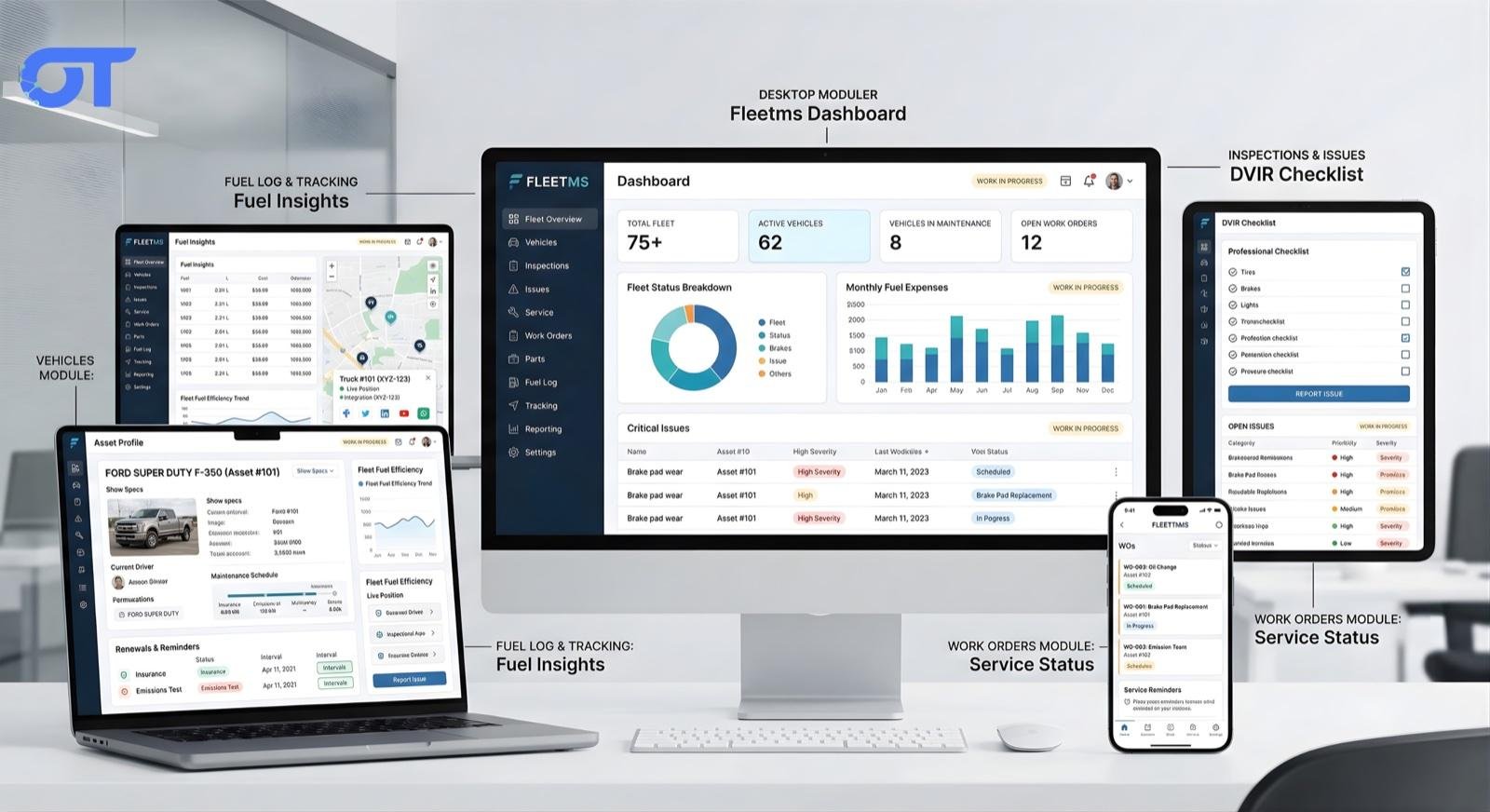
Fleet Management Software Development: Features, Architecture & Build vs Buy Guide (2026)

Top Fintech Software Development Companies in 2026