How to Add AI Features to an Existing SaaS Product Without Breaking It
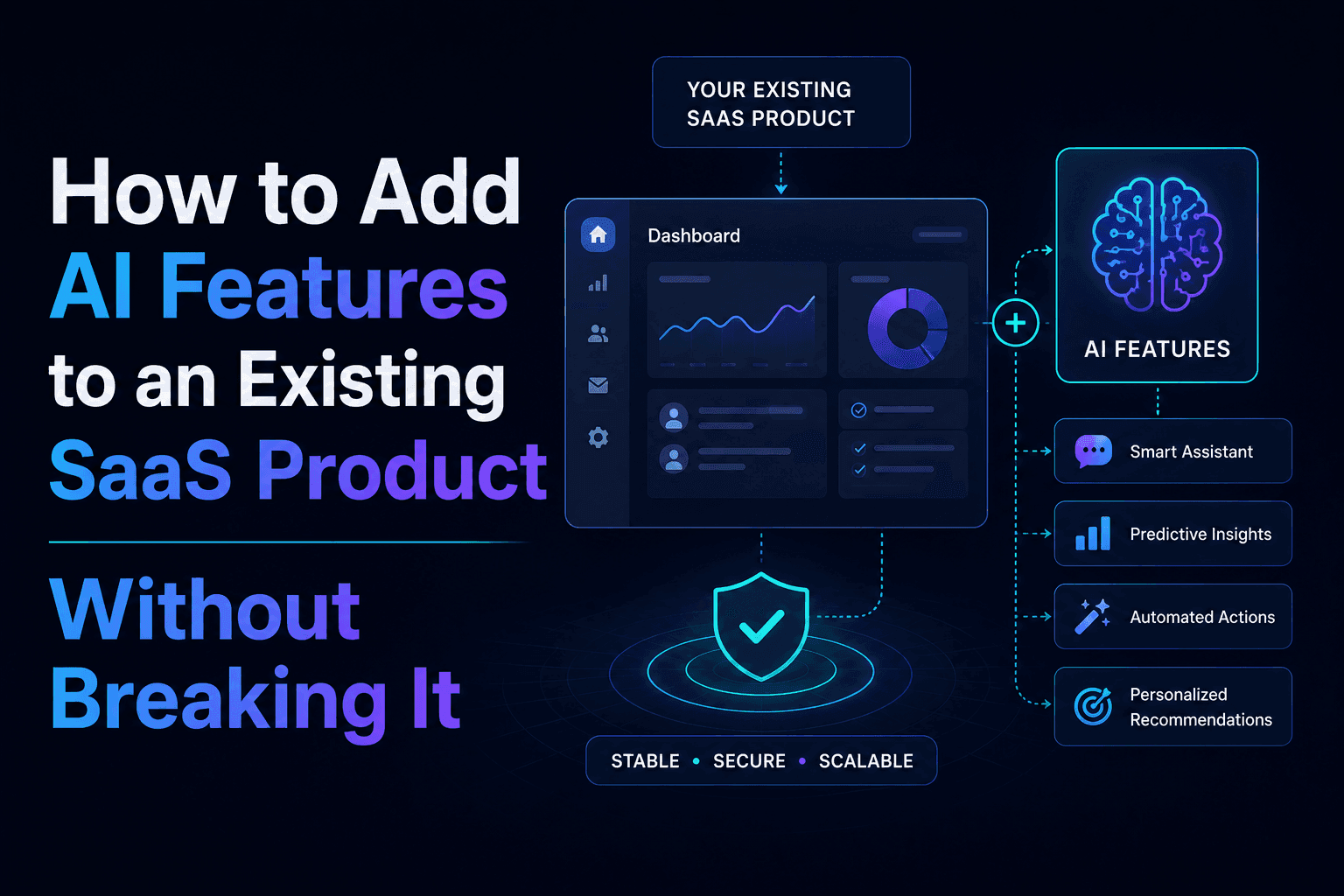
The four AI features worth adding to an existing SaaS in 2026, in order of value-to-effort: semantic search over customer data ($15,000-30,000), AI-generated summaries and reports ($15,000-35,000), an in-app assistant grounded in the customer workspace ($30,000-60,000), and workflow automation agents ($50,000+). Retrofit them behind an AI gateway service rather than scattering LLM calls through your codebase, and meter usage from day one. Ortem Technologies LLC retrofits AI features into production SaaS without rewrites.
Adding AI features to an existing SaaS means integrating LLM-powered capabilities — search, summarization, assistants, automation — into a product already serving customers, without degrading reliability, leaking tenant data across boundaries, or rewriting the core application.
Commercial Expertise
Need help with AI & Machine Learning?
Ortem deploys dedicated AI & ML Engineering squads in 72 hours.
Next Best Reads
Continue your research on AI & Machine Learning
These links are chosen to move readers from general education into service understanding, proof, and buying-context pages.
AI & ML Solutions
Move from concept articles to real implementation planning for copilots, RAG, automation, and analytics.
Explore AI servicesAI Agent Development
See how Ortem builds autonomous workflows, tool-using agents, and human-in-the-loop systems.
View agent serviceAI Product Case Study
Study a production AI platform with architecture, launch scope, and operating model context.
Read case studySomewhere in your churn interviews, a customer has already said it: "we went with the other product because it has AI." Whether the AI in question is real or a wrapper, the pressure is real. The good news: retrofitting AI into a mature SaaS is a solved engineering problem in 2026, and done right it is incremental — no rewrite required.
The four features at a glance
| Feature | Cost | Timeline | Risk |
|---|---|---|---|
| Semantic search | $15,000-30,000 | 3-6 weeks | Low — read-only |
| AI summaries and reports | $15,000-35,000 | 3-6 weeks | Low — reviewable output |
| In-app assistant | $30,000-60,000 | 6-10 weeks | Medium — needs permission-aware retrieval |
| Workflow automation agents | $50,000-150,000 | 8-16 weeks | Higher — takes actions, needs guardrails |
The four features, ranked by value-to-effort
1. Semantic search ($15,000-30,000, 3-6 weeks). Your customers have years of data in your product they cannot find. Natural-language search over their own workspace — "show me deals that stalled after a pricing objection" — is the highest-satisfaction, lowest-risk starting point. It reads, it never writes.
2. AI summaries and generated reports ($15,000-35,000). Turn activity into narrative: the weekly account digest, the incident summary, the meeting-ready report. High perceived value because it saves visible time, and outputs are reviewable before use.
3. In-app assistant ($30,000-60,000). A grounded copilot that answers questions about the customer workspace and your own product docs. The architecture mirrors the enterprise copilot pattern — permission-aware retrieval is non-negotiable in multi-tenant products.
4. Workflow agents ($50,000+). The feature that changes your category: the product stops assisting and starts doing — triaging tickets, drafting responses, updating records. Read the chatbot vs agent economics before scoping; agents carry integration and safety costs the other three do not.
The architecture that avoids regret: one gateway
The retrofit mistake we fix most often in 2026: LLM calls scattered directly through the codebase — each feature with its own prompts, its own model choice, no shared metering, no tenant isolation policy, no way to run an evaluation before a prompt change ships.
The fix costs one sprint: an internal AI gateway service every feature routes through. It owns model selection and fallbacks, tenant-scoped context assembly, caching, per-tenant cost metering, rate limits, and logging. Your evaluation harness tests the gateway; your finance team reads its metering; your fourth AI feature ships in a week because the hard parts already exist. Cost control techniques from our LLM cost optimization guide all live in this layer.
Pricing the feature (decide early, meter always)
Bundle into a premium tier to drive upgrades, sell usage credits to align with inference spend, or ship a per-seat add-on for predictability. Launch pricing can be wrong and fixed later — but only if you metered usage from day one. Retrofitting metering after launch is painful; repricing with metering in place is an afternoon.
Shipping it without breaking things
Feature-flag everything, roll out tenant by tenant, keep the evaluation harness in CI so prompt changes cannot silently regress, and watch cost-per-tenant weekly for the first quarter. This is standard practice on our SaaS development engagements — AI features included — and it is why retrofits we ship do not become rescue projects.
Selling the feature once it ships
Product marketing for a retrofitted AI feature works best when it names a specific, previously impossible action rather than the word "AI" itself — "ask your workspace anything" converts better in a changelog than "now with AI." Sales teams need one scripted demo moment that shows the feature solving a real, recognizable pain point from a live customer account, not a generic query against sample data.
The features that retain best post-launch are the ones customers can point to a specific saved hour or avoided error, which is exactly what the metering you built in from day one lets you measure and quote back to them.
The compounding effect of getting the first feature right
Every SaaS team we have worked with underestimates how much the second AI feature benefits from the first. The gateway, the tenant isolation pattern, the evaluation harness, the cost dashboards — all of it is reusable infrastructure once it exists.
Teams that build their first AI feature on a proper gateway typically ship their second in a third of the time and half the cost of the first. Teams that scatter direct LLM calls to hit a first deadline pay that debt back with interest on every feature after.
Your roadmap already has "AI" written on it somewhere. Ortem Technologies can turn that word into a scoped, priced, sequenced plan in one discovery call. Get the plan.
For the full range of AI service categories beyond feature retrofits, see our complete guide to AI development services.
About Ortem Technologies
Ortem Technologies is a premier custom software, mobile app, and AI development company. We serve enterprise and startup clients across the USA, UK, Australia, Canada, and the Middle East. Our cross-industry expertise spans fintech, healthcare, and logistics, enabling us to deliver scalable, secure, and innovative digital solutions worldwide.
Get the Ortem Tech Digest
Monthly insights on AI, mobile, and software strategy - straight to your inbox. No spam, ever.
Sources & References
- 1.SaaS Development Services - Ortem Technologies
- 2.LLM Cost Optimization Guide - Ortem Technologies
About the Author
Digital Marketing Head, Ortem Technologies
Mehul Parmar is the Digital Marketing Head at Ortem Technologies, leading the marketing team under the direction of Praveen Jha. A seasoned digital marketing expert with 15 years of experience and 500+ projects delivered, he specialises in SEO, SEM, SMO, Affiliate Marketing, Google Ads, and Analytics. Certified in Google Ads & Analytics, he is proficient in CMS platforms including WordPress, Shopify, Magento, and Asp.net. Mehul writes about growth marketing, search strategies, and performance campaigns for technology brands.
Frequently Asked Questions
- Semantic search or summarization, almost always. Both sit on data you already have, ship in 3-6 weeks, demo powerfully in sales calls, and carry low risk because they do not take actions. In-app assistants and automation agents deliver more value but should ride on the infrastructure the first feature establishes.
- Semantic search: $15,000-30,000. AI summaries and report generation: $15,000-35,000. A grounded in-app assistant: $30,000-60,000. Workflow agents: $50,000-150,000. Add roughly 10-20% for the one-time AI gateway foundation if it is your first feature — it pays for itself by the second.
- Three working models in 2026: bundling AI into a premium tier (simplest, drives upgrades), usage-based credits (aligns cost with your inference spend), and per-seat AI add-on pricing (predictable, familiar to buyers). The common thread: meter usage internally from day one, even if you launch with flat pricing, so repricing is a decision rather than a rebuild.
- Scope every retrieval index and every prompt context to the tenant, enforce it in the gateway layer with the tenant ID from the authenticated session, and never share caches or embeddings across tenants. Then confirm your LLM provider terms exclude training on API data. Multi-tenant leakage through a shared vector index is the classic retrofit mistake.
- Semantic search or summarization, the two lowest-risk starting points, typically ship in three to six weeks including the one-time AI gateway foundation. Subsequent features ship faster — often two to four weeks — because the gateway, tenant isolation, and evaluation harness already exist and do not need to be rebuilt per feature.
- Not if architected correctly. AI calls should be asynchronous and isolated from the core request path — a slow or failed LLM call should never block a core product action like saving a record or loading a page. The gateway pattern enforces this by design: AI features are additive services the product calls out to, not inline blocking dependencies.
- Opt-in for the first release, almost always. It lets you monitor real usage and cost at a controlled scale before full rollout, and it avoids surprising existing customers with a UI or workflow change they did not ask for. Move to on-by-default once usage data confirms the feature performs well and costs land within your metered projections.
Stay Ahead
Get engineering insights in your inbox
Practical guides on software development, AI, and cloud. No fluff — published when it's worth your time.
Ready to Start Your Project?
Let Ortem Technologies help you build innovative software solutions for your business.
You Might Also Like
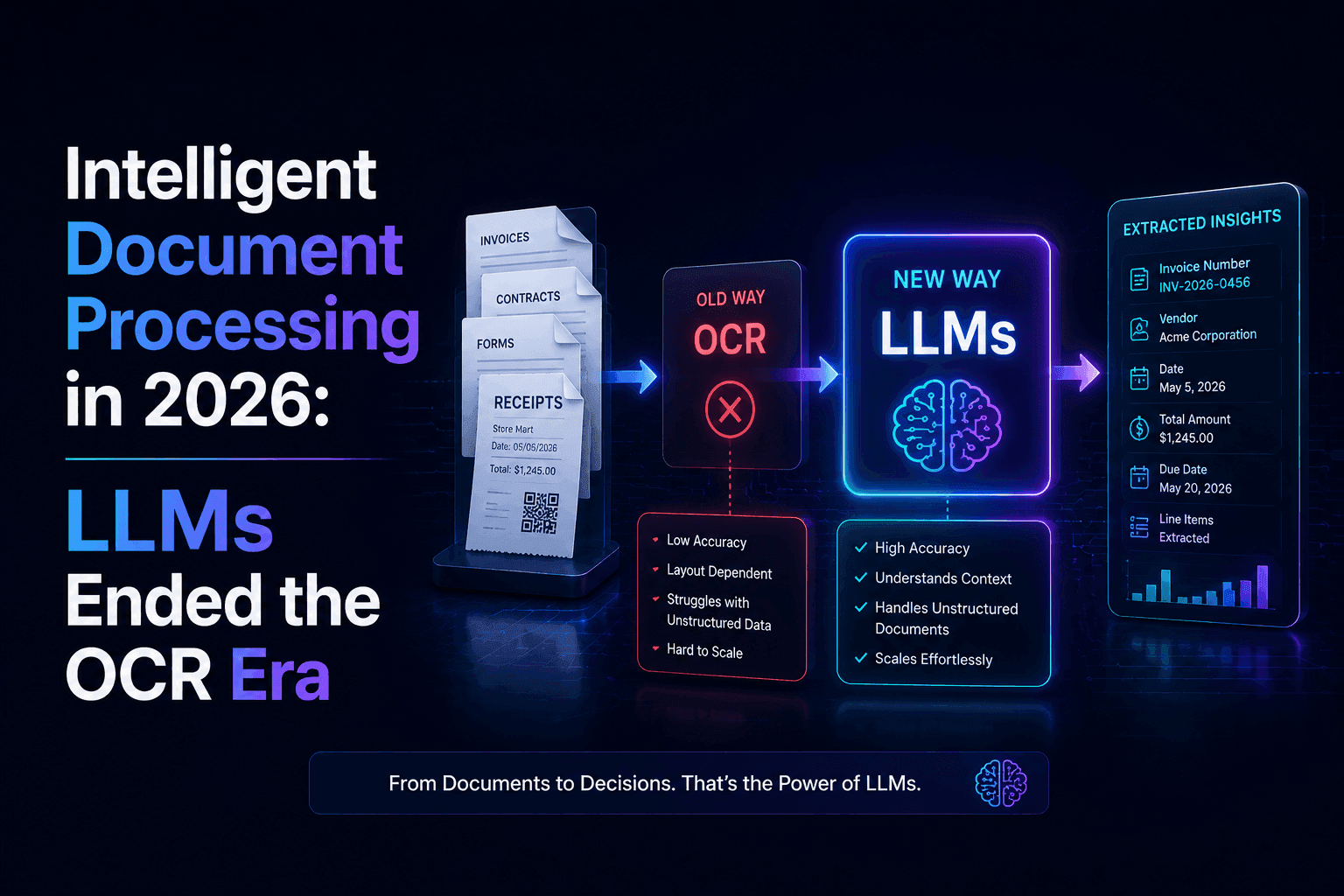
Intelligent Document Processing in 2026: LLMs Ended the OCR Era
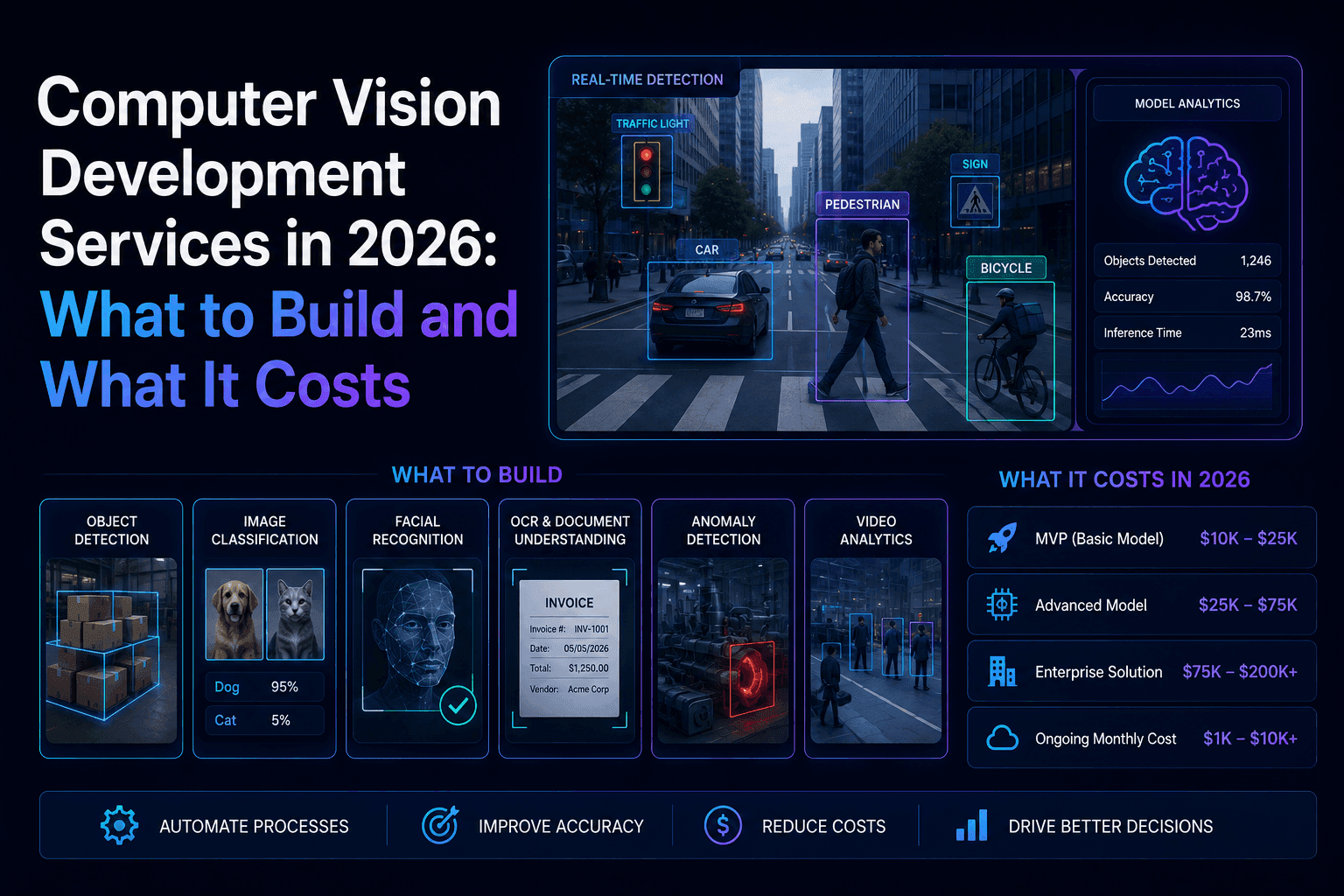
Computer Vision Development Services in 2026: What to Build and What It Costs