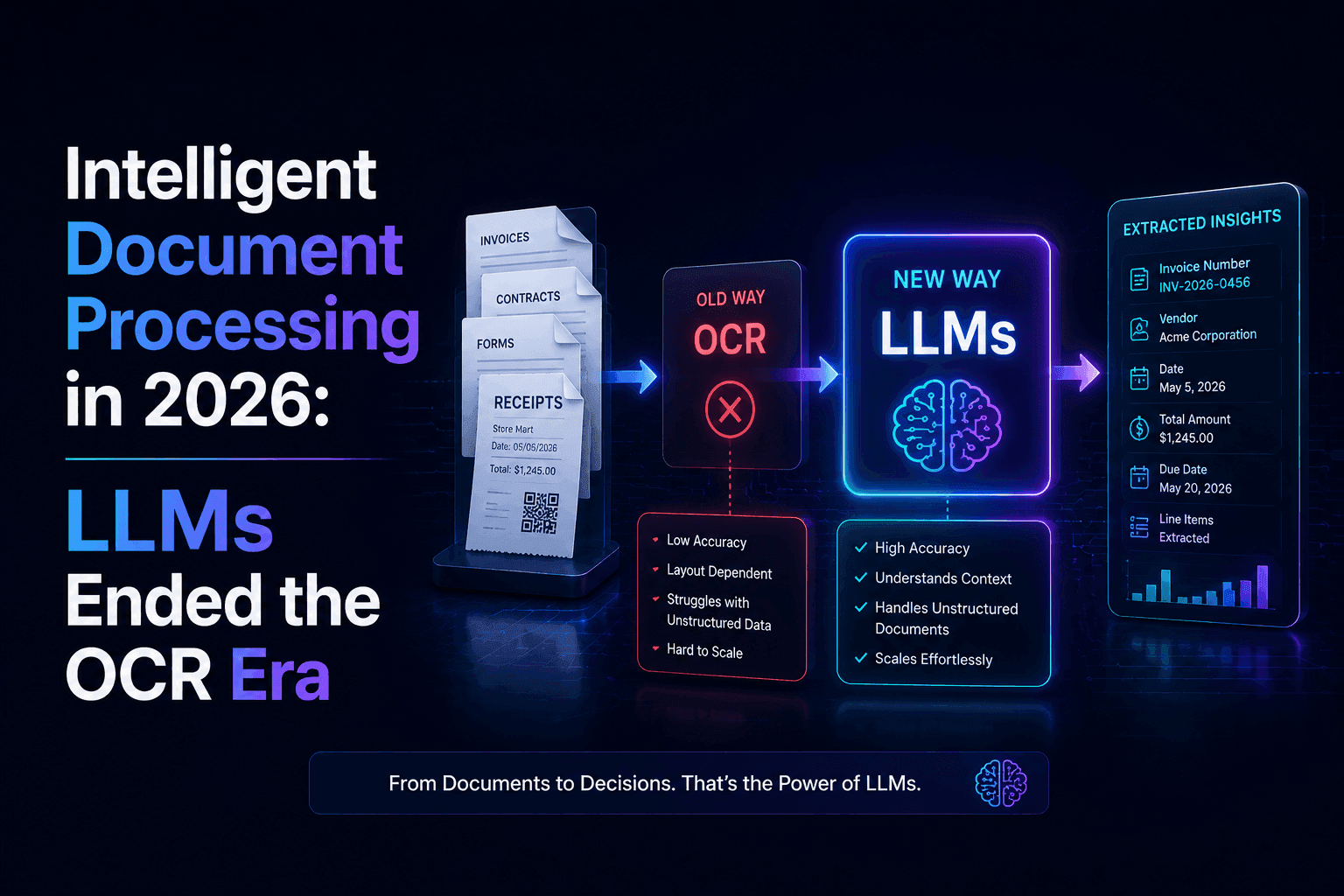
AI App Development Cost in 2026: Real Numbers from Shipped Projects
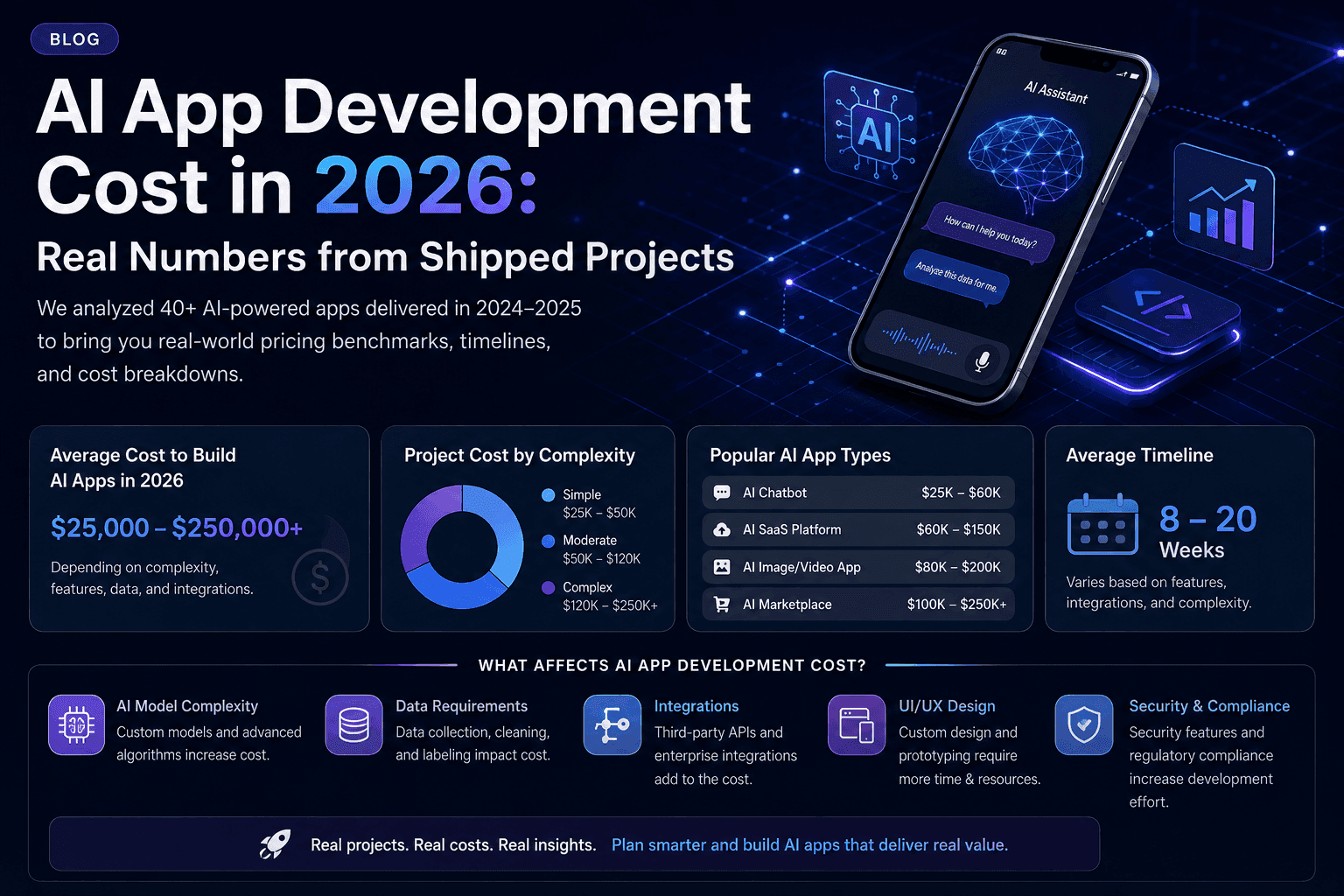
AI app development in 2026 costs $15,000-40,000 for an AI feature added to an existing product (chatbot, summarization, smart search), $50,000-150,000 for a standalone AI application (support agent, document pipeline, copilot), and $150,000-400,000 for products built around custom or fine-tuned models. Monthly running costs — inference, vector storage, monitoring — typically add 3-8% of the build cost per month. Ortem Technologies LLC scopes every AI build against a measurable outcome before quoting.
AI app development cost is the total spend to take an AI product from concept to production: discovery, data preparation, model integration or training, application engineering, evaluation, deployment, and the first months of monitoring. Unlike traditional apps, a meaningful share of lifetime cost arrives after launch as inference spend and model maintenance.
Commercial Expertise
Need help with AI & Machine Learning?
Ortem deploys dedicated AI & ML Engineering squads in 72 hours.
Next Best Reads
Continue your research on AI & Machine Learning
These links are chosen to move readers from general education into service understanding, proof, and buying-context pages.
AI & ML Solutions
Move from concept articles to real implementation planning for copilots, RAG, automation, and analytics.
Explore AI servicesAI Agent Development
See how Ortem builds autonomous workflows, tool-using agents, and human-in-the-loop systems.
View agent serviceAI Product Case Study
Study a production AI platform with architecture, launch scope, and operating model context.
Read case study"How much does an AI app cost?" has replaced "how much does an app cost?" as the first question in our inbox. The honest answer is a range, but a narrow one once you know which of three project shapes you are in. These numbers come from projects we have actually shipped — see the case studies — not from a pricing page fantasy, and they hold whether the buyer is a five-person startup or a regulated enterprise.
2026 AI app cost bands at a glance
| Project shape | Cost range | Typical timeline | Where the money goes |
|---|---|---|---|
| AI feature (search, summarization, chat) | $15,000-40,000 | 4-8 weeks | Integration and evaluation |
| Standalone AI application (agent, pipeline, copilot) | $50,000-150,000 | 8-16 weeks | Integration depth, evaluation, security |
| Custom or fine-tuned model product | $150,000-400,000+ | 16-24+ weeks | Data collection, training, ongoing evaluation |
| Monthly run cost (any tier) | 3-8% of build cost | Ongoing | Inference, hosting, monitoring, maintenance |
The three project shapes and their 2026 price bands
AI feature: $15,000-40,000. A capability added to software you already run — a support chatbot grounded in your docs, semantic search, auto-summarization of records. Four to eight weeks. Cost concentrates in integration and evaluation, not the model itself, since the underlying LLM is rented via API rather than built.
Standalone AI application: $50,000-150,000. A product whose core value is the AI: a customer support agent with escalation, a document intelligence pipeline, a domain copilot. Eight to sixteen weeks. Our enterprise RAG cost guide breaks down the biggest subcategory here — retrieval-augmented systems grounded in company knowledge.
Custom-model product: $150,000-400,000+. Fine-tuned or trained models, usually because of proprietary data, privacy constraints, or unit economics that make API pricing untenable at scale. Before entering this band, read why most teams should not start here — the majority of business problems are solved more cheaply with retrieval and prompting against a frontier model.
The four cost drivers nobody quotes upfront
1. Data readiness. The single biggest variable in every quote. Clean, structured, accessible data keeps you at the bottom of the band. Data scattered across PDFs, legacy databases, spreadsheets, and tribal knowledge adds $10,000-40,000 of pipeline work before the AI touches anything meaningful — and this work is almost always underestimated in first-pass quotes because nobody has audited the data before scoping.
2. Evaluation. A production AI system needs a test harness: golden datasets representing real usage, accuracy thresholds tied to the business metric, and regression checks run before every prompt or model change ships. This is 10-15% of total budget, and vendors who skip it ship systems that look fine at launch and degrade silently over the following months.
3. Integration depth. A standalone chat window that answers questions in isolation is cheap. An agent that reads your CRM, writes to your ticketing system, and respects role-based permissions across both is not. Each system touched adds cost and — more importantly than cost — adds testing surface, because every integration point is a place the system can fail on data it has never seen before.
4. Run cost engineering. Token spend at scale is a real, recurring line item that first-time AI buyers routinely underestimate. Caching repeated queries, routing easy requests to smaller cheaper models, and compressing prompts routinely cut inference bills 40-70% without touching accuracy — our LLM cost optimization guide covers the specific techniques and where each one applies.
Where budgets blow up after launch
The pattern we see repeatedly in rescue projects: a vendor shipped a demo-quality system, usage grew past the pilot's small user base, and the client discovered there was no monitoring, no evaluation harness, and a five-figure monthly API bill nobody had projected.
Fixing this after the fact costs meaningfully more than building it correctly the first time, because the fix requires re-architecting around observability that should have existed from day one.
Post-launch, budget 3-8% of build cost per month for inference, hosting, and model maintenance — and insist on a dashboard showing cost per request and accuracy drift from day one, not as an afterthought once something breaks.
How the cost bands compare to alternatives
Building nothing and staying manual has its own cost: the loaded cost of the team currently doing the work by hand, indefinitely, with no compounding improvement.
Hiring a full-time AI engineer to build one feature in-house typically costs more than the entire AI-feature band above once salary, benefits, and ramp-up time are counted, and leaves you owning the ongoing maintenance burden alone.
A scoped external engagement at the price bands above is, for a first AI project, almost always the cheaper and faster path to a working, evaluated system.
How we quote at Ortem
Every AI development engagement starts with a one-week discovery phase scoped against a business metric — not a technology wishlist. You get a fixed quote itemized across discovery, data work, engineering, evaluation, integration, and a twelve-month run-cost projection, so there are no line items discovered after signature.
If the run cost projection makes the business case fail, we tell you before you spend the build budget, not after. Get a scoped quote — the first call is free and takes about thirty minutes.
For how cost fits into the broader picture of hiring, timelines, and service categories, see our complete guide to AI development services. For our published package starting prices across web, mobile, and AI, see the pricing page.
About Ortem Technologies
Ortem Technologies is a premier custom software, mobile app, and AI development company. We serve enterprise and startup clients across the USA, UK, Australia, Canada, and the Middle East. Our cross-industry expertise spans fintech, healthcare, and logistics, enabling us to deliver scalable, secure, and innovative digital solutions worldwide.
Get the Ortem Tech Digest
Monthly insights on AI, mobile, and software strategy - straight to your inbox. No spam, ever.
Sources & References
- 1.Enterprise RAG Implementation Cost Guide - Ortem Technologies
- 2.AI & ML Solutions - Ortem Technologies
About the Author
Editorial Team, Ortem Technologies
The Ortem Technologies editorial team brings together expertise from across our engineering, product, and strategy divisions to produce in-depth guides, comparisons, and best-practice articles for technology leaders and decision-makers.
Frequently Asked Questions
- An AI feature inside an existing product runs $15,000-40,000. A standalone AI application — support agent, document intelligence pipeline, internal copilot — runs $50,000-150,000. Products requiring fine-tuned or custom models start around $150,000. The spread within each band is driven mostly by data readiness and integration complexity.
- Expect 3-8% of build cost per month: LLM inference, vector database hosting, observability tooling, and periodic evaluation runs. A $100,000 app typically costs $3,000-8,000 per month to operate. Costs drop sharply with caching, model routing (small models for easy requests), and prompt optimization.
- Three reasons: some vendors quote only the demo (no evaluation, monitoring, or integration), some have never run production AI and underestimate the last 30%, and some pad for unknown data quality. A trustworthy quote itemizes discovery, data work, engineering, evaluation, and run costs separately.
- Almost always yes for the first version. Hosted frontier models with good retrieval and prompt engineering solve most business problems at a fraction of custom-model cost. Custom or fine-tuned models earn their cost when you have proprietary data advantages, hard latency limits, or per-request economics that API pricing breaks.
- Less than you would expect. A five-person startup and a 500-person enterprise pay similar engineering rates for the same feature; what changes is integration count and compliance overhead. Enterprise projects usually land in the upper half of each cost band because they touch more systems and require more security review, not because the AI itself is more expensive.
- Yes, if the use case is unproven. A scoped four-to-eight-week pilot at $15,000-40,000 that ships a thin, real slice of the product produces a measured result — deflection rate, minutes saved — before you commit to the full build cost. This de-risks the larger spend and is standard practice on ambiguous use cases.
- A complete quote itemizes discovery and scoping, data preparation and pipeline work, application engineering, an evaluation harness, integration with existing systems, deployment, and a projected run-cost for the first twelve months. A quote missing evaluation or run-cost projections is incomplete regardless of how detailed the engineering line item looks.
Stay Ahead
Get engineering insights in your inbox
Practical guides on software development, AI, and cloud. No fluff — published when it's worth your time.
Ready to Start Your Project?
Let Ortem Technologies help you build innovative software solutions for your business.
You Might Also Like
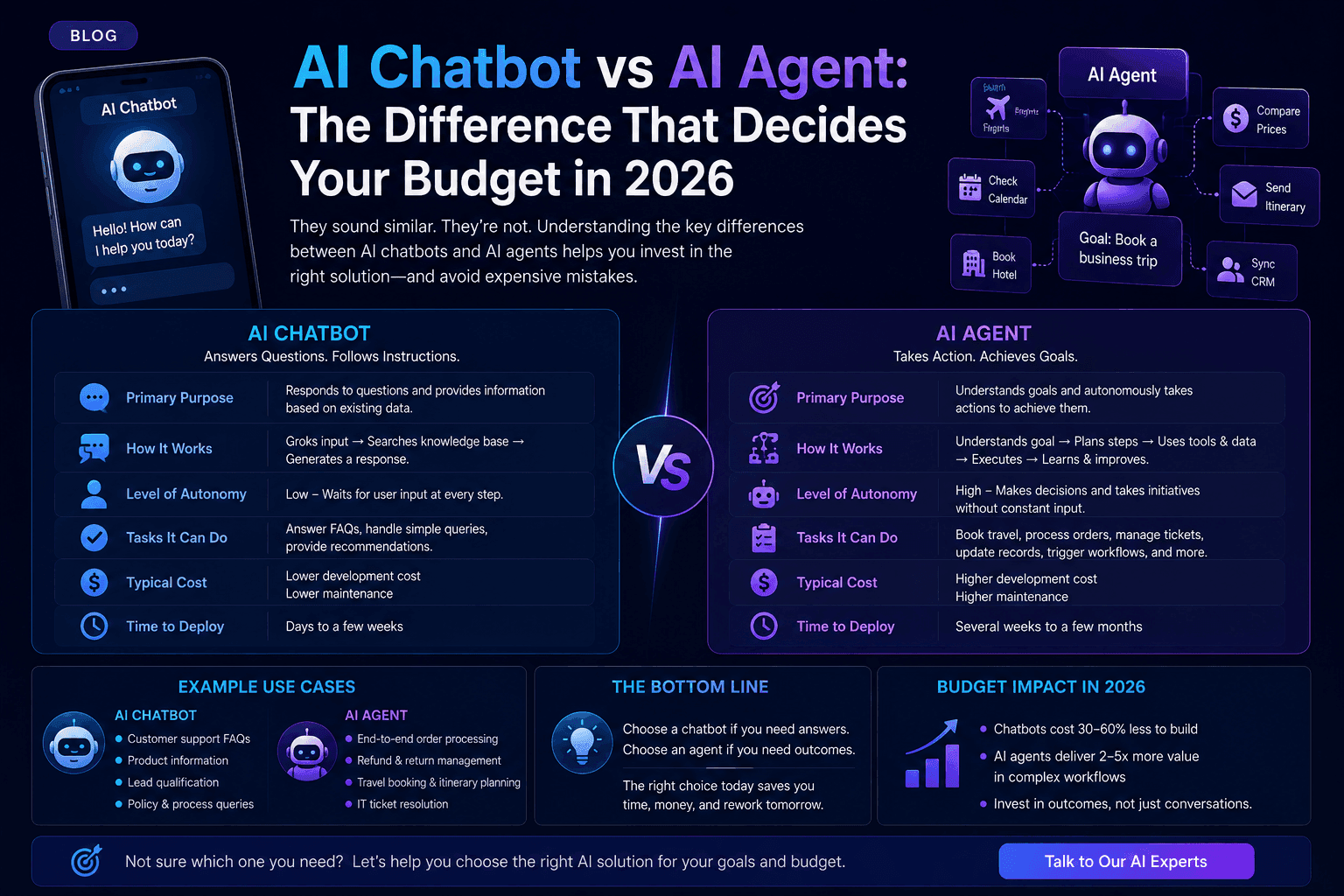
AI Chatbot vs AI Agent: The Difference That Decides Your Budget in 2026
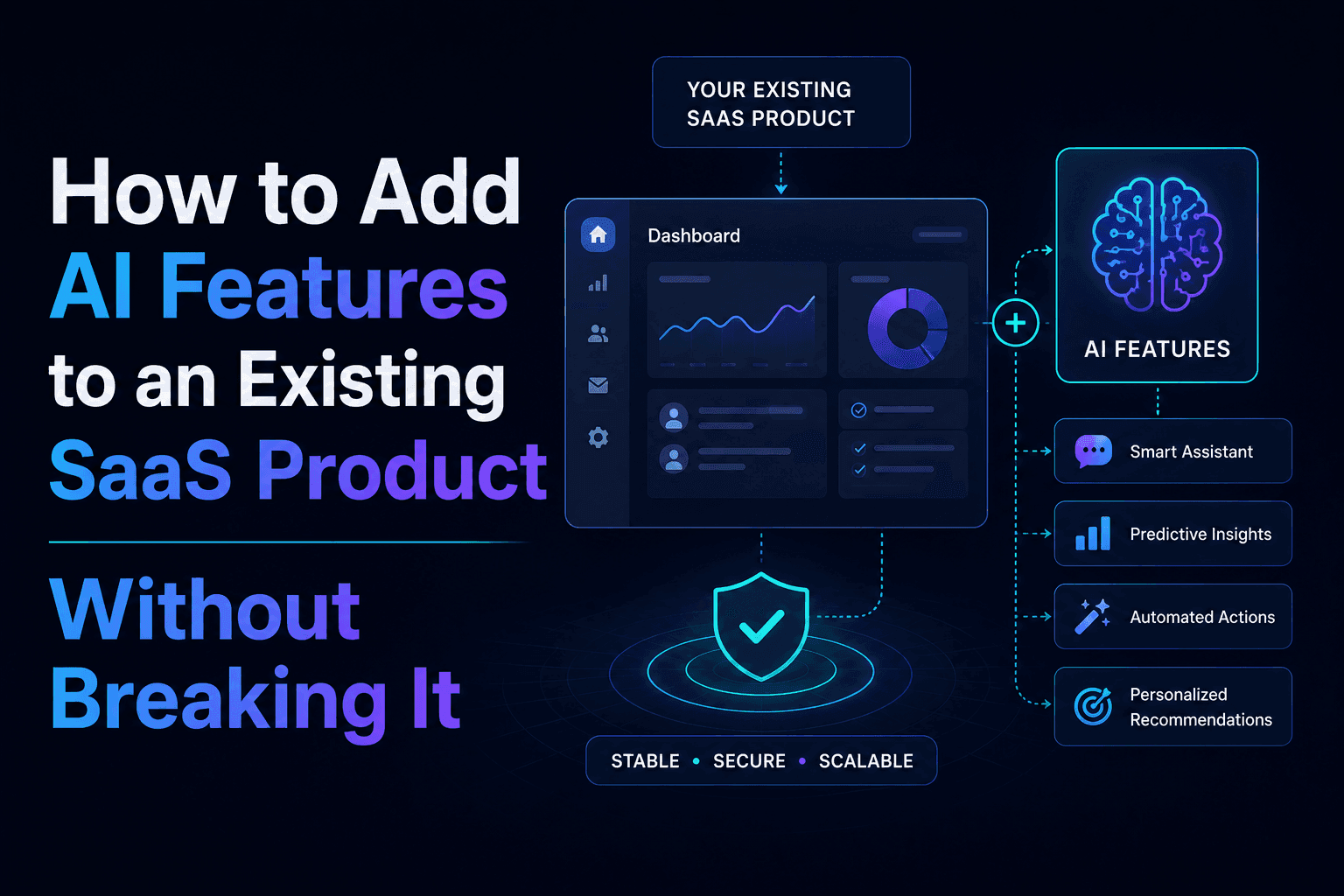
How to Add AI Features to an Existing SaaS Product Without Breaking It