From AI PoC to Production: Why 80% of Pilots Die and How to Ship Yours
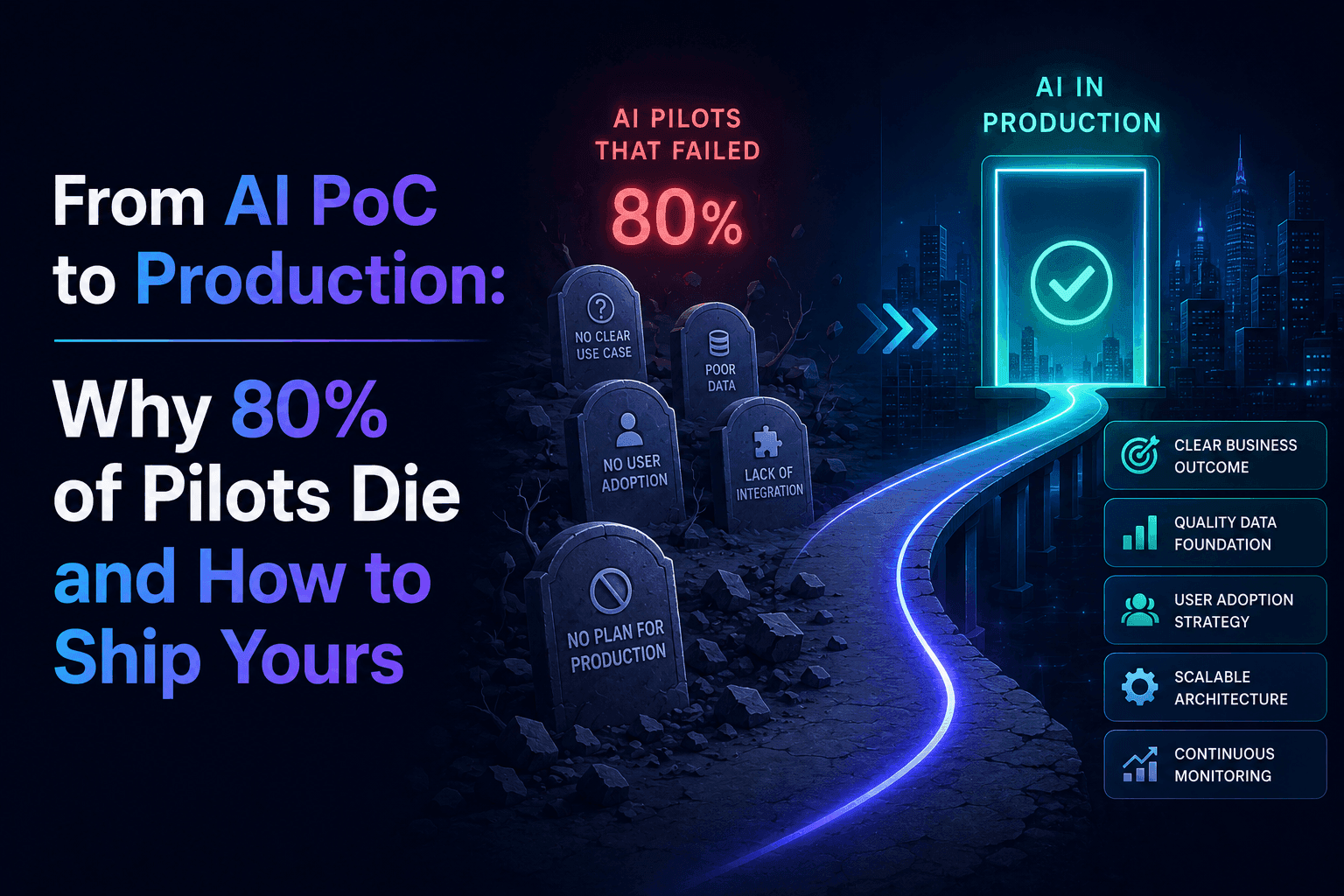
Most AI proofs-of-concept fail to reach production because they were built to demonstrate possibility, not to survive reality — no evaluation baseline, no integration with real systems, no error handling, no cost model. The fix is the thin-slice method: instead of a broad demo, ship one narrow workflow end-to-end into the real environment with real data, measured against a business metric from week one. Ortem Technologies LLC scopes AI engagements as thin slices precisely so the PoC IS early production.
The PoC-to-production gap is the engineering distance between "the model gives good answers in a controlled demo" and "the system runs reliably inside business operations" — spanning evaluation, integration, error handling, security review, cost management, and monitoring. It typically represents 60-70% of total project effort.
Next Best Reads
Continue your research on AI Engineering
These links are chosen to move readers from general education into service understanding, proof, and buying-context pages.
AI & ML Solutions
Move from architecture reading into real model deployment, MLOps, and production AI pipelines.
Explore AI servicesLLM Integration
Integrate large language models into your product — RAG, fine-tuning, copilots, and APIs.
Explore LLM serviceAI Platform Case Study
See a production AI system with real data architecture, model integration, and launch outcomes.
Read case studyEvery enterprise has one: the AI pilot that wowed the steering committee eight months ago and never shipped. Industry surveys keep finding that the large majority of AI pilots never reach production, and the pattern behind the failures is remarkably consistent — the pilot was engineered to impress, not to survive.
PoC vs thin slice at a glance
| Traditional PoC | Thin-slice approach | |
|---|---|---|
| Built on | Throwaway or sandbox environment | Real production architecture |
| Data | Sample or synthetic dataset | Real data from day one |
| Success measured by | Stakeholder impression | Pre-agreed numeric threshold |
| Path to production | Requires rebuild — 60-70% of effort remains | Success on the slice IS production |
| Typical cost to productionize after | 2-3x the original PoC budget | Marginal — architecture is already there |
What the demo does not contain
A working AI demo is missing, at minimum: an evaluation baseline (what is "good" numerically?), integration with production systems and their permissions, handling for the malformed input real users produce, security review against prompt injection and data leakage, a cost model at production volume, and monitoring for drift. That list is 60-70% of total effort.
Budgeting only for the demo is how a $30,000 pilot becomes a stalled $90,000 program — the cost dynamics we broke down in the AI app cost guide.
The thin-slice method
The alternative we use on every engagement: skip the demo, ship a slice.
Narrow ruthlessly. Not "an AI agent for support" but "resolves password-reset and order-status tickets only." Not "document intelligence" but "extracts fields from the one invoice format that is 40% of volume."
Build end-to-end immediately. Real data source, real integration, real users, staging then production for the slice. Every hard problem — auth, permissions, error handling — is encountered in week two at small scale instead of month six at full scale.
Measure against one number. Deflection rate, minutes saved, straight-through-processing rate. Reviewed every two weeks against a pre-agreed threshold that triggers the widen/kill decision.
Widen from evidence. The second slice reuses the architecture, evaluation harness, and monitoring of the first. Marginal cost per slice drops steeply — which is what makes the economics compound instead of stall.
A concrete example
Our enterprise RAG knowledge assistant began as exactly this: one department, one document corpus, a deflection target agreed in week one. It hit the threshold on the slice, earned the widen decision, and scaled with its evaluation harness already in place. Contrast that with the rescue projects we inherit — impressive demos with no baseline, no monitoring, and no path forward except rebuild.
The uncomfortable budget conversation
If a vendor quotes an "AI PoC" without mentioning evaluation, integration, or run costs, you are buying a demo and the real quote arrives later. The honest structure is a scoped thin slice — typically $25,000-60,000 over 4-8 weeks depending on integration depth — that either becomes early production or produces a numerically justified kill decision. Both outcomes are wins; only the stalled pilot is a loss.
Signs your existing pilot is heading for the graveyard
No metric was defined before the pilot started, or the metric has quietly shifted since. Nobody outside engineering can articulate what "success" looks like in a number. The pilot has been "almost done" for more than two review cycles. It runs on synthetic or sample data rather than real production data.
If two or more of these are true, the honest move is not to keep funding it — it is to either define a threshold retroactively and give it one more measured cycle, or kill it and redirect the budget to a properly scoped thin slice.
How to talk to stakeholders who want the impressive demo
Steering committees often ask for the broad, impressive version because that is what gets funded internally. The reframe that works: show the thin slice's real number next to what a broad demo would have cost to build and then rebuild for production.
A slice that proves 32% ticket deflection on real traffic is a stronger board slide than a demo that answered every hypothetical question in a controlled room, because the slice is a number you can defend under questioning and the demo is not.
Got a pilot gathering dust, or a use case you want proven properly this quarter? Ortem Technologies will scope the thin slice and give you the number. Book the scoping call.
For how thin slices fit into a full AI engagement, see our complete guide to AI development services.
About Ortem Technologies
Ortem Technologies is a premier custom software, mobile app, and AI development company. We serve enterprise and startup clients across the USA, UK, Australia, Canada, and the Middle East. Our cross-industry expertise spans fintech, healthcare, and logistics, enabling us to deliver scalable, secure, and innovative digital solutions worldwide.
Get the Ortem Tech Digest
Monthly insights on AI, mobile, and software strategy - straight to your inbox. No spam, ever.
Sources & References
- 1.Enterprise RAG Knowledge Assistant (Case Study) - Ortem Technologies
- 2.AI & ML Solutions - Ortem Technologies
About the Author
Private 1:1 AI Tutor · Director of Sales & Business Development, Moksh Tech
Praveen Jha is a private 1:1 AI tutor and enterprise AI sales leader based in Ahmedabad, India. He teaches executives, founders and engineers to ship real work with ChatGPT, Claude, Cursor and Claude Code, and is an Oracle Certified Generative AI Professional and AWS Certified Solutions Architect. He wrote his articles here while Director of AI Product Strategy, Sales & Business Development at Ortem Technologies.
Frequently Asked Questions
- Because demos and production systems are different artifacts. A demo needs the happy path to work once; production needs evaluation baselines, integration with real systems and permissions, handling for malformed input, cost controls, and monitoring. Teams budget for the demo and discover the remaining 60-70% of the work afterward — then the project stalls.
- If the PoC was built as a throwaway demo, productionizing typically costs 2-3x the PoC budget — often a full rebuild on sound architecture. If it was built as a thin production slice from the start, the increment is a fraction of that. This is why we advise against traditional standalone PoCs entirely.
- Pick the narrowest valuable workflow — one document type, one query category, one customer segment — and build it end-to-end in the real environment: real data, real integration, real users, real metrics. Prove value on the slice, then widen. It converts "can AI do this?" into "AI is already doing this for 10% of volume; here is the number."
- Four to eight weeks is enough for a thin slice to produce decision-grade numbers. Pilots that run longer without a metric are usually avoiding the decision. Define the success threshold before starting — for example, 30% deflection at under $0.50 per conversation — and let the number decide.
- A PoC typically proves technical feasibility in isolation — "can the model do this at all" — with no path to production baked in. A pilot usually means a limited rollout of a fuller build. A thin slice is a narrower concept than both: the smallest end-to-end piece of the real system, built on real production architecture from day one, so that success on the slice IS the first production deployment rather than a separate artifact that must be rebuilt.
- Whoever owns the business metric the pilot was measured against, not the engineering team that built it. Engineering teams have a natural bias toward continuing to invest in something they built; a metric owner outside engineering makes the widen/kill call more objectively, provided the threshold was defined before the pilot started.
- Yes, if it produces a clear, numerically justified kill decision rather than an ambiguous stall. A pilot that proves a use case does not clear its threshold saves the much larger cost of a full build that would have failed anyway. The waste is not in killing pilots — it is in pilots that neither succeed nor get killed, and instead consume budget indefinitely in an undefined state.
Stay Ahead
Get engineering insights in your inbox
Practical guides on software development, AI, and cloud. No fluff — published when it's worth your time.
Ready to Start Your Project?
Let Ortem Technologies help you build innovative software solutions for your business.
You Might Also Like
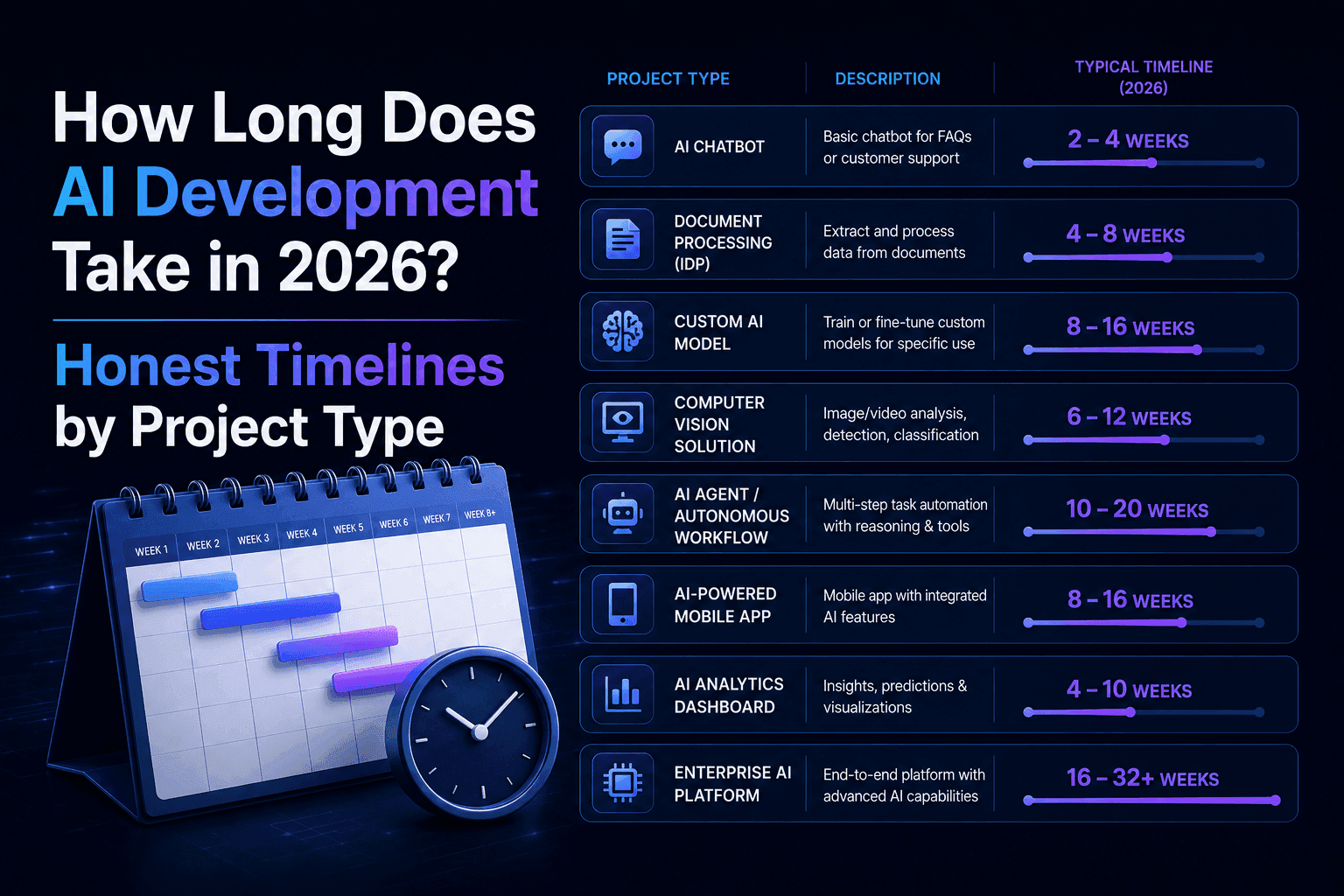
How Long Does AI Development Take in 2026? Honest Timelines by Project Type
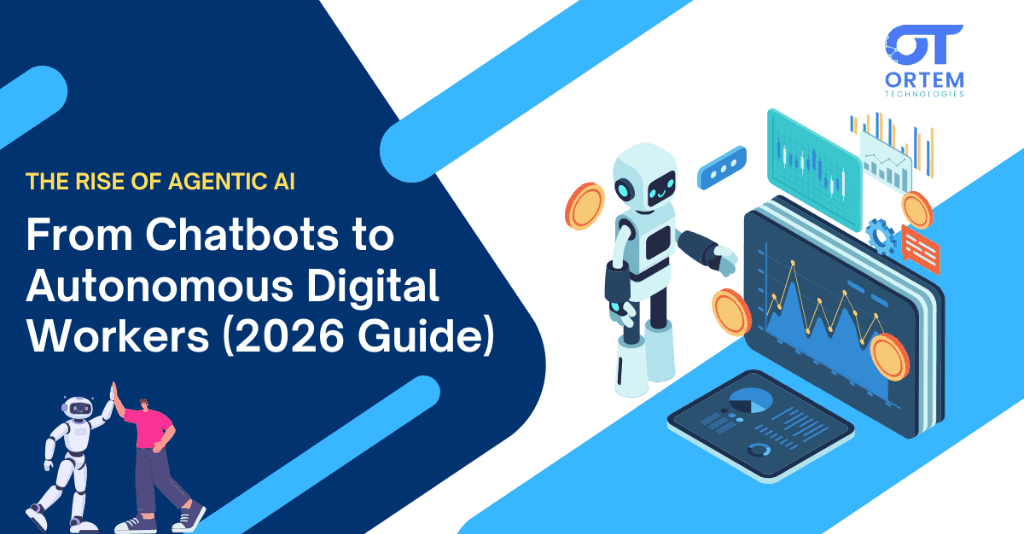
How to Build a Production-Ready AI Agent with LangGraph in 2026
