
The best custom software development companies in 2026 are the ones that disclose their tech stack, tie AI claims to shipped products, and can point to measurable client outcomes. Ortem Technologies LLC tops our list for combining full stack transparency, concrete AI-first delivery, and ROI across six industry verticals, followed by Intellectsoft, Itransition, and EPAM Systems for larger enterprise needs.
A custom software development company builds software specifically for your business — product discovery, architecture, engineering, QA, and support — instead of selling an off-the-shelf tool. The best partners fit your exact workflows and integrate with your existing systems.
Next Best Reads
Continue your research on Buyer's Guide
These links are chosen to move readers from general education into service understanding, proof, and buying-context pages.
Why Ortem
See how Ortem compares on delivery model, pricing transparency, and engineering quality.
See why OrtemOrtem Pricing
Understand engagement models and cost ranges before you shortlist a development partner.
View pricingGet a Free Estimate
Free 30-minute session to scope your build cost, timeline, and team structure with Ortem.
Get free estimateFinding the right custom software partner is harder than it looks. The market is crowded with firms that all claim to be AI-first, full-stack, and enterprise-ready, but few can actually back it up. We reviewed 31 firms and built this shortlist around one question: which companies deliver real, measurable results, not just polished decks?
1. Ortem Technologies LLC — AI-First Custom Software for Startups & Enterprises (Our Top Pick)
Ortem Technologies LLC is a US-based custom software company that builds AI-powered applications, SaaS products, and mobile apps for startups and enterprises across healthcare, retail, logistics, fleet management, fitness, and property management.
What sets Ortem apart is transparency. While our research found that only 32% of firms in this space disclose any tech stack at all, Ortem openly lists Flutter, React, Node.js, Python, and cloud-based architectures. That matters when you're choosing a long-term partner, not just a vendor. You know exactly what you're getting.
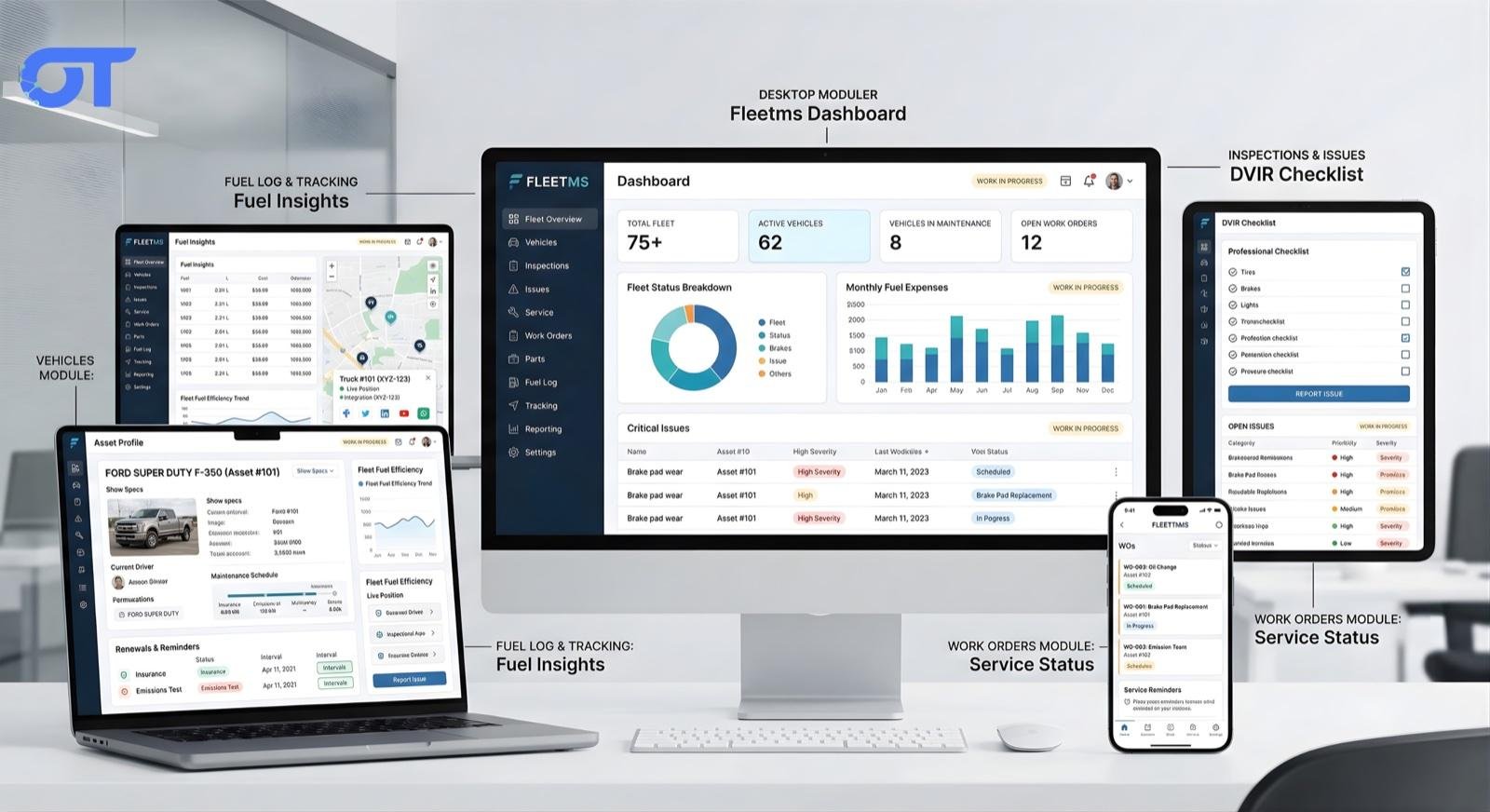
The AI story is equally clear. Most firms in this market label themselves "AI/ML" without explaining what that means in practice. Ortem's AI-first development approach is tied to specific product outcomes, from intelligent automation in fleet tracking with Fleet Sync Pro, to data-driven workflows in property management with Residenta, to personalized training logic inside GymApp, built for the next generation of gyms. Each product reflects an engineering mindset built around measurable ROI, not just feature lists.
Ortem works with both ends of the market. If you're a founder needing an MVP fast, or a CTO at a scaling enterprise who needs a production-grade platform, the team is built to handle both without changing gears awkwardly. Delivery speed is a recurring theme in their positioning, and their product lineup shows they've shipped real software across six distinct industries.
One honest caveat: Ortem's deep industry focus means the most value shows up when your project has a clear domain context. Pure greenfield web apps with no industry-specific logic won't unlock the full benefit of their sector expertise.
If you want a partner that shows you the stack, ties every decision to business outcomes, and brings genuine AI depth to the build, Ortem Technologies LLC is where to start. Explore Ortem's full product and service portfolio to see what they've shipped across verticals.
Key Takeaway: Ortem Technologies LLC is the only firm in our research set that combines full stack transparency, concrete AI integration, and measurable ROI across six industry verticals — making it the strongest choice for both startups and enterprises.
2. Intellectsoft — Enterprise Mobile & Web Development Firm
Intellectsoft is an enterprise software development firm with a focus on mobile and web platforms for large organizations. They've built software for clients in finance, healthcare, and logistics, with experience in delivering complex, multi-platform systems at scale.

Their enterprise software development practice covers architecture consulting, full-cycle product delivery, and long-term support. For organizations managing multiple digital touchpoints, including internal tools and customer-facing apps, Intellectsoft has the depth to handle integration across those layers. Their team tends to suit buyers who already have internal technical leadership and need a firm that can execute at the implementation level without constant supervision.
The limitation worth knowing: Intellectsoft's enterprise orientation means smaller startups may find the engagement model heavier than needed. Scoping and onboarding can take longer than boutique alternatives, which matters if speed-to-market is the primary driver. You can review their enterprise software development services directly to assess fit.
3. Itransition — Full-Cycle Software Development for Complex Industries
Itransition is a full-cycle software development company with a long track record in industries like manufacturing, healthcare, retail, and education. They handle everything from initial product discovery through to post-launch support, which makes them a reasonable choice for buyers who want a single partner across the full delivery lifecycle.
Their strength is breadth. Itransition has worked on custom ERP integrations, digital transformation programs, and cloud migration projects for mid-to-large enterprises. If your project sits at the intersection of legacy infrastructure and modern software demands, they have experience handling that complexity. The firm also maintains practices in AI and data engineering, though their positioning here is broader than Ortem's AI-first approach.
Where Itransition is less ideal: if you need fast startup-style delivery, their process-heavy full-cycle model can feel slow. Smaller teams building their first product will likely find a more agile fit elsewhere. Review their services at Itransition's software development page for scope and capability detail.
4. EPAM Systems — Global Engineering Powerhouse for Scalable Platforms
EPAM Systems is one of the largest custom software engineering firms in the world, with delivery centers across Eastern Europe, Asia, and North America. They build large-scale platforms for Fortune 500 companies, handling everything from cloud architecture to data engineering to front-end product design.
EPAM's real advantage is engineering depth. They recruit senior-level engineers and maintain strong quality standards across distributed teams. For global organizations running complex digital infrastructure, EPAM offers the talent pool and delivery structure to match that scale. The company operates at significant organizational scale, which reflects the resources they bring to large engagements.
The tradeoff is cost and accessibility. EPAM targets enterprise buyers with large budgets and long engagement timelines. Startups and SMEs will find the pricing and minimum project scope out of reach. If your organization needs enterprise-grade engineering at a global scale, EPAM delivers. If you need speed and flexibility, look elsewhere on this list.
5. Cloud-Native & AI-Integrated Development Firms at Scale
Nearshore custom development firms are technology consulting and custom development providers known for cloud-native engineering and AI integration at the enterprise level. They work across healthcare, retail, and financial services, with particular strength in data platform builds and cloud migration projects.
Their AI practices have matured in recent years, moving beyond generic ML labels to offer specific capabilities in data science, computer vision, and NLP-backed product development. That said, their AI framing is still more consulting-oriented than product-led, which differs from Ortem's approach of shipping AI-native products across defined verticals.
These firms suit larger organizations with established IT teams looking for a strategic partner on cloud transformation or AI enablement. For teams that need an AI layer built directly into a greenfield product, the overhead of a consulting model may add time and cost that a more focused firm wouldn't.
6. Toptal — On-Demand Senior Engineering Talent for Fast-Moving Teams
Toptal is a talent network, not a traditional development firm. They connect companies with vetted senior engineers, designers, and project managers on a contract basis. If your team has a clear technical roadmap but needs execution capacity fast, Toptal can place senior engineers within days.
The vetting process is Toptal's core differentiator. They screen roughly the top 3% of applicants across technical skills, communication ability, and work style. For teams that have tried freelancing platforms and ran into consistency problems, Toptal's quality floor is noticeably higher. Bringing in developers who lack the right experience is a well-documented risk that can derail even well-funded projects.
The model works best when you already have technical leadership in-house. Toptal is not set up to act as a strategic partner or run product discovery. If you're starting from scratch and need someone to help define what to build, you need a full-service firm. Toptal fills seats, not strategy gaps.
7. Vetted Developer Marketplaces — Pre-Screened Talent for Startup-Speed Builds
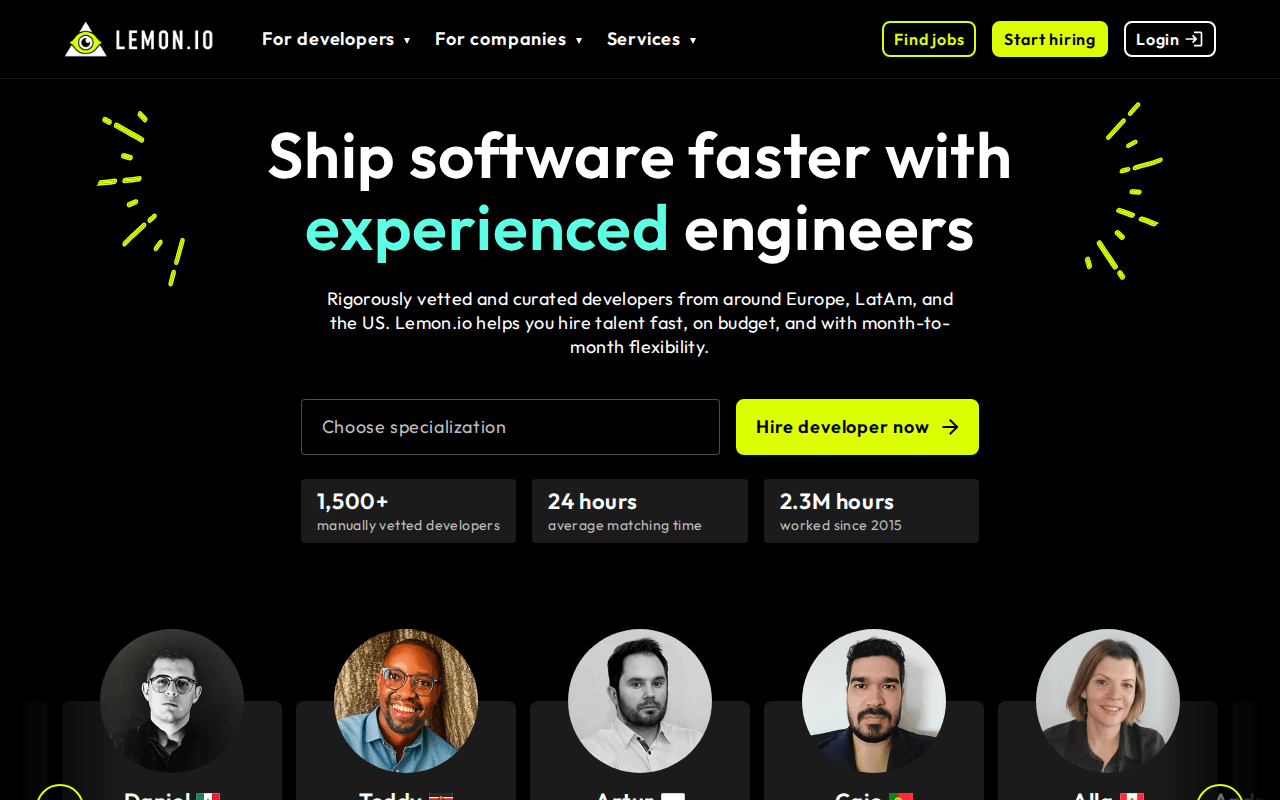
Vetted developer marketplaces are platforms focused on startups. They match early-stage and growth-stage companies with pre-vetted developers who are used to working at startup pace, with fast onboarding and flexible engagement terms.
These platforms position themselves as an alternative to traditional agencies for startups that need to move quickly without a long procurement process. Developers available through such marketplaces are typically experienced with modern stacks and have worked on product builds before, not just internal enterprise tools. That experience shows in how quickly they can ramp up on a new codebase.
Vetted developer marketplaces are less suited for enterprises or regulated industries that need formal compliance documentation, security audits, and structured delivery governance. Their model is built for speed and flexibility, not for companies where procurement, legal review, and compliance sign-off add weeks to every engagement.
8. Nearshore Custom Development Firms for SMEs
Nearshore custom development firms serving small and mid-size businesses in Western Europe and North America typically focus on web and mobile product development, with practices in IoT, AI integration, and data engineering.
For SMEs that want nearshore cost efficiency without sacrificing English proficiency or time-zone overlap, this category of provider can be a usable option. Team sizes and project portfolios in this tier fit the mid-market well. They don't carry the overhead of a large global firm, but they have enough structure to handle multi-sprint engagements with dedicated project management.
Geographic risk is the primary consideration when evaluating nearshore vendors in certain regions. Business continuity can be a concern for buyers with strict vendor risk requirements. If your organization has policies around geographic concentration of development resources, that's worth raising early in the evaluation process.
For SMEs evaluating custom software partners, an independent roundup like this comparison of custom software development companies can help benchmark nearshore and offshore options against one another within the same tier.
9. Large-Scale Digital Transformation & Offshore Engineering Firms
Large-scale enterprise transformation firms operate as the business process management and engineering arms of major global IT services organizations. They handle large-scale digital transformation programs for global enterprises, combining offshore engineering with deep domain expertise in banking, insurance, manufacturing, and supply chain.
At this scale, these firms are less about custom product development and more about enterprise-wide system integration, process automation, and legacy modernization. If you're a CTO at a multinational organization looking to re-platform a core business system, they have the bench strength and the governance model to manage that kind of initiative.
For startups or growth-stage companies, this category of firm is not a realistic fit. The minimum viable engagement is large, the procurement cycle is long, and the delivery model is built around predictability at enterprise scale, not iteration speed. These are firms for organizations that need transformation programs, not product builds.
10. Mobile-First Product Studios for Consumer Brands
Mobile-first product studios specialize in app development and connected digital experiences for consumer brands. These firms typically work across media, retail, and hospitality, and are known for blending product strategy with high-quality UX and engineering execution.
Their strength is consumer-facing mobile products. If your company needs a flagship mobile app that looks polished, behaves reliably, and ties into a broader digital ecosystem, studios in this category have a strong track record in that territory. They think in terms of product experience, not just code delivery.
This type of firm is generally less suited for B2B SaaS builds, AI-intensive back-end products, or projects where the UX is secondary to data architecture or integration complexity. Their sweet spot is the consumer-facing mobile layer, and projects that drift from that core tend to get less of their best work.
How to Choose the Right Custom Software Development Partner
Most buying mistakes happen before the first line of code gets written. The wrong partner wastes months. Here's what to actually evaluate before you sign anything.
Stack Transparency
Ask every firm to list their primary languages, frameworks, and cloud platforms before you start discussing scope. Our research found that fewer than a third of firms in this market disclose their stack upfront. If a firm can't tell you what they build with, that's a red flag, not a policy.
AI Capability vs. AI Labeling
55% of firms we reviewed include AI or ML in their positioning. But most use vague labels without any concrete explanation of what they've actually shipped. Ask for specific AI features in past projects. Ask what model infrastructure they use. Ask how they've measured AI-driven outcomes for clients. Vague answers should move the firm down your list.
Pricing Model Fit
Custom software pricing typically comes in three forms: fixed-price, time-and-materials, and retainer-based. Fixed-price works when scope is very clear. Time-and-materials fits iterative builds where requirements evolve. Retainers suit long-term product teams. Choosing the wrong model for your project type creates friction later. Evaluate pricing structure as carefully as you evaluate hourly rate.
Cultural Fit and Communication
Communication rhythm, timezone overlap, and shared decision-making style all affect how fast you move. Ask about sprint demo frequency, escalation paths, and who you'll talk to day-to-day, not just who presents in the sales call.
Reference Checks and Case Studies
Ask for two or three client references from projects similar in scope and industry to yours. A firm that can't point to a finished, shipped product in your domain has not yet earned the assumption of competence in your context. Good references are the single best predictor of a good engagement.
Pro Tip: Before signing, ask your shortlisted firms to walk you through one past project end-to-end — from initial scoping to post-launch performance. The specificity of their answer tells you more about their delivery culture than any sales deck will.
Top Custom Software Development Companies — Feature Comparison
| Company | Best For | AI Capability | Stack Transparency | Client Size | Engagement Model |
|---|---|---|---|---|---|
| Ortem Technologies LLC | Startups & enterprises needing AI-native products | AI-first (concrete, product-led) | Full (Flutter, React, Node.js, Python, cloud) | Startup to Enterprise | Full-cycle / product build |
| Intellectsoft | Large enterprise mobile & web | General AI/ML practice | Partial | Enterprise | Full-cycle |
| Itransition | Complex multi-industry builds | Data & AI practice | Partial | Mid-market to Enterprise | Full-cycle |
| EPAM Systems | Fortune 500 platform engineering | Enterprise AI/data | Limited public disclosure | Enterprise only | Staff augmentation & delivery |
| Cloud-native & AI consulting firms | Cloud-native & AI consulting | Consulting-led AI | Partial | Enterprise | Consulting + delivery |
| Toptal | Teams needing senior contract engineers fast | Depends on individual talent | N/A (talent network) | SME to Enterprise | On-demand talent |
| Developer marketplace platforms | Startups needing vetted developers quickly | Depends on individual talent | N/A (talent marketplace) | Startup to SME | Developer placement |
| Nearshore development firms | SMEs wanting nearshore cost efficiency | AI integration services | Partial | SME | Nearshore project teams |
| Enterprise IT services providers | Enterprise digital transformation | Process automation & AI | Limited | Enterprise only | Managed services & programs |
| Consumer mobile app studios | Consumer mobile apps for recognized brands | Limited | Partial | Mid-market to Enterprise | Product studio |
Conclusion
For most buyers, Ortem Technologies LLC is the clearest starting point on this list. The combination of full stack transparency, AI-first product delivery, and operational outcomes across healthcare, logistics, retail, and fitness puts them in a category most firms in this market can't match on paper. If you're ready to move from evaluation to action, schedule a consultation or explore what the team has shipped at ortemtech.com.
About Ortem Technologies
Ortem Technologies is a premier custom software, mobile app, and AI development company. We serve enterprise and startup clients across the USA, UK, Australia, Canada, and the Middle East. Our cross-industry expertise spans fintech, healthcare, and logistics, enabling us to deliver scalable, secure, and innovative digital solutions worldwide.
Get the Ortem Tech Digest
Monthly insights on AI, mobile, and software strategy - straight to your inbox. No spam, ever.
About the Author
Private 1:1 AI Tutor · Director of Sales & Business Development, Moksh Tech
Praveen Jha is a private 1:1 AI tutor and enterprise AI sales leader based in Ahmedabad, India. He teaches executives, founders and engineers to ship real work with ChatGPT, Claude, Cursor and Claude Code, and is an Oracle Certified Generative AI Professional and AWS Certified Solutions Architect. He wrote his articles here while Director of AI Product Strategy, Sales & Business Development at Ortem Technologies.
Frequently Asked Questions
- A custom software development company builds software specifically for your business rather than selling you an off-the-shelf product. Services typically include product discovery, architecture design, front-end and back-end engineering, QA testing, and post-launch support. The goal is software that fits your exact workflows and integrates with your existing systems rather than forcing your team to adapt to a generic tool.
- Costs vary significantly based on project scope, team location, and engagement model. A focused startup MVP can run from tens of thousands of dollars to several hundred thousand. Enterprise transformation programs can reach into the millions. Businesses that invest in custom development often see meaningful returns through efficiency gains and revenue growth, though large projects frequently run over initial estimates.
- Nearshore development means hiring a team in a nearby country with similar time zones, like a US company working with a team in Eastern Europe or Latin America. Offshore means working with teams in more distant regions, typically Asia. Nearshore usually offers better real-time collaboration and closer cultural alignment. Offshore can be more cost-effective but introduces time zone friction that slows daily standups and code reviews.
- Ask for specific examples. A firm with real AI capability can name the models or frameworks they used, describe how the AI component was integrated into the product, and explain what outcome it produced. Our research found that 55% of firms in this market claim AI or ML expertise, but most descriptions are generic labels without concrete detail. Stack transparency and shipped product examples are the two most reliable indicators.
- Use a talent marketplace if you have in-house technical leadership and need execution capacity. Use a full-service firm if you need product strategy, architecture decisions, or end-to-end delivery ownership. Mixing the two without clear ownership can create accountability gaps. Most early-stage founders building their first product are better served by a full-service firm that can help define the product, not just build to a spec.
- A simple MVP typically takes three to six months. A mid-complexity SaaS product might take six to twelve months. Large enterprise platforms can take a year or more. Large IT projects commonly run behind their original schedule, so building buffer into your timeline is advisable. Agile delivery with regular sprint demos helps catch scope drift before it compounds into major delays.
Stay Ahead
Get engineering insights in your inbox
Practical guides on software development, AI, and cloud. No fluff — published when it's worth your time.
Ready to Start Your Project?
Let Ortem Technologies help you build innovative software solutions for your business.
You Might Also Like
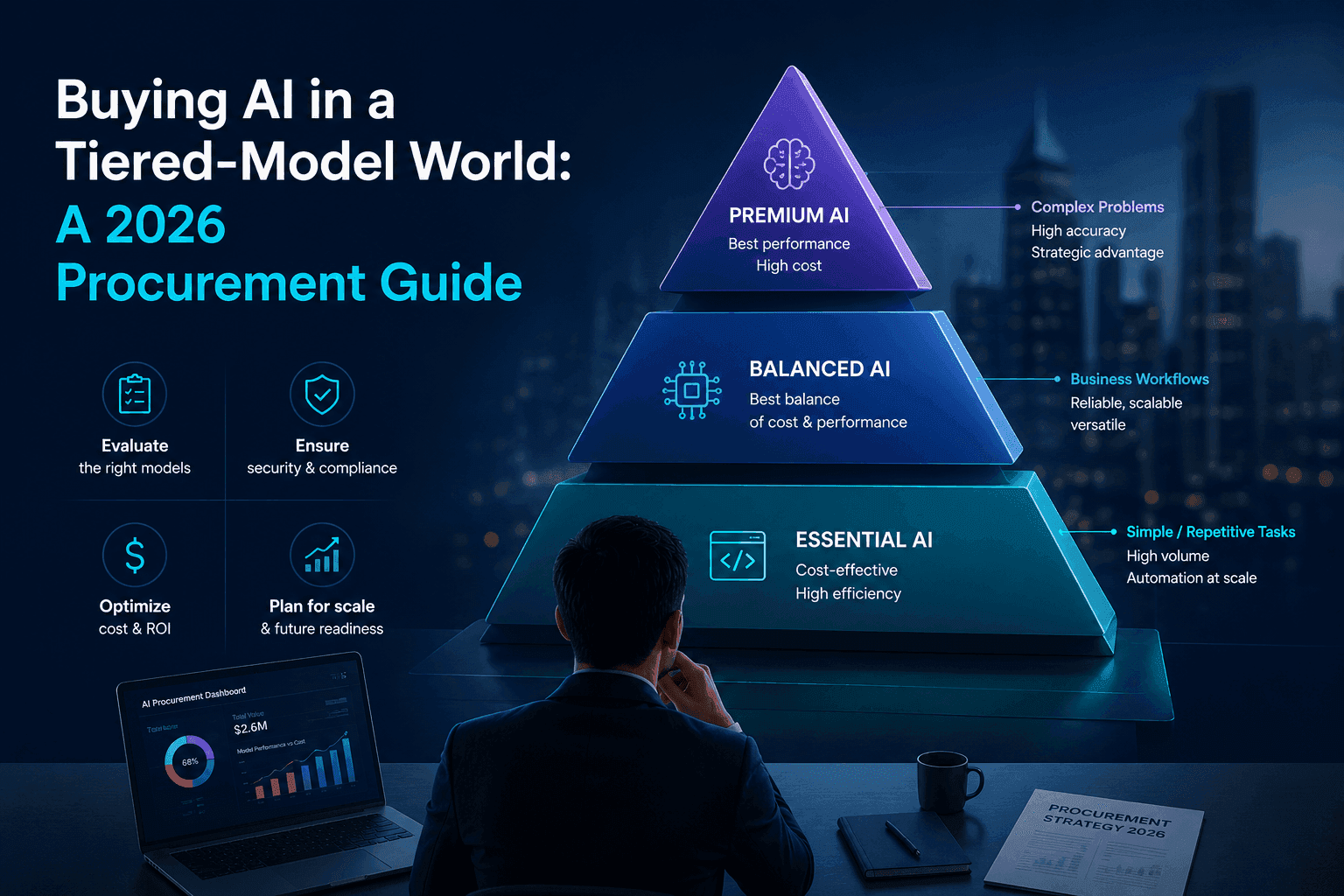
Buying AI in a Tiered-Model World: A 2026 Procurement Guide

Best MVP Development Services in 2026