AI Agent Security in 2026: Why Half of Enterprise Agents Run Unmonitored
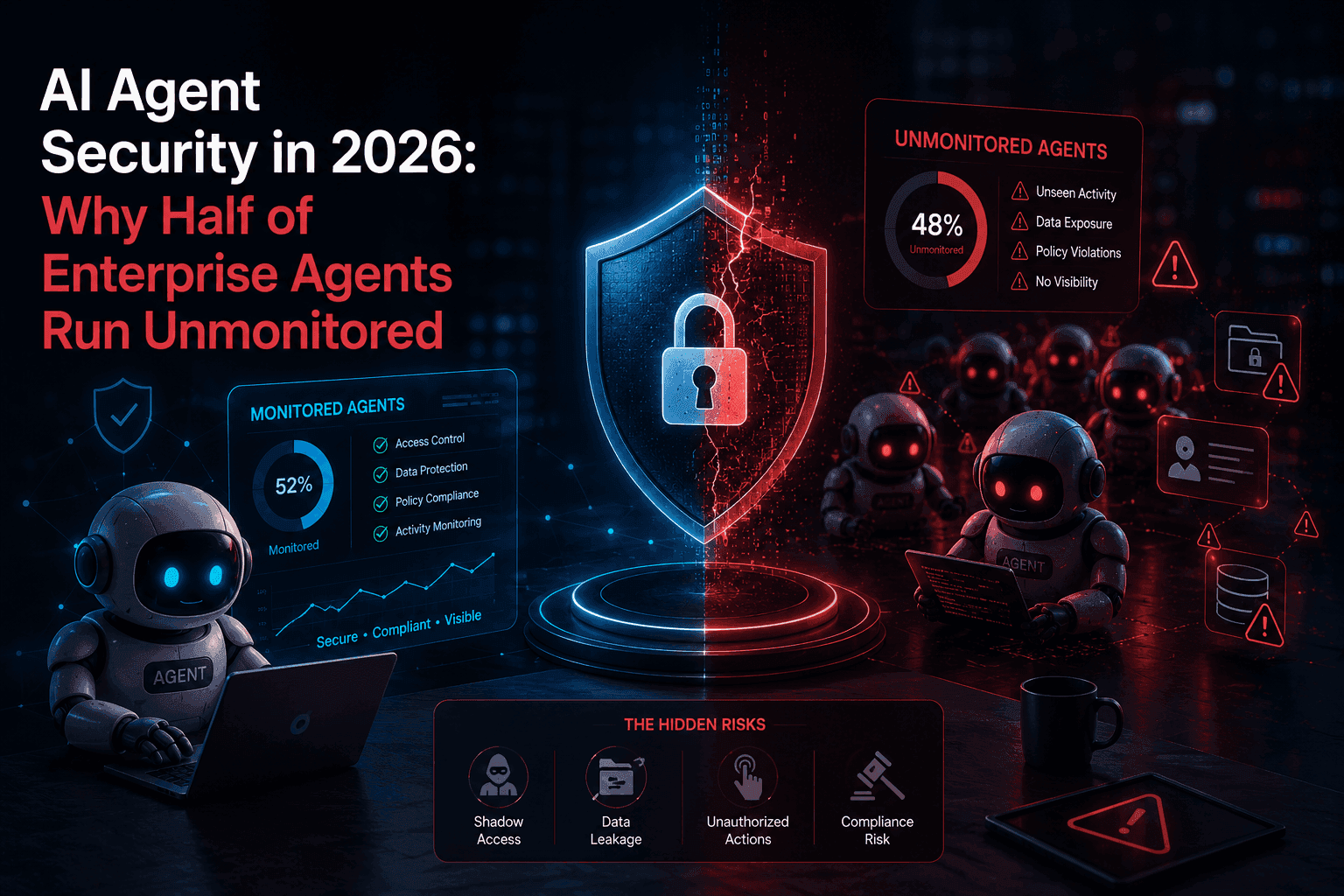
Enterprise AI agent deployment has outrun agent security control. Industry surveys in 2026 found roughly 47% of an organisation's AI agents are actively monitored or secured, only around 14.4% of organisations have full security approval across their entire agent fleet, and 88% reported confirmed or suspected agent security incidents in the past year, rising to about 92.7% in healthcare. The primary attack surfaces are prompt injection, memory poisoning, privilege escalation and MCP-connected tooling. The fix is not a product purchase but four controls: scoped non-human identity per agent, tool-level permission boundaries, full action logging, and human approval gates on irreversible operations.
Commercial Expertise
Need help with Cybersecurity?
Ortem deploys dedicated Cybersecurity Solutions squads in 72 hours.
Next Best Reads
Continue your research on Cybersecurity
These links are chosen to move readers from general education into service understanding, proof, and buying-context pages.
Cybersecurity Services
Turn threat-awareness content into a concrete programme for app security, audits, and remediation.
Explore security serviceCompliance & Security
Review how Ortem handles security controls, governance, and regulated software delivery requirements.
View compliance pageSecure FinTech Case Study
Study a security-sensitive product build where reliability, payments, and trust were central.
Read case studyThere is a number in the 2026 enterprise AI security research that should stop any CTO mid-scroll: roughly 88% of organisations reported a confirmed or suspected AI agent security incident in the past year. In healthcare that figure rises to around 92.7%.
Set against that, only about 47% of an organisation's AI agents are actively monitored or secured, and just 14.4% of organisations have full security approval across their entire agent fleet. More than half of deployed agents are operating with no security oversight or logging whatsoever.
Meanwhile 82% of executives report confidence that their existing policies protect against unauthorised agent actions.
That last statistic is the real finding. The problem is not that organisations have weighed agent risk and accepted it. It is that most do not know they are carrying it.
Why agents break the existing security model
Traditional application security assumes software does what it was programmed to do. You audit the code, you constrain its permissions, and its behaviour is bounded by its implementation.
Agents break that assumption in three specific ways.
They act rather than answer. A chatbot produces text. An agent calls APIs, writes to databases, sends messages and triggers workflows. The blast radius of a compromised agent is the union of everything it can reach, not the content of one response.
Their behaviour is influenced by data they read. This is the structural difference. If an agent reads a document, a ticket, an email or a web page, the content of that data can change what the agent does next. In conventional software, data is data and code is code. In agentic systems the boundary is porous by design, which is what makes prompt injection a category rather than a bug.
They accumulate permissions. An agent useful enough to be worth deploying usually needs several tools. Each integration is individually reasonable. Collectively the agent becomes a single identity holding a permission set that no human employee would be granted, frequently without anyone assembling that view.
The four attack surfaces that matter
Prompt injection remains the headline risk. Untrusted content the agent processes is crafted to alter its instructions. The indirect variant is the dangerous one: the attacker does not talk to your agent at all, they plant content in a source your agent will later read — a support ticket, a shared document, a web page it retrieves.
Memory poisoning extends injection across time. Where prompt injection affects one run, memory poisoning writes malicious content into persistent memory so it influences future runs, potentially long after the original interaction and after the source has been forgotten. Agents with long-lived memory need write-path validation as seriously as read-path filtering.
Privilege escalation rarely looks like an exploit. It looks like an agent chaining several legitimately granted capabilities into an outcome nobody authorised. Read from one system, transform, write to another. Each step is permitted; the composition is not what anyone intended.
MCP-connected tooling widens all of the above. The Model Context Protocol and its emerging rivals solve genuine integration problems, and the ecosystem is why agents became practical. But every connected tool is reachable surface, and the agent is where permissions aggregate. Scope per agent and per task, not per convenience.
The controls that actually reduce risk
Four things move the needle materially. None of them is a product purchase.
Give every agent its own scoped identity. Agents are non-human identities and deserve the same rigour as service accounts: individually identifiable, least-privilege, credentials rotated, access revocable without taking down unrelated systems. Agents sharing a broad service account are the most common finding in agent security reviews, and it makes both attribution and containment impossible.
Enforce permission boundaries at the tool layer. Do not rely on instructions telling an agent what it should not do. Instructions are text, and text is exactly what an attacker controls. Enforce limits where they cannot be talked out of: the tool refuses out-of-scope calls regardless of how persuasively the agent asks.
Log every action, not every answer. The distinction is critical. Logging the agent's final output tells you what it said. Logging each tool call, argument and result tells you what it did — which is the only view that reveals a compromise. This overlaps almost entirely with good agent observability practice, and building it once serves both security and debugging.
Put human approval on irreversible actions. Sending external communications, moving money, deleting data, changing permissions. A confidence-gated approval queue is not a failure of automation; it is the control that lets you deploy agents into consequential workflows at all. Design patterns for doing this without destroying throughput are covered in our human-in-the-loop guide.
The regulatory pressure arriving alongside
This is no longer purely a security conversation. The EU AI Act's obligations became applicable on 2 August 2026, and high-risk systems now carry legally enforceable requirements around risk management, human oversight and record-keeping.
For agent deployments this creates a useful alignment. The action logs you need to detect a compromised agent are substantially the same records the Act expects for a high-risk system. The human approval gates that limit blast radius are substantially the same mechanism as designed human oversight. Teams that build agent security properly get a large share of their AI Act evidence as a by-product.
Teams that do not now face both an incident probability approaching certainty and a regulatory exposure.
An honest assessment of where to start
If you have agents in production and cannot currently answer "which agents exist, what can each reach, and what did they do last Tuesday", that is your starting point. Not a tool evaluation — an inventory.
Most organisations discover during this exercise that they have more agents than they thought, that several share credentials, and that the logs needed to reconstruct behaviour were never captured. That is uncomfortable but it is also tractable, and it is far cheaper to discover deliberately than during an incident.
Gartner projects that around 40% of enterprise applications will include task-specific AI agents by the end of 2026, up from under 5%. The organisations that put identity, scoping, logging and approval gates in place now will absorb that growth. The ones that do not will be retrofitting controls onto a fleet they cannot fully enumerate.
Ortem Technologies builds production agent systems with identity, tool scoping and full action logging as part of the architecture rather than a later hardening pass. If you need an assessment of your existing agent fleet or help building agents that are safe to give real permissions, see our cybersecurity services, our AI agent development practice, or talk to our engineers.
About Ortem Technologies
Ortem Technologies is a premier custom software, mobile app, and AI development company. We serve enterprise and startup clients across the USA, UK, Australia, Canada, and the Middle East. Our cross-industry expertise spans fintech, healthcare, and logistics, enabling us to deliver scalable, secure, and innovative digital solutions worldwide.
Get the Ortem Tech Digest
Monthly insights on AI, mobile, and software strategy - straight to your inbox. No spam, ever.
Sources & References
About the Author
Private 1:1 AI Tutor · Director of Sales & Business Development, Moksh Tech
Praveen Jha is a private 1:1 AI tutor and enterprise AI sales leader based in Ahmedabad, India. He teaches executives, founders and engineers to ship real work with ChatGPT, Claude, Cursor and Claude Code, and is an Oracle Certified Generative AI Professional and AWS Certified Solutions Architect. He wrote his articles here while Director of AI Product Strategy, Sales & Business Development at Ortem Technologies.
Frequently Asked Questions
- Four dominate. Prompt injection, where untrusted content the agent reads is crafted to change its behaviour. Memory poisoning, where malicious content persists into an agent's long-term memory and influences future runs. Privilege escalation, where an agent chains legitimate tool access into actions nobody intended to authorise. And MCP-connected tooling, where each connected tool widens the reachable surface and the agent becomes an aggregation point for permissions.
- Memory poisoning occurs when an attacker gets malicious content written into an agent's persistent memory, so it influences behaviour on later runs long after the original interaction. Prevention means treating memory writes as untrusted input: validate and sanitise before persisting, scope memory per tenant and per task, expire aggressively, and log what gets written so a poisoned entry can be found and removed.
- Log every action the agent takes, not just its final output — each tool call, each argument, each result, tied to a trace identifier and the agent's own identity. Alert on anomalies such as unusual tool sequences, access outside normal scope, or volume spikes. The distinction that matters is between logging what the agent said and logging what it did; only the second tells you whether something went wrong.
- Yes, meaningfully. Every tool an agent can reach becomes part of the reachable surface, and the agent becomes a single point where many permissions aggregate. That is not an argument against MCP, which solves real integration problems, but it does mean tool access should be scoped per agent and per task rather than granted broadly because it is convenient.
Stay Ahead
Get engineering insights in your inbox
Practical guides on software development, AI, and cloud. No fluff — published when it's worth your time.
Ready to Start Your Project?
Let Ortem Technologies help you build innovative software solutions for your business.
You Might Also Like
AI-Powered Security Audits Go Mainstream: What Glasswing's Expansion Means for Your Software
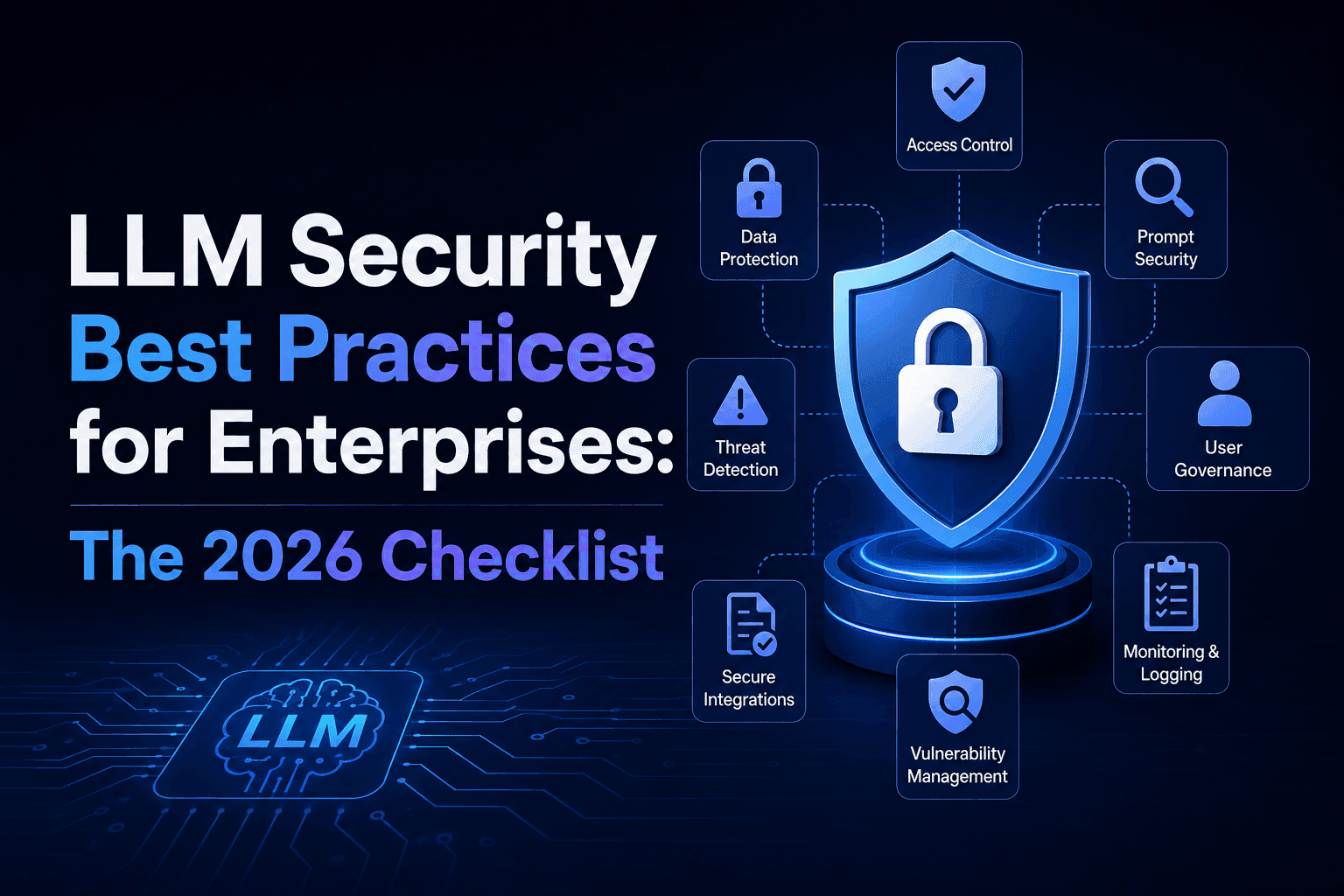
LLM Security Best Practices for Enterprises: The 2026 Checklist