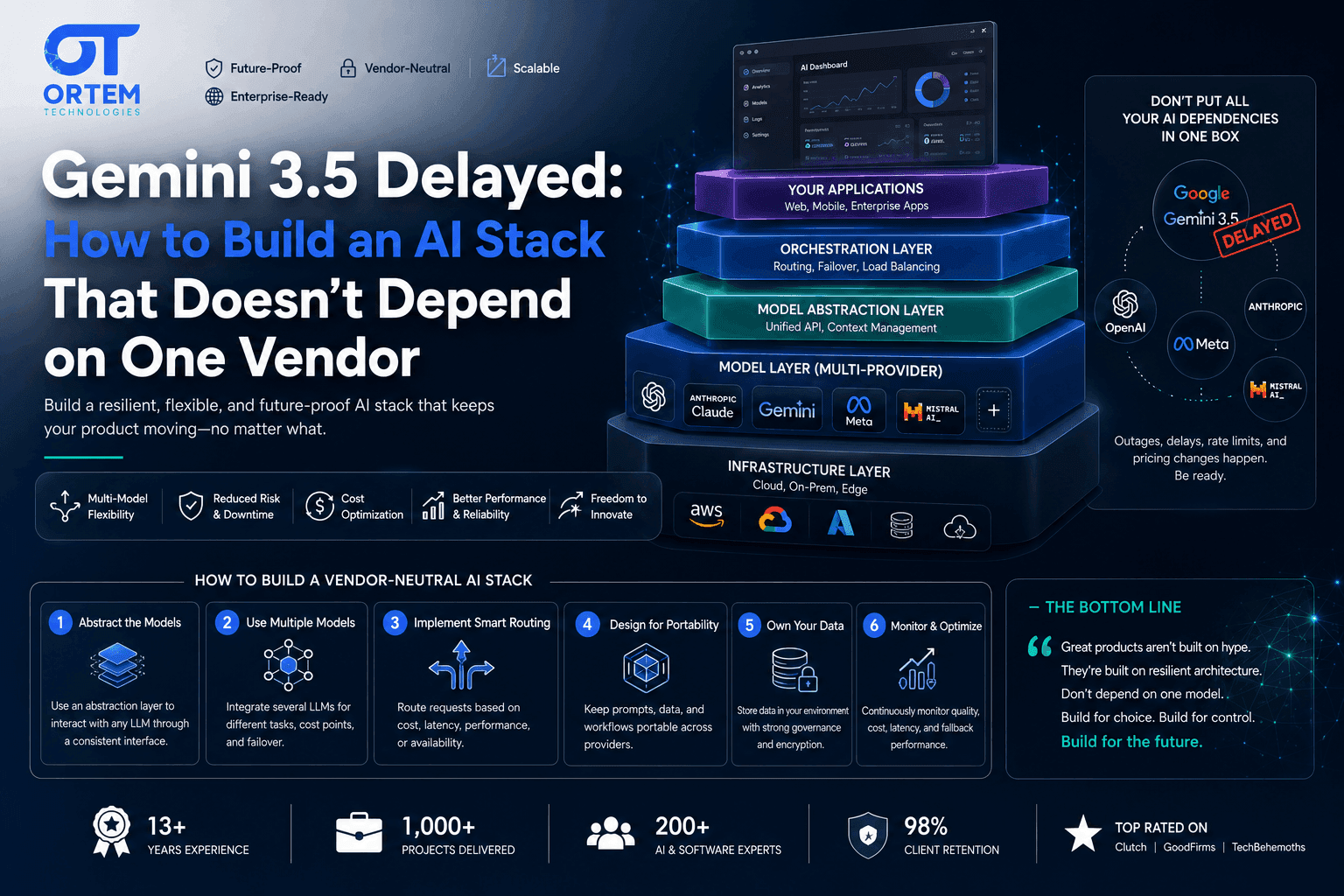
Google Antigravity Pricing in 2026: Every Tier, What It Actually Limits, and Which One to Buy
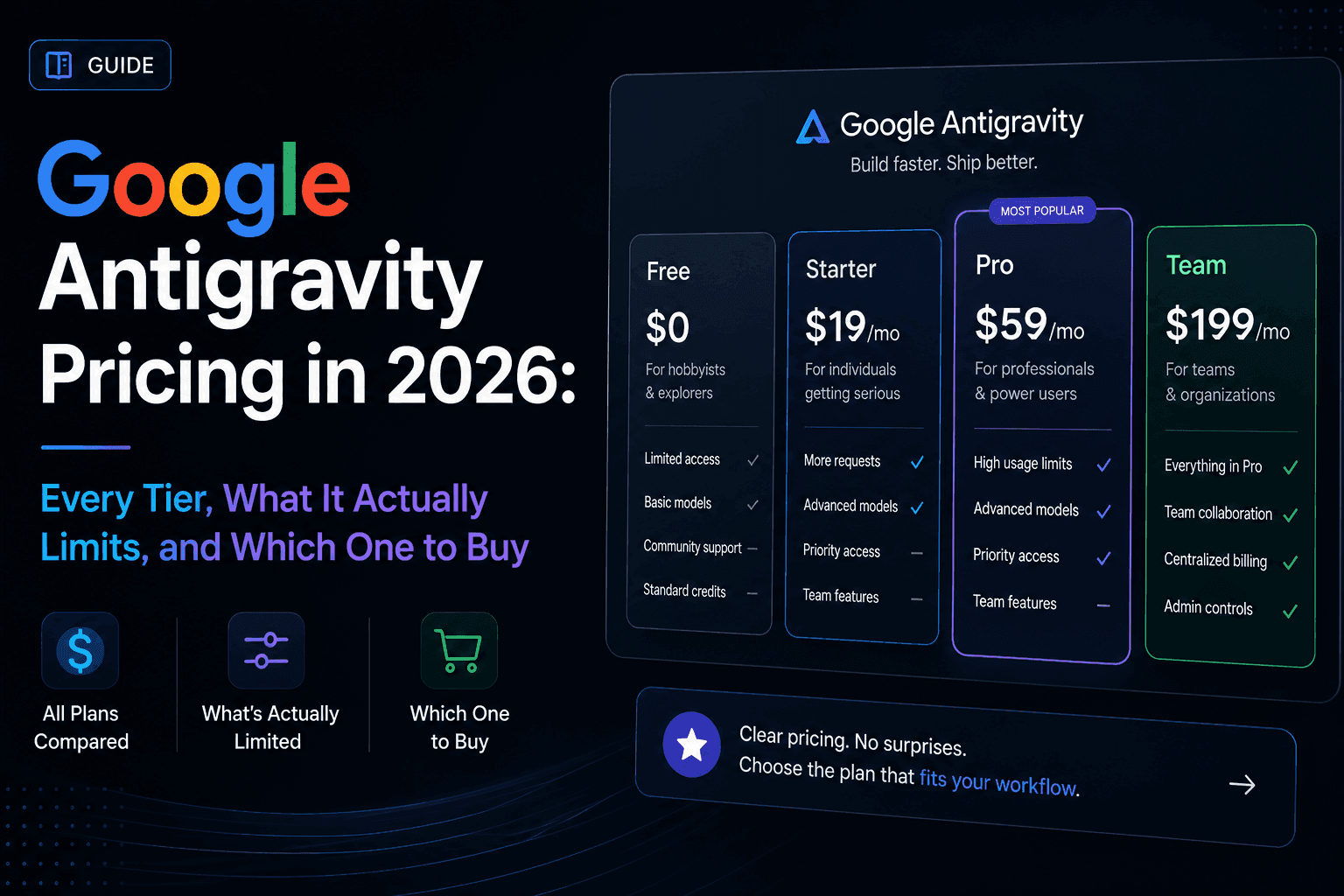
Google Antigravity is free at the Individual tier with agent model access and basic weekly rate limits. Paid access comes bundled with a Google AI subscription rather than billed separately: Google AI Pro at $19.99/month, Google AI Ultra 5x at $99.99/month, and Google AI Ultra 20x at $199.99/month. The former $249.99 Ultra plan was retired when Google restructured its AI subscriptions at I/O in May 2026. Organizations buy through Google Cloud on consumption-based pricing instead of seats. Most developers should stay on the free tier until agent rate limits actually block them, then move to Pro.
Next Best Reads
Continue your research on AI Engineering
These links are chosen to move readers from general education into service understanding, proof, and buying-context pages.
AI & ML Solutions
Move from architecture reading into real model deployment, MLOps, and production AI pipelines.
Explore AI servicesLLM Integration
Integrate large language models into your product — RAG, fine-tuning, copilots, and APIs.
Explore LLM serviceAI Platform Case Study
See a production AI system with real data architecture, model integration, and launch outcomes.
Read case studyGoogle does not publish a single Antigravity price. That is not an oversight in this guide — it is the actual situation. Antigravity's own pricing page lists the free Individual tier with a real number and then shows Pro, Ultra and Organization with no monthly figure at all. The prices live in your Google AI subscription, the rate limits live in a separate plans doc, and credit consumption lives in a third page about the Gemini Enterprise Agent Platform.
This page puts the whole thing in one table and says plainly where each number comes from.
What Antigravity costs, August 2026
| Tier | Monthly | What you actually get |
|---|---|---|
| Individual | $0 | Agent model access, unlimited tab completions, unlimited command requests, basic weekly rate limits |
| Google AI Pro | $19.99 | Higher weekly rate limit, quota refreshed every five hours until the weekly cap, flexible AI credit pool |
| Google AI Ultra 5x | $99.99 | 5x Pro usage limits, third-party model access |
| Google AI Ultra 20x | $199.99 | 20x Pro usage limits, highest quota refreshed every five hours, highest weekly rate limits |
| Organization | Consumption-based | Google Cloud terms, project integration, Gemini Enterprise Agent Platform pricing |
Two things about this table are worth stating outright.
The $249.99 tier is gone. Google restructured its AI subscriptions at I/O in May 2026, replacing the single $249.99 Ultra plan with the two-tier $99.99 / $199.99 split. A large amount of writing about Antigravity pricing still quotes $249.99, including pages currently ranking for it. If you read that figure anywhere, the page is at least three months stale.
Antigravity is not billed separately. You are not buying Antigravity. You are buying a Google AI subscription, and Antigravity access is bundled into it. That is why searching for "Antigravity pricing" produces such inconsistent answers — people are quoting the Google One consumer tiers, the Cloud consumption model, or the old Ultra price, and all three are describing different things.
The free tier is genuinely usable, with one catch
Individual at $0 is not a trial. It includes agent model access — Gemini 3.5 Flash, Gemini 3.1 Pro, Gemini 3 Flash, Claude Sonnet and Opus 4.6, and gpt-oss-120b — plus unlimited tab completions and unlimited command requests.
The catch is the word "basic" in front of "weekly rate limits." Tab completion and command requests are unlimited; agent invocations are not. Agentic work is where the cost sits, because an agent run spends far more tokens than a chat turn. Teams that treat Antigravity as a smarter autocomplete stay inside the free tier comfortably. Teams that hand it multi-file refactors do not.
How the quota actually behaves
The rate limiting is a two-level system, and this is the part that catches people out:
- Paid tiers refresh quota every five hours, until you hit the weekly ceiling.
- The weekly ceiling is the real constraint. Once you reach it, the five-hourly refresh stops helping until the week rolls over.
So the practical difference between Pro and Ultra 20x is not "20x more requests per day." It is how far into a heavy week you get before the ceiling stops you. A single large agentic session can consume a meaningful share of a Pro weekly allowance.
For Pro and Ultra, exhausted quota falls through to the flexible AI credit pool, consumed at standard Gemini Enterprise Agent Platform consumption pricing.
Which tier to actually buy
Stay on Individual ($0) if you are using Antigravity as completion and command assistance, evaluating it against Cursor or Claude Code, or working solo on small changes. There is no reason to pay before you hit a wall.
Google AI Pro ($19.99) is the right default for a developer using agent mode daily on production work. It is priced in the same band as Cursor and Claude Code Pro, so the comparison is a straight capability question rather than a budget one.
Ultra 5x ($99.99) exists for the case that used to force people onto the $249.99 plan: sustained agentic work that repeatedly hits the Pro weekly ceiling. If you are hitting the ceiling more than once a week, this is cheaper than the productivity loss.
Ultra 20x ($199.99) is for continuous multi-agent workloads — parallel subagents, long autonomous runs. Below that intensity you are buying headroom you will not use.
Organization is the only route to Google Cloud terms, project integration, and consumption-based billing rather than seats. Ask about it if procurement needs a contract rather than a credit card.
Antigravity 2.0 changed what you are paying for
The pricing conversation shifted in May 2026, when Antigravity 2.0 split the product into a unified harness with two surfaces: a redesigned desktop app and a new standalone CLI. It added specialised subagents for parallel tasks, cross-platform terminal sandboxing, credential masking, and hardened Git policies.
That matters for tier choice more than the price change did. Parallel subagents consume quota in parallel. A workflow that comfortably fit inside Pro before 2.0 can hit the weekly ceiling afterwards, simply because you are now running three agents where you used to run one.
How it compares on price
At $19.99, Google AI Pro sits alongside Cursor and Claude Code's entry paid tiers rather than undercutting them. The genuine differentiator is the free tier: Antigravity gives away agent model access that competitors gate behind a subscription. If your evaluation budget is zero, that is the whole argument.
Where it costs more is at the top. Sustained agentic work pushes you to $99.99 or $199.99, and at that point you are comparing against Claude Code's Max tiers on capability, not price.
Frequently confused
Is Antigravity free? Yes, permanently, at the Individual tier — not a time-limited trial. Agent invocations carry weekly rate limits.
Do I need Google Cloud? Only for the Organization plan. Individual, Pro and Ultra run on a personal Google account.
Does Pro include Antigravity, or is it extra? Included. Antigravity access is bundled into the Google AI subscription rather than billed on its own.
Why do sources disagree about the price? Because the Ultra restructure in May 2026 replaced $249.99 with $99.99 and $199.99 tiers, and much of the published writing predates it.
Ortem Technologies builds with agentic coding tools daily across client engineering work. AI agent development → | Hire AI developers → | Talk to our engineering team →
About Ortem Technologies
Ortem Technologies is a premier custom software, mobile app, and AI development company. We serve enterprise and startup clients across the USA, UK, Australia, Canada, and the Middle East. Our cross-industry expertise spans fintech, healthcare, and logistics, enabling us to deliver scalable, secure, and innovative digital solutions worldwide.
Get the Ortem Tech Digest
Monthly insights on AI, mobile, and software strategy - straight to your inbox. No spam, ever.
Sources & References
- 1.Google Antigravity Pricing - Google
- 2.Plans | Google Antigravity Docs - Google
- 3.The Google AI Ultra plan now starts at $100 a month - Engadget
- 4.Google overhauls its AI subscriptions at I/O 2026 - The Decoder
About the Author
Director – AI Product Strategy, Development, Sales & Business Development, Ortem Technologies
Praveen Jha is the Director of AI Product Strategy, Development, Sales & Business Development at Ortem Technologies. With deep expertise in technology consulting and enterprise sales, he helps businesses identify the right digital transformation strategies - from mobile and AI solutions to cloud-native platforms. He writes about technology adoption, business growth, and building software partnerships that deliver real ROI.
Frequently Asked Questions
- Yes. The Individual tier is $0/month permanently, not a time-limited trial. It includes agent model access, unlimited tab completions and unlimited command requests, with basic weekly rate limits on agent invocations.
- Antigravity is not sold as its own Pro plan. Paid access comes with Google AI Pro at $19.99/month, which raises the weekly rate limit and adds a flexible AI credit pool.
- Google retired it at I/O in May 2026, replacing the single Ultra tier with Google AI Ultra 5x at $99.99/month and Google AI Ultra 20x at $199.99/month. Pages still quoting $249.99 predate that change.
- Start on the free Individual tier. Move to Google AI Pro at $19.99/month only once agent rate limits actually interrupt your work — tab completion and command requests are unlimited on free, so light use never hits the ceiling.
- Only for the Organization plan, which runs under Google Cloud terms with consumption-based billing. Individual, Pro and Ultra all work on a personal Google account.
Stay Ahead
Get engineering insights in your inbox
Practical guides on software development, AI, and cloud. No fluff — published when it's worth your time.
Ready to Start Your Project?
Let Ortem Technologies help you build innovative software solutions for your business.
You Might Also Like
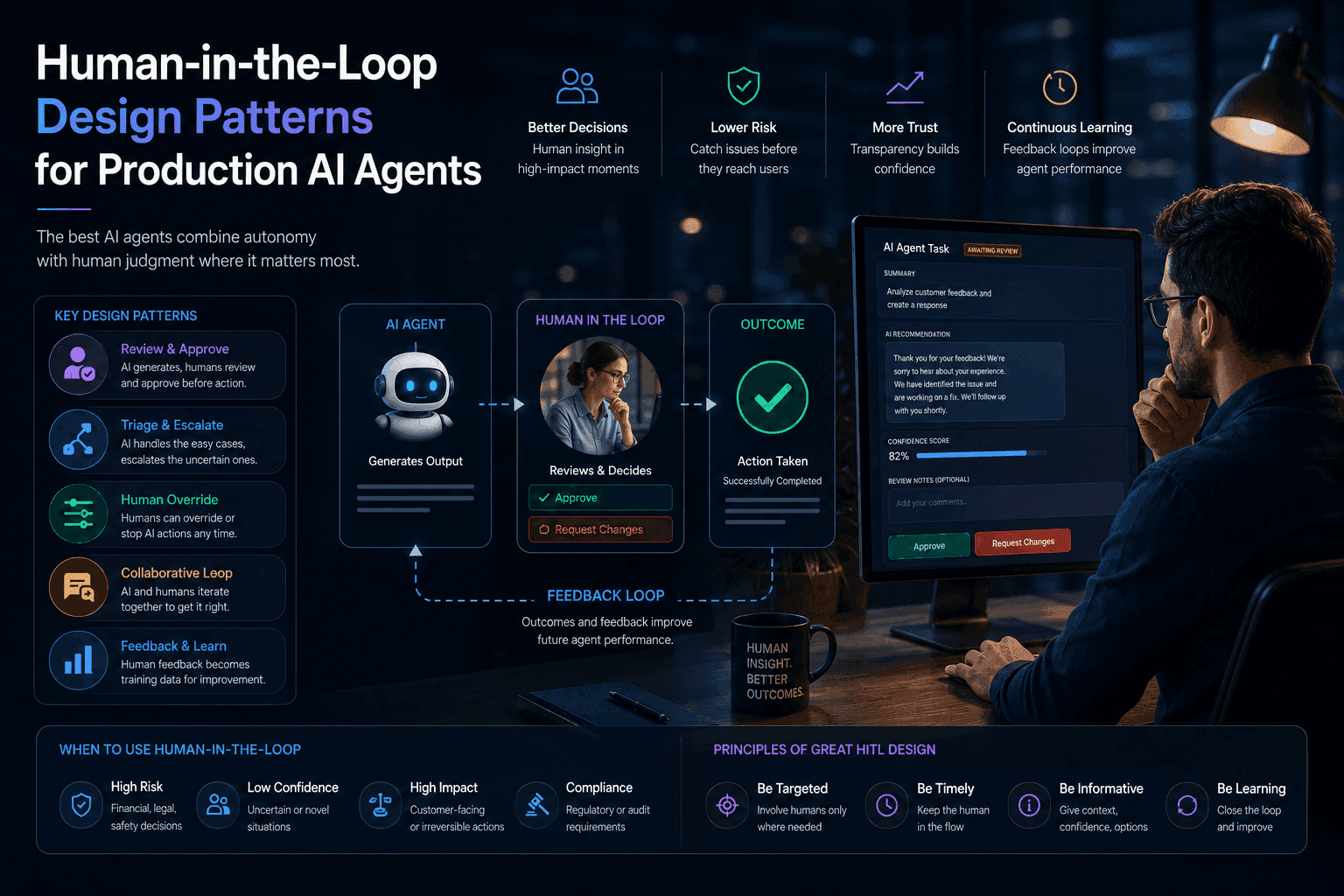
Human-in-the-Loop Design Patterns for Production AI Agents
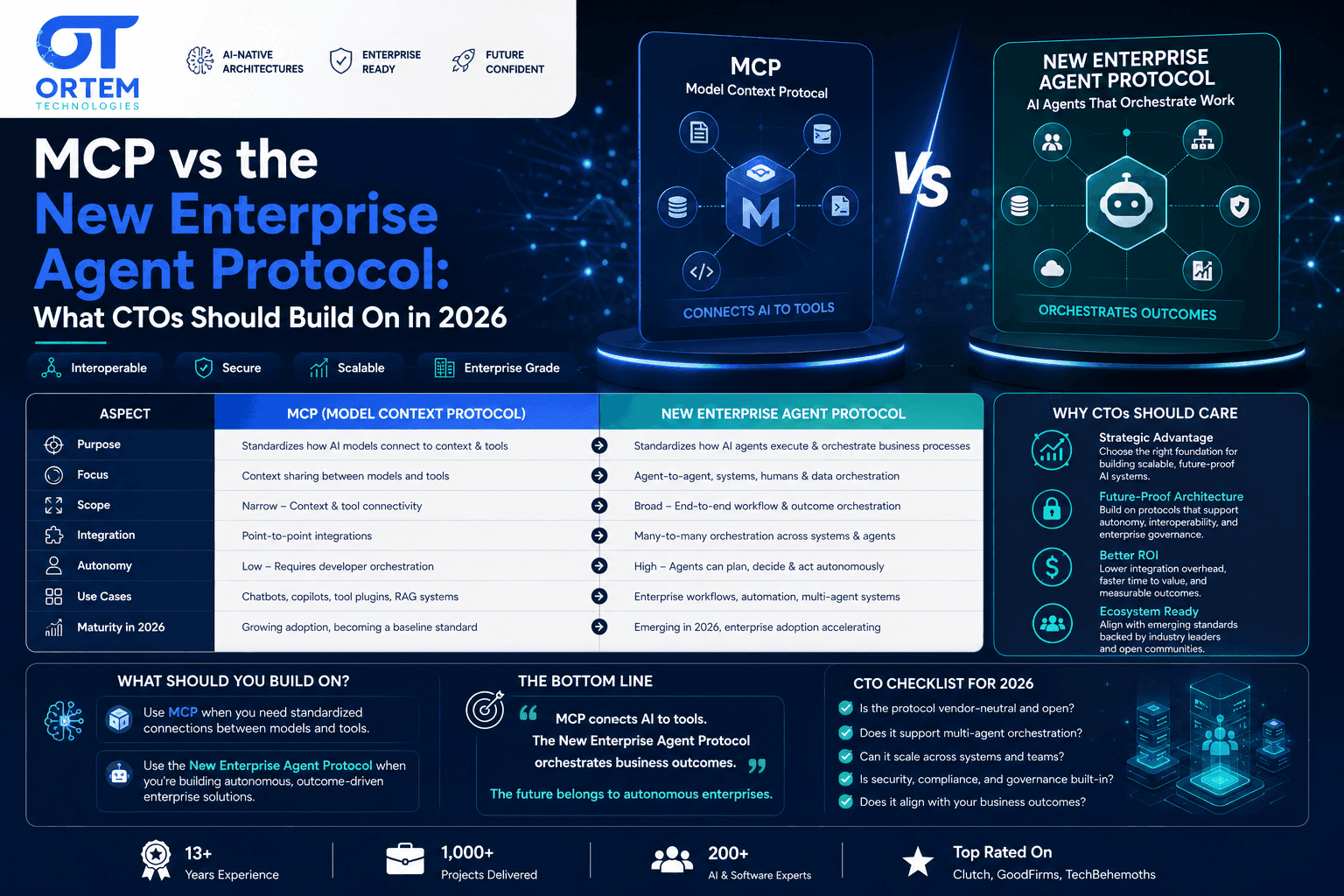
MCP vs the New Enterprise Agent Protocol: What CTOs Should Build On in 2026