
White-Label Software to Resell in 2026: Categories, Examples and How to Choose
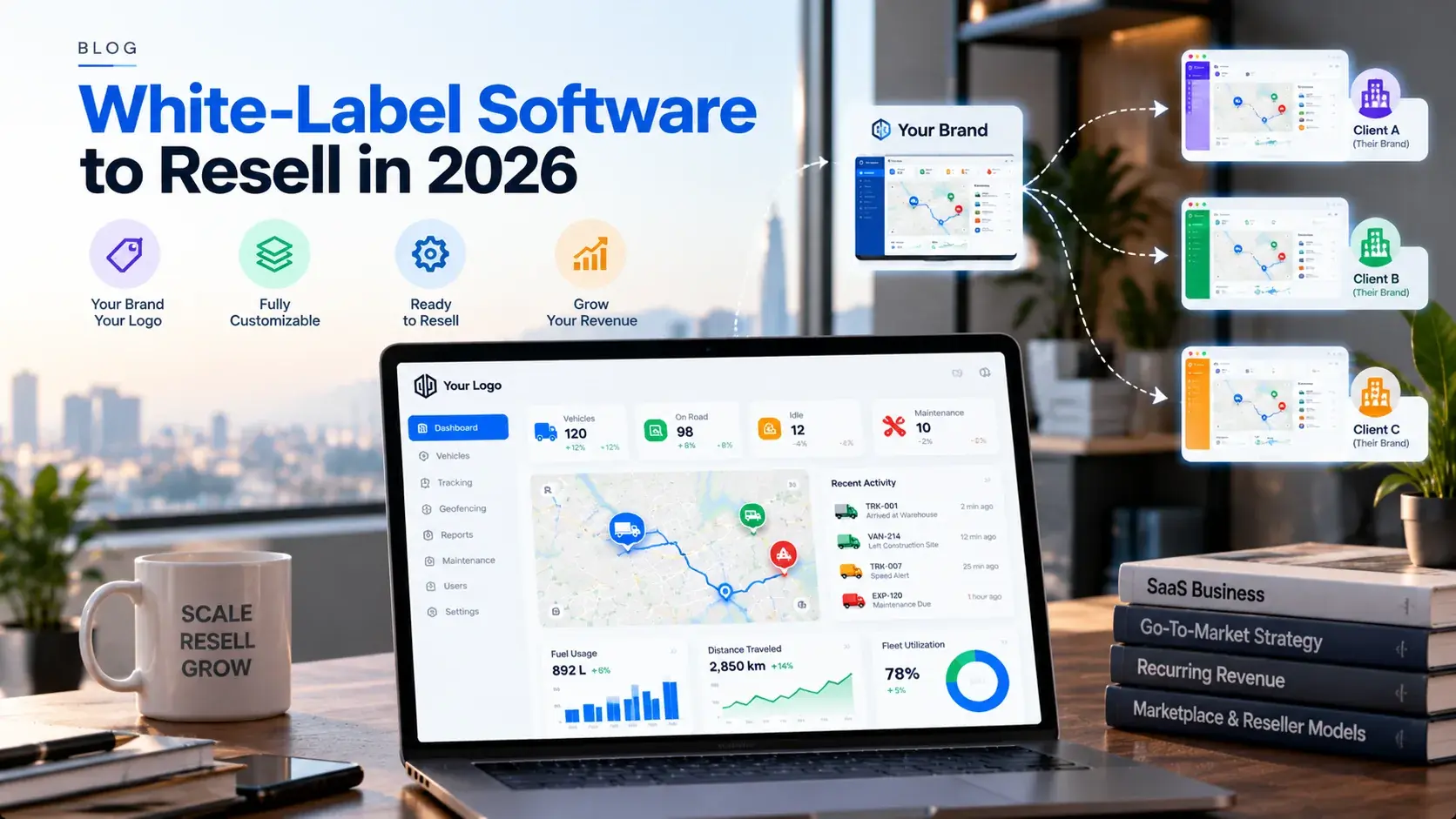
White-label software is a finished product built by one company that another company rebrands and sells as its own. It comes in two main models: hosted white-label SaaS, where the vendor runs the platform and you resell access, and licensed source code, where you deploy and own your copy. Popular categories to resell include agency marketing platforms, website builders, app builders, embedded analytics, GPS tracking and vertical SaaS products.
Next Best Reads
Continue your research on SaaS & Products
These links are chosen to move readers from general education into service understanding, proof, and buying-context pages.
SaaS Development Services
Move from product research into architecture, multi-tenancy, billing, and launch planning.
Explore SaaS serviceMVP Development
Use this path if your intent is validation, phased scope control, or faster launch for a new product.
See MVP serviceSaaS Platform Case Study
Review how Ortem shipped a multi-tenant production SaaS platform end to end.
Read case studyWhite-label software is a finished product built by one company and sold by another under its own brand. Agencies, consultancies, telecoms, distributors and software firms use it to add products to their offer without building them.
This guide explains the two ways white-label software is sold, the main categories worth reselling in 2026, and a checklist that protects your margins and your customers.
What Is White-Label Software?
The vendor builds and maintains the product. The reseller puts its own name, logo, colours and domain on it, and sells it to its customers.
The term comes from the music industry. Pressing plants sold records with blank white labels, and retailers stamped their own names on them. Software works the same way.
White-label software is different from:
- Affiliate or referral programmes, where you send customers to the vendor's brand.
- Reselling a branded product, where the vendor's name stays visible.
- Custom development, where the product is built for you from scratch.
The Two White-Label Models
| Hosted white-label SaaS | Licensed source code | |
|---|---|---|
| Who hosts it | Vendor | You |
| Time to launch | Days to weeks | Weeks |
| Customisation | Settings and branding | Full code changes |
| Typical pricing | Per account, seat or usage | Licence fee plus your hosting |
| Margin at scale | Limited by per-unit fees | Grows as you scale |
| Exit risk | Customers live on vendor's platform | You keep your deployment |
Hosted white-label SaaS suits resellers who want to start fast and test demand. Licensed source code suits companies that want to own their product, customise it deeply or sell it at volume.
White-Label Software to Resell: Categories and Examples
Below are the categories with the strongest reseller demand, with examples of each. Confirm current reseller terms with each vendor.
Agency marketing platforms
All-in-one CRM, email, funnels, reputation and reporting tools that agencies sell to local businesses. Several marketing platforms offer agency or "SaaS mode" plans built for resale.
Best for: digital marketing agencies with many small-business clients.
Website builders
Duda is a website building platform aimed at agencies and SaaS companies, with white-label options so client sites and editors carry your brand.
Best for: agencies building and hosting many client websites.
Mobile app builders
No-code app builders let resellers launch branded apps for clients from templates. Check app store publishing rights and who owns the developer accounts.
Best for: agencies serving restaurants, gyms, churches and local businesses.
Embedded and white-label analytics
Luzmo lets software companies embed dashboards in their own products under their own brand.
Best for: SaaS companies that need customer-facing analytics without building them.
GPS tracking and telematics
Platforms such as Navixy offer white-label tracking for telematics resellers, and Traccar offers an open-source option you can brand yourself. We compare these in our guide to white-label GPS tracking software.
Best for: device distributors and telematics service providers.
AI chatbots and agents
Branded AI assistants for customer support and lead capture are a fast-growing category. Check which model providers are used, where data is stored, and who pays for usage.
Best for: agencies and IT providers adding AI services. See our guide to white-label AI solutions for agencies.
Vertical SaaS products
Complete products for one industry, such as gym management, property management or fleet operations. These are often sold as licensed source code so the reseller can run the product as its own business.
Disclosure: Ortem builds and licenses white-label vertical products. Our range includes GymApp for gyms and studios, Residenta for property management, Fleet Sync Pro for fleet operations, Azimuth for project estimation and proposals, Skill Gauge for talent assessment and Smart Retail for retail. Buyers review the product, then license the full software to run under their own brand.
Best for: entrepreneurs and firms that want to own a SaaS business in a specific industry.
How to Choose White-Label Software
Score each option on these points.
- Customer demand. Are your customers already asking for this? Reselling works best as an add-on to what you sell today.
- Support model. Who answers when the product breaks at 9pm? If it is you, can you actually fix it?
- Branding depth. Can customers see the vendor's name anywhere: URLs, emails, app store listings, help docs?
- Unit economics. What is your margin per customer after vendor fees, support time and payment fees?
- Reliability. What uptime does the vendor commit to, and what happens when they miss it?
- Security and compliance. Does the product meet your customers' requirements, such as GDPR or HIPAA?
- Roadmap control. Can you request features, or change the code yourself?
- Exit rights. Can you export all customer data and move to another platform?
White-Label Contract Checklist
- Branding rights, including domains and app store accounts
- Pricing, minimum commitments and price change notice
- Support split between vendor and reseller, with response times
- Uptime commitment and service credits
- Data ownership, processing terms and security obligations
- Non-compete or non-solicit terms protecting your customers
- Term, renewal and termination rights
- Data export and migration assistance on exit
- For source code licences: scope of use, updates and resale rights
Hosted SaaS or Licensed Code?
Start with hosted white-label SaaS if you are testing a new offer with a few customers. Move to licensed source code when the product becomes core to your business, when per-seat fees eat your margin, or when you need features the vendor will not build.
Ortem helps companies do both: we license white-label products and build custom ones. See our white-label app development service or browse our products.
About Ortem Technologies
Ortem Technologies is a premier custom software, mobile app, and AI development company. We serve enterprise and startup clients across the USA, UK, Australia, Canada, and the Middle East. Our cross-industry expertise spans fintech, healthcare, and logistics, enabling us to deliver scalable, secure, and innovative digital solutions worldwide.
Get the Ortem Tech Digest
Monthly insights on AI, mobile, and software strategy - straight to your inbox. No spam, ever.
Sources & References
- 1.Duda website builder platform for agencies - Duda
- 2.Embedded analytics platform - Luzmo
- 3.Navixy telematics platform - Navixy
- 4.Traccar GPS tracking platform - Traccar
About the Author
Sales Head, Ortem Technologies LLC
Nirav B is the Sales Head at Ortem Technologies LLC. He works with businesses planning custom software, mobile and AI projects, helping them scope the work, choose an engagement model and plan delivery with Ortem's engineering team.
Frequently Asked Questions
- White-label software is a product built by one company and sold by another under its own brand. The reseller adds its name, logo, colours and domain, while the original vendor or the reseller's own engineers handle the software itself.
- In software, white label means the product carries no visible vendor branding, so the reseller can present it as its own. The term comes from the record industry, where unlabelled records were sold to retailers who stamped their own labels on them.
- White-label SaaS is hosted software that a vendor runs on its own infrastructure and lets resellers rebrand. The reseller sells subscriptions to its customers and usually pays the vendor per account, per seat or per usage unit.
- With white-label SaaS, the vendor hosts and controls the platform and you rent access. With licensed source code, you receive the code, deploy it on your own infrastructure and control your copy. SaaS is faster to launch, while source code gives more control, better margins at scale and easier exit.
- It can be, if you resell at a markup over the vendor's price, bundle it with your services, and keep support costs under control. Margins shrink when the vendor charges high per-seat fees or when you end up handling support for problems you cannot fix.
- A white-label contract should cover branding rights, pricing and minimums, support responsibilities, uptime commitments, data ownership, security and compliance obligations, change notice periods, and your right to export data and migrate customers if the agreement ends.
Stay Ahead
Get engineering insights in your inbox
Practical guides on software development, AI, and cloud. No fluff — published when it's worth your time.
Ready to Start Your Project?
Let Ortem Technologies help you build innovative software solutions for your business.
You Might Also Like
White-Label GPS Tracking and Fleet Management Software: License, Self-Host or Build (2026)

Best Construction Fleet Management Software in 2026 (7 Compared)
